
 English
 русский
 中文简体



-
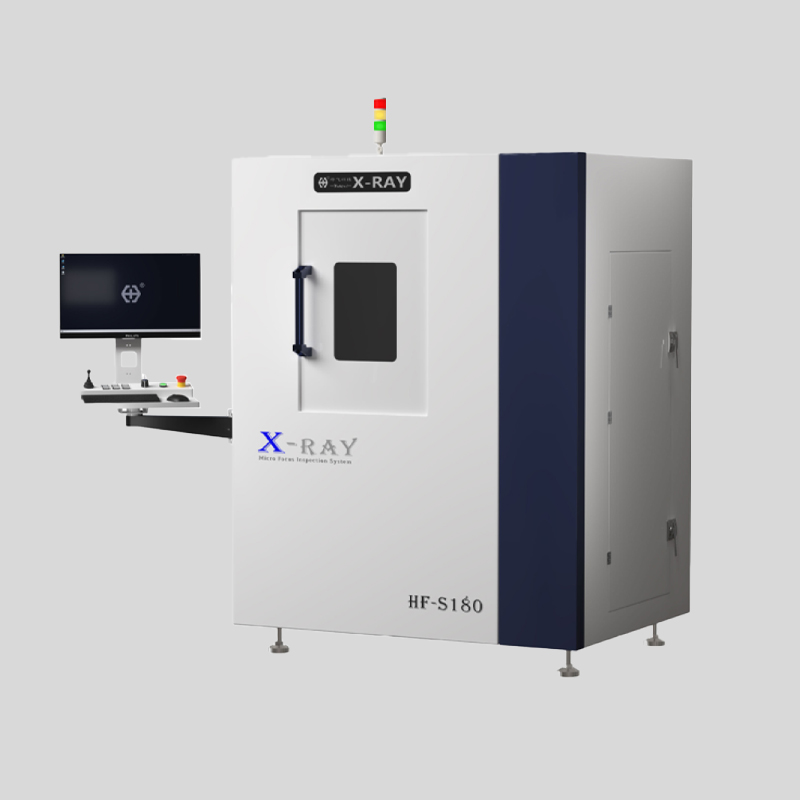
Metal Detection + X-Ray Inspection for Agricultural Products
Function Introduction:
Dual detection technology sensitively identifies ferrous (Fe) metal foreign matter with detection accuracy down to 0.3 mm, while X-ray inspection adds density-based detection of glass, stone, hard plastic, and other high-density contaminants that a metal detector cannot see. The combined system strengthens product safety at the final inspection stage, where a single missed contaminant becomes a recall, not a rework.
Usage Scenario:
Final inspection process of export-grade and infant-grade freeze-dried agricultural products. Meet the needs of customers with high food safety standards.
Performance data
- Ferrous metal detection sensitivity: Fe ≥ 3 mm, achievable on dry, low-conductivity freeze-dried fruit matrices where product effect is minimal. Stainless steel and non-ferrous sensitivity scales accordingly, with the exact limit verified by product challenge testing.
- X-ray density detection: detects glass, ceramic, stone, and hard plastic at approximately ∅0 mm and above, depending on product thickness and positioning; metal detection remains the tighter gate for Fe specifically.
- Throughput: conveyor speeds configurable across the range typical for bulk and packaged freeze-dried fruit inspection — from low-speed packaged-goods lines to 10–120 m/min on bulk-flow X-ray platforms, with metal detection synchronized to the same line speed.
- Reject mechanism: pneumatic ejection with millisecond response, targeting individual contaminated items without disrupting the main product stream. Reject confirmation and a record trail are logged for each event, supporting audit documentation.
- Material handling: X-ray inspection is compatible with bulk, trayed, and packaged freeze-dried fruit; metal detection is positioned either upstream for bulk product or downstream for packaged finished goods, depending on the line layout.
What dual inspection actually buys a freeze-dried fruit line
A metal detector alone satisfies the most common hazard — blade wear, screen wire, and equipment fragments from cutting and screening. But export-grade and infant-grade specifications increasingly require a documented answer to the non-metal hazards that field-to-package handling introduces: stones from the orchard, glass from jars or light fixtures, hard plastic from trays and conveyors. X-ray inspection covers that gap, and the metal detector continues to provide the tighter Fe sensitivity that X-ray alone may not match on every geometry. The combined system also changes the economics of quality holds: instead of a downstream customer discovering a contaminant after shipment, the line produces a reject record at the point of inspection, with the contaminated unit isolated and the remaining production released against a verified inspection event.
Case reference: a leading fruit enterprise in Shandong, China

Bolaike supplied this metal detection and X-ray inspection combination to a leading fruit processing enterprise headquartered in Shandong, China, for its export-oriented freeze-dried and processed fruit lines. The customer operates at national-level agricultural industrialization leadership scale, with concentrated juice and processed fruit capacity ranked among the largest globally, and products exported to North America, Europe, Japan, South Korea, and other markets. Its quality system already runs under HACCP, BRC, ISO9001, and HALAL, with export customers requiring documented foreign-matter control at the final inspection stage.
The project requirement was driven by the gap between metal detection and the non-metal hazards present in a fruit processing environment. The line handles fruit that moves through cutting, screening, and tray handling before freeze-drying; metal fragments from equipment wear are the primary hazard, but glass and hard plastic from field crates, trays, and plant infrastructure are realistic secondary hazards that a metal detector cannot address. The customer specified Fe 0.3 mm metal detection as the baseline for the ferrous hazard, and X-ray inspection as the density-based gate for glass, stone, and hard plastic. On the line, the metal detector is positioned to inspect the product stream at the point where mechanical handling risk is highest, while the X-ray unit provides the final density-based verification before packaging. Reject events are logged and tied to the batch record, giving the customer a traceable inspection trail that satisfies both its export customers' specifications and its own HACCP critical-control-point documentation.

Request a Quote




 yuanliang@jsblk.com
 No.29 Tongiiang North Road, Xinbei District, Changzhou City, Jiangsu, China
