
 English
 русский
 中文简体



-
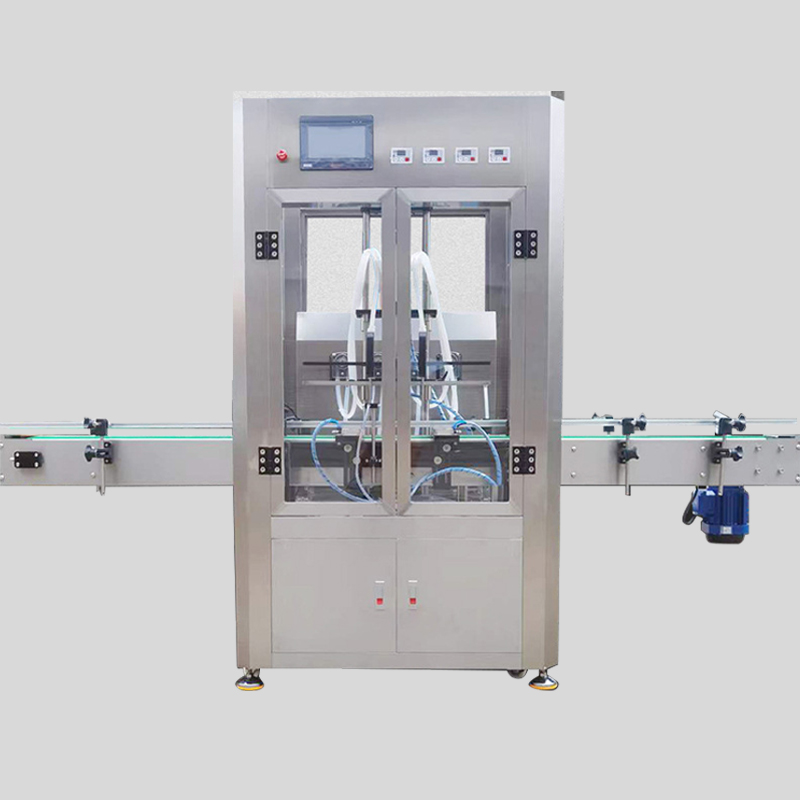
Tea Quantitative Filling Machine — Precision Dosing for Strip and Granule Tea Packaging
Deliver precise feeding at the front end of the packaging line to improve efficiency and consistency across every bag. The machine is built for small-sized tea powder, granules, and strip products, supporting high-accuracy filling and automatic sealing so each bag carries consistent content weight, fill profile, and seal integrity. In strip and granule tea packaging, small bag weights and high daily output mean even a fraction of a gram of variation becomes measurable yield loss or a specification breach by the end of a shift.
Why filling accuracy matters in tea
Tea is a high-value material with variable bulk density. A strip of freeze-dried tea powder and a strip of granular tea can look identical but differ in mass by several percent if the dosing system does not compensate for flow behavior, particle shape, and aeration. Overfilling wastes product that carries upstream freeze-drying or extraction cost; underfilling fails declared net-content checks and damages brand trust. On a line running tens of thousands of strips per shift, the difference between ±2 g and ±0.5 g is the difference between a saleable batch and a rework decision.
Performance data
- Filling accuracy: within ±5 g in production configurations; ±0.2 g achievable on selected powder and fine-granule formats under stable feed conditions.
- Weighing response: single weigh completed in approximately 0.1 seconds using infrared sensing with dual vibratory feeding.
- Speed range: adjustable from 8 to 50 bags per minute for small-format strip and granule configurations.
- Material compatibility: granules and powders, including strip tea, broken tea, granular tea, and fine tea powder, without changing the core dosing principle.
- Bag size compatibility: multiple packaging bag sizes, from narrow strip to small pouch, with parameter switching rather than mechanical changeover for routine transitions.
- Line integration: links with upstream feeding and downstream packaging, sealing, and coding systems to form a continuous strip or pouch packaging line.
- Dosing principle: measuring, not pressing
The quantitative core is not based on volumetric compression. It uses a flexible discharge valve with adaptive drop-error compensation: the machine weighs material as it falls, adjusts the feed gate in real time, and corrects for the lag between the weigh signal and material landing in the bag. This matters because tea is light, elastic, and prone to static and aeration. A fixed-time gate will drift as bulk density changes by lot or humidity; a closed-loop weigh-and-correct approach holds accuracy across the shift. The same architecture lets the operator switch between free-flowing granules and cohesive powders by adjusting the feed profile rather than replacing the dosing head.
Application scenarios
- Strip freeze-dried tea packaging: closed-loop weighing and gentle discharge prevent compaction and weight drift in hygroscopic, low-density powder.
- Granular functional tea filling lines: adaptive feed profile holds accuracy even when blended particles segregate during feeding.
- Small-package ready-to-drink tea powder: tight net-weight distribution protects declared content and cup-to-cup sensory consistency.
Case reference: a leading tea enterprise in Fujian, China
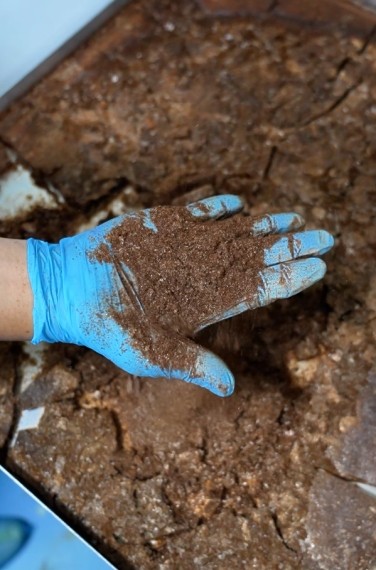
Bolaike supplied this filler to a leading Fujian tea enterprise for a strip and granule packaging line producing small-format products. The customer operates one of the province’s most recognized tea brands and has been moving from semi-automatic filling toward integrated automated lines as part of an intelligent manufacturing upgrade. The filler was specified to run in-line with existing bag-forming and sealing stations, with coding integrated at the discharge end. The requirement was not simply speed, but the ability to hold declared net weight across strip powder, granular blend, and broken-leaf product without stopping for mechanical changeover.
In production, dual-vibratory feeding and adaptive drop compensation kept filling error inside the customer’s tolerance band while running at a speed matched to the downstream sealer. Reject logic diverts underweight or malformed bags without interrupting the main stream. The measurable result is a strip line that can be scheduled against a net-content specification rather than run with a safety overfill margin.
What this means for a tea packaging project
A quantitative filler is small relative to the packaging hall but sets the line’s economic and quality ceiling. If the filler drifts, downstream stations inherit the variation: the sealer seals wrong headspace, the coder marks a batch that later fails weight check, and the case packer counts non-compliant bags. The figures that matter are accuracy at the line’s actual cycle rate, sustained across material changes and a full shift, with reject handling that does not stop the strip. The Fujian installation is a reference point for meeting that requirement in a leading tea enterprise’s strip and granule packaging environment.

Request a Quote




 yuanliang@jsblk.com
 No.29 Tongiiang North Road, Xinbei District, Changzhou City, Jiangsu, China
