English
  русский
  中文简体
中文简体 
Request a Quote

Industry News
 Home / Recent News / Industry News / How can freeze-drying plant design optimize batch scheduling to reduce energy consumption?
  2026.03.05
 Industry News
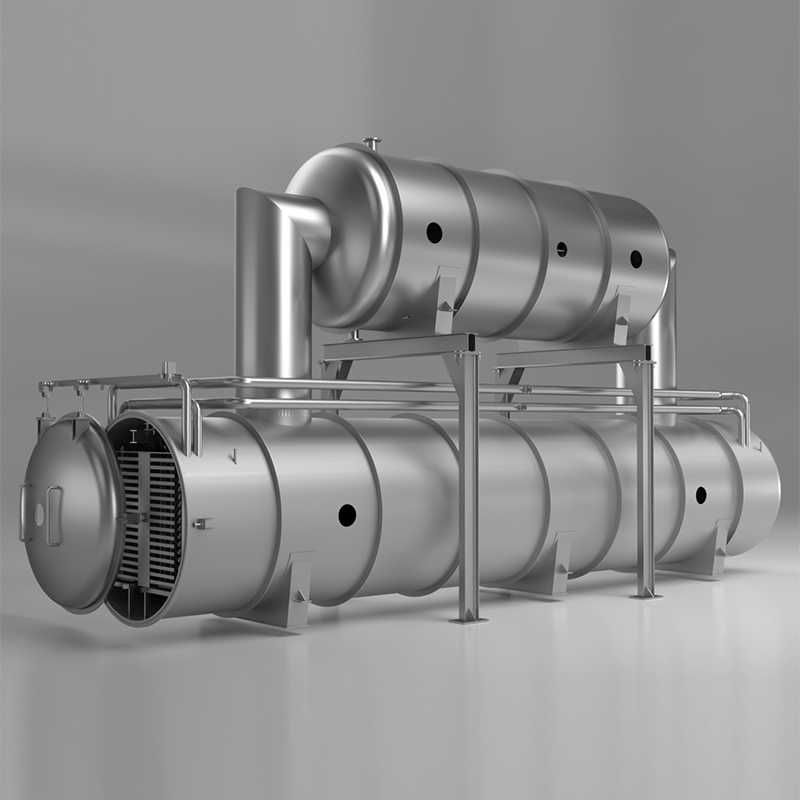
Freeze-drying, also known as lyophilization, is widely used in food processing, pharmaceuticals, and biotechnology due to its ability to preserve structure and extend shelf life. However, it is also recognized as an energy-intensive process. The main sources of energy consumption include refrigeration systems for freezing, vacuum pumps for pressure reduction, and heating systems for sublimation. Within a freeze drying plant design, these subsystems operate in coordinated cycles, and their interaction directly influences total power demand. Batch scheduling plays a critical role because energy peaks often occur during freezing and primary drying phases. If multiple chambers enter peak load phases simultaneously without coordination, the plant’s overall power requirement increases, resulting in higher operational costs and reduced efficiency of utility systems.
Understanding the load profile of each processing stage is the foundation for optimizing scheduling. Freezing requires rapid cooling to low temperatures, while primary drying involves sustained vacuum and controlled heat input. Secondary drying typically requires less energy but still contributes to overall consumption. A well-planned batch schedule aligns these stages to smooth energy demand across the facility.
Effective freeze drying plant design incorporates scheduling considerations from the early planning stage rather than treating them as an operational afterthought. The number of chambers, condenser capacity, refrigeration load, and vacuum system configuration should be determined based on expected production throughput and batch overlap strategy. When plant layout and utility sizing reflect realistic scheduling models, energy spikes can be minimized.
For example, designing shared refrigeration units that serve multiple chambers allows load balancing if batch start times are staggered. If all chambers initiate freezing simultaneously, refrigeration systems must operate at maximum capacity. By contrast, a staggered approach reduces simultaneous peak demand. Therefore, freeze drying plant design and batch scheduling must be developed as interconnected elements rather than independent decisions.
One practical method for reducing energy consumption involves staggering the initiation of batches. Instead of starting multiple freeze-drying cycles at the same time, operations can be scheduled with calculated offsets. This approach ensures that while one chamber enters primary drying, another may be transitioning to secondary drying, and another may still be in loading or unloading phases.
This scheduling pattern distributes refrigeration and vacuum loads more evenly throughout the day. As a result, the plant’s electrical infrastructure experiences fewer demand peaks. Lower peak demand can reduce demand charges imposed by utility providers. Additionally, equipment operates under more stable conditions, which may contribute to longer service life and reduced maintenance requirements.
Thermal load management is another important factor in optimizing energy usage. During freezing, compressors operate intensively to remove heat from the product. During primary drying, heaters and vacuum systems maintain sublimation conditions. If these stages overlap across multiple chambers without coordination, thermal systems must operate at high output simultaneously.
Sequencing batches so that high thermal load stages occur at different times enables shared utilities to function at moderate levels rather than maximum capacity. This strategy can be implemented through production planning software integrated into the customized freeze drying line setup. Such integration allows plant managers to visualize load curves and adjust schedules dynamically based on real-time demand.
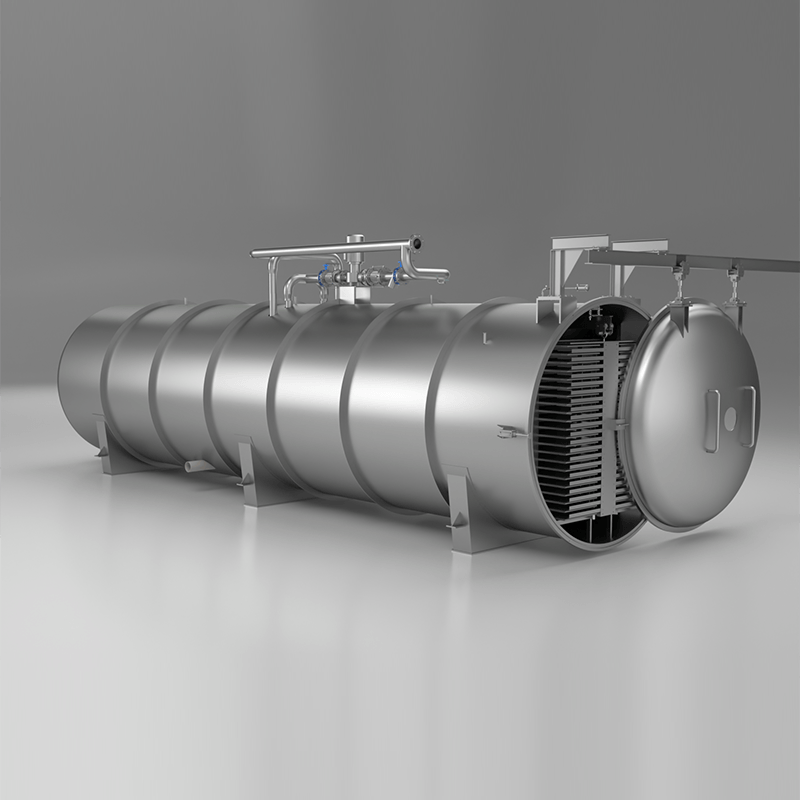
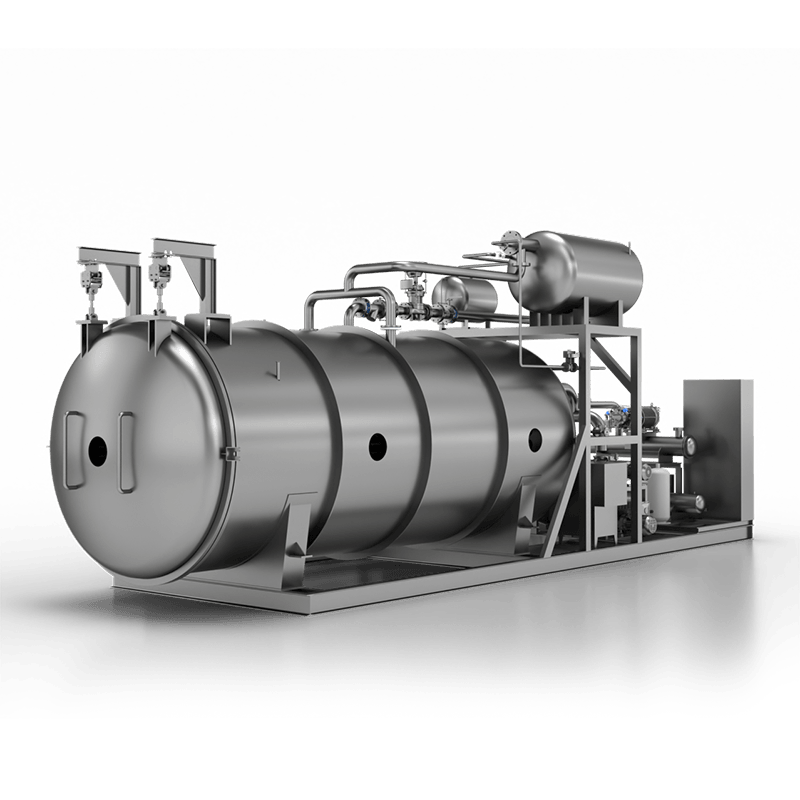
A customized freeze drying line setup provides flexibility in aligning equipment configuration with production requirements. Instead of adopting a uniform layout, manufacturers can design modular chambers, independent condensers, or shared vacuum manifolds depending on anticipated scheduling strategies. Customization makes it possible to create buffer zones between stages, such as pre-freezing rooms or intermediate storage areas, which decouple preparation from drying cycles.
This structural flexibility supports energy optimization because it allows better control over when batches enter energy-intensive stages. For example, pre-freezing products during off-peak electricity hours and initiating primary drying during periods of lower facility load can balance consumption. The customized freeze drying line setup becomes a structural enabler for strategic scheduling rather than merely a physical arrangement of equipment.
A customized freeze drying process accounts for differences in product formulation, moisture content, and drying time. Not all products require identical freezing or drying durations. By analyzing thermal profiles and sublimation rates, operators can categorize products based on energy demand characteristics. Scheduling batches with similar energy requirements at different times prevents cumulative peaks.
Adaptive scheduling tools can adjust cycle parameters such as shelf temperature ramp rates or chamber pressure transitions. When integrated with plant monitoring systems, this approach allows dynamic rescheduling if unexpected delays occur. Rather than allowing idle chambers to consume standby power unnecessarily, adaptive scheduling can reallocate batches to maintain steady utilization.
Centralized monitoring systems enhance the relationship between scheduling and energy management. Modern freeze drying plant design often includes supervisory control and data acquisition systems that track refrigeration load, vacuum pump activity, and heating output in real time. By analyzing this data, operators can refine batch timing to avoid overlapping peak loads.
Coordinating utility systems also means synchronizing compressor cycling and condenser regeneration schedules. If condenser defrost cycles coincide with freezing peaks, overall demand increases. Strategic scheduling ensures that auxiliary operations occur during lower-load intervals, reducing total consumption.
In some facilities, thermal energy storage systems can be incorporated into freeze drying plant design. Chilled water tanks or phase-change materials store cooling capacity generated during off-peak hours. Batch scheduling can then align high refrigeration demand with stored energy availability. This approach reduces dependence on grid electricity during peak pricing periods.
The following table illustrates how different scheduling strategies influence energy demand patterns within a plant.
| Scheduling Strategy | Peak Load Impact | Utility Stability | Energy Cost Implication |
| Simultaneous Batch Start | High peak demand | Fluctuating loads | Higher demand charges |
| Staggered Batch Start | Moderate peak demand | Balanced operation | Reduced peak-related costs |
| Off-Peak Freezing with Storage | Lower daytime peaks | Stable cooling supply | Improved tariff management |
Idle equipment still consumes energy through standby systems, control panels, and auxiliary components. Optimized scheduling minimizes idle time by aligning batch transitions efficiently. For example, planning cleaning and maintenance activities during naturally low production periods prevents unnecessary energy consumption during high-demand hours.
In a customized freeze drying process, cleaning-in-place cycles can be scheduled immediately after unloading, allowing the chamber to return to service without prolonged downtime. This coordinated approach reduces wasted cooling and vacuum stabilization energy that might occur if chambers remain unused yet partially active.
Advanced modeling tools simulate different scheduling scenarios before implementation. By inputting parameters such as chamber capacity, product load, and cycle duration, plant managers can forecast energy curves for various batch arrangements. This predictive analysis supports informed decisions during freeze drying plant design and future expansion planning.
Digital twins of the customized freeze drying line setup allow engineers to test the impact of adding new chambers or modifying production sequences. Through iterative modeling, energy-efficient schedules can be identified without disrupting ongoing operations.
Energy optimization through scheduling should also consider long-term scalability. As production volume increases, batch overlap may intensify. A flexible freeze drying plant design accommodates future chambers or upgraded refrigeration systems without compromising load balance. Designing with modular expansion in mind ensures that energy-efficient scheduling strategies remain effective as throughput grows.
Long-term flexibility also involves maintaining compatibility with different product categories. A customized freeze drying process may evolve over time, requiring adjustments in cycle duration and temperature profiles. Scheduling systems must remain adaptable to accommodate these changes without increasing energy intensity.


Sieno's whole series of freeze-drying equipment, covering the experimental research to the industrial scale, is energy efficient, stable, and reliable, with flexible customization as the core, to production, optimization of process, and multiple fields with green manufacturing solutions.
Sieno, based on the research of intelligent freeze-dried food, provides with custom process for the whole chain of freeze-dried technology support (including pretreatment, freeze-dried, and packaging), helping enterprises realize multiple improvements in efficiency, quality, and environmental protection.
Equiment & Soiution
Food Industry Pharmaceuticals Industry Agricultural Industry Pet Industry Beauty Care Industry Chemical Engineering & Laboratory Environmental Protection & Circular EconomyContact Info.
 +86 18068757376
  bolaike@jsblk.com
  Zhenglu Town, Tianning District, Changzhou City, Jiangsu Province, China
Follow Us
Copyright ©
Sieno Freeze-drying Technology Research Institute (Jiangsu) Co., Ltd
All Rights
Reserved
Custom One-Stop Freeze Drying Equipment Suppliers