English
  русский
  中文简体
中文简体 
Request a Quote

Industry News
 Home / Recent News / Industry News / How Does a Freeze Dryer Work? A Guide to Freeze Drying Equipment
  2026.08.05
 Industry News
A freeze dryer works by cycling a product through freezing, primary drying, and secondary drying. Each stage plays a distinct role, and skipping or rushing any of them leads to poor results like collapsed structure, "meltback," or residual moisture that shortens shelf life.
The product is cooled to between -40°F and -50°F (-40°C to -45°C) on a temperature-controlled shelf, usually over 6 to 10 hours. This step locks water into ice crystals, which is essential because sublimation only works on frozen water, not liquid. Slower freezing produces larger ice crystals and faster drying later; flash-freezing produces finer crystals but a slightly denser final texture.
A vacuum pump drops chamber pressure to a fraction of normal atmospheric pressure, typically around 0.1 to 2 millibars. At this pressure, ice converts straight to vapor without melting. Mild heat is applied to the shelves to supply the energy needed for sublimation, and this stage removes roughly 90% of the total moisture in the product. It is also the longest phase, often accounting for 60-70% of total cycle time.
Once visible ice is gone, the machine raises shelf temperature further, sometimes up to 110-140°F, to release water molecules bound to the product's internal structure. This drives final moisture content down to below 1-4%, depending on the material, which is what gives freeze-dried goods their long shelf life.
Sublimation only happens when pressure and temperature are both low enough to push water past its "triple point," the exact combination where solid, liquid, and gas can theoretically coexist. For water, that point sits at roughly 0.01°C and 6.11 millibars of pressure. Below that pressure threshold, adding heat to ice causes it to jump straight to vapor instead of melting into liquid first.
This is why a freeze dryer pulls the chamber far below atmospheric pressure (about 1,013 millibars at sea level) before applying any heat. Pump down too little, and the ice simply melts once heat is introduced, ruining the process. Pump down enough, and the water vapor pressure inside the product stays lower than the surrounding chamber, which keeps pulling moisture outward until the product is dry.
The condenser plays a supporting role in this physics: by staying colder than the product, it creates a pressure gradient that continuously draws vapor away from the chamber and traps it as ice on the coil, rather than letting it saturate the air and slow the process down.
Conventional dehydration uses heat above 100°F to evaporate water, which breaks down heat-sensitive vitamins, alters texture, and shrinks the product. Freeze drying avoids this because the product never rises above freezing during the critical moisture-removal phase.
| Factor | Freeze Drying | Heat Dehydration |
|---|---|---|
| Nutrient retention | 90-97% | 50-70% |
| Shrinkage | Minimal | Significant |
| Rehydration speed | Fast, near-original texture | Slow, tougher texture |
| Shelf life | 15-25 years (sealed) | 1-2 years |
| Weight loss | Up to 98% | 70-80% |
| Energy cost | Higher | Lower |
Because ice crystals sublimate in place, they leave behind a porous, sponge-like structure rather than a collapsed one. This porosity is why freeze-dried fruit, coffee, or camping meals rehydrate in under five minutes compared to the 20-30 minutes often needed for sun-dried or oven-dried equivalents.
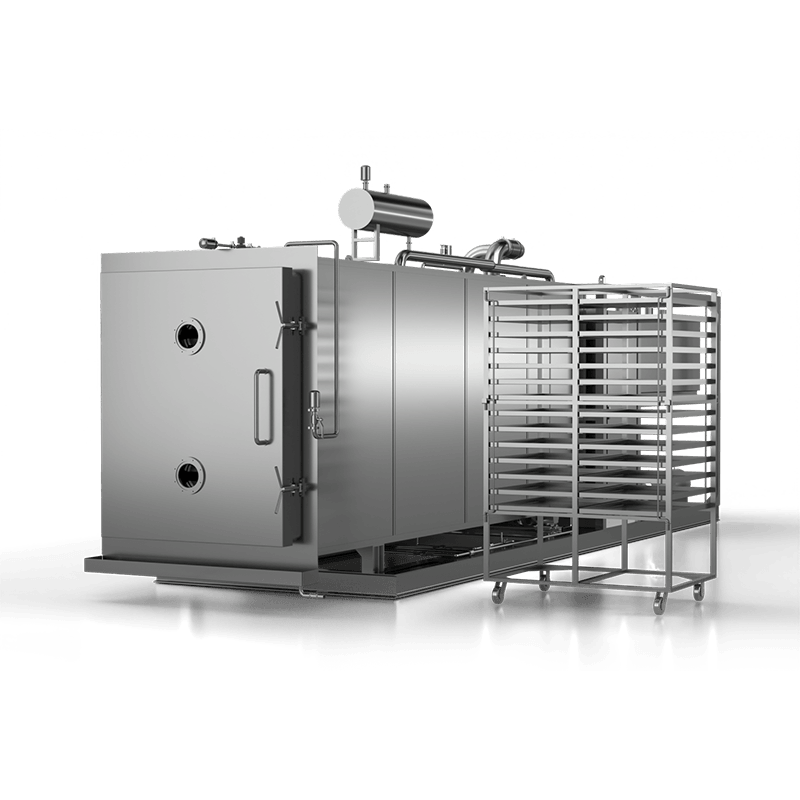
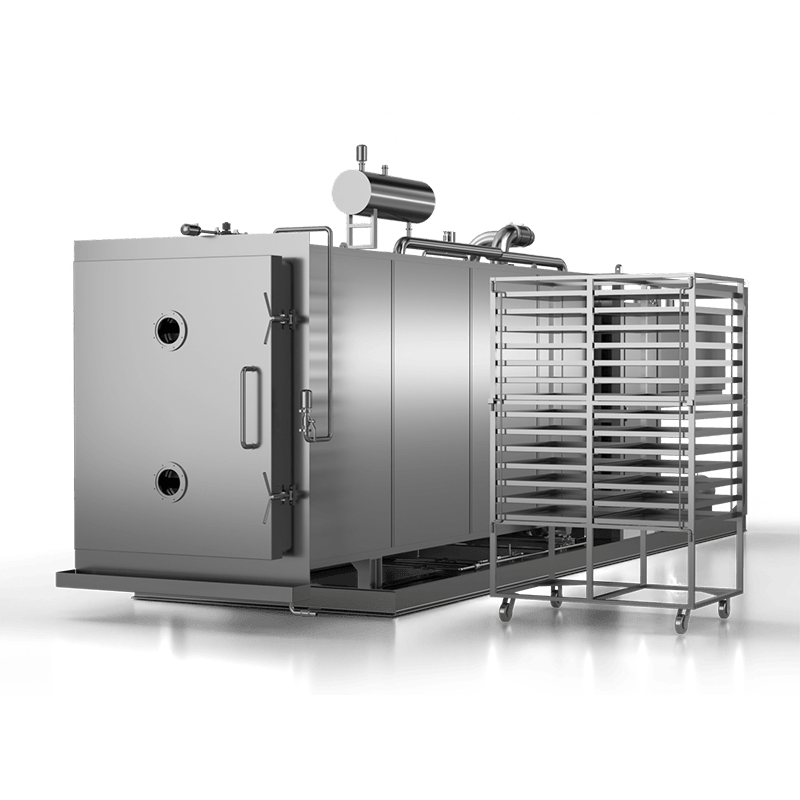
Every freeze dryer, whether a small countertop unit or an industrial system, relies on the same core hardware working together to create and maintain a vacuum while managing temperature.
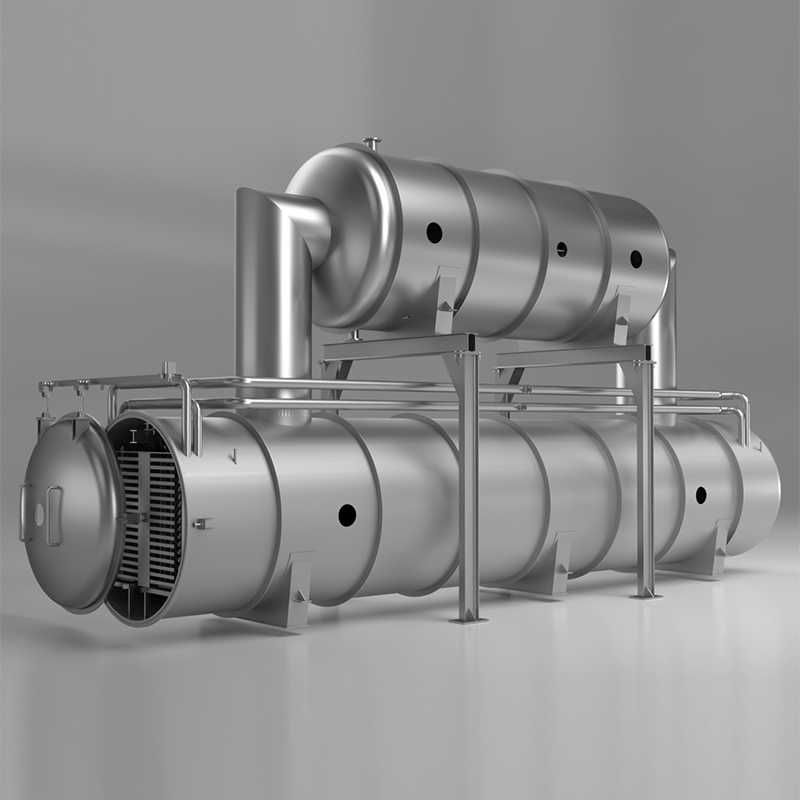
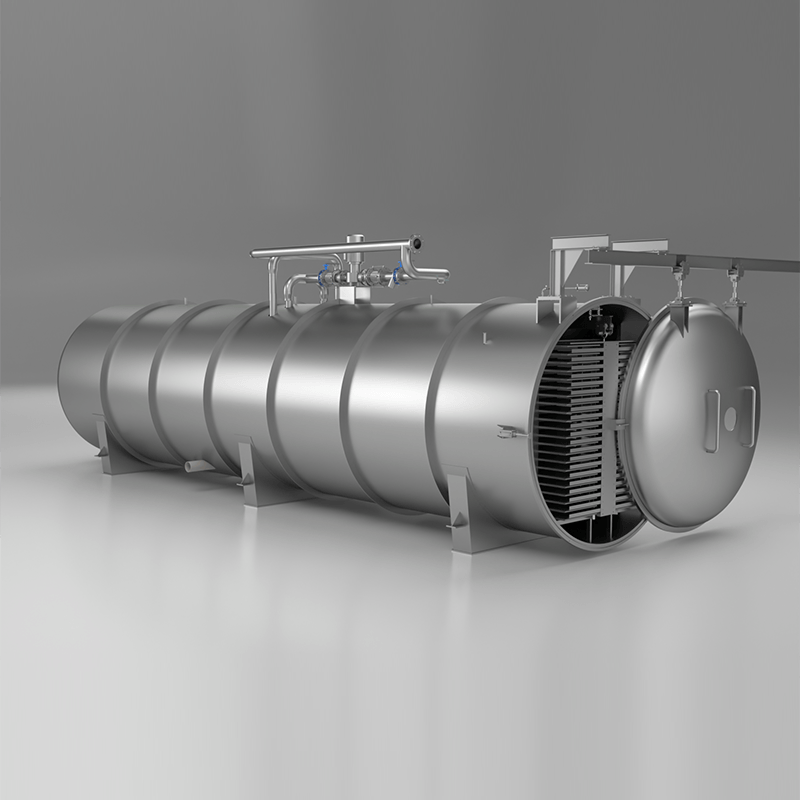
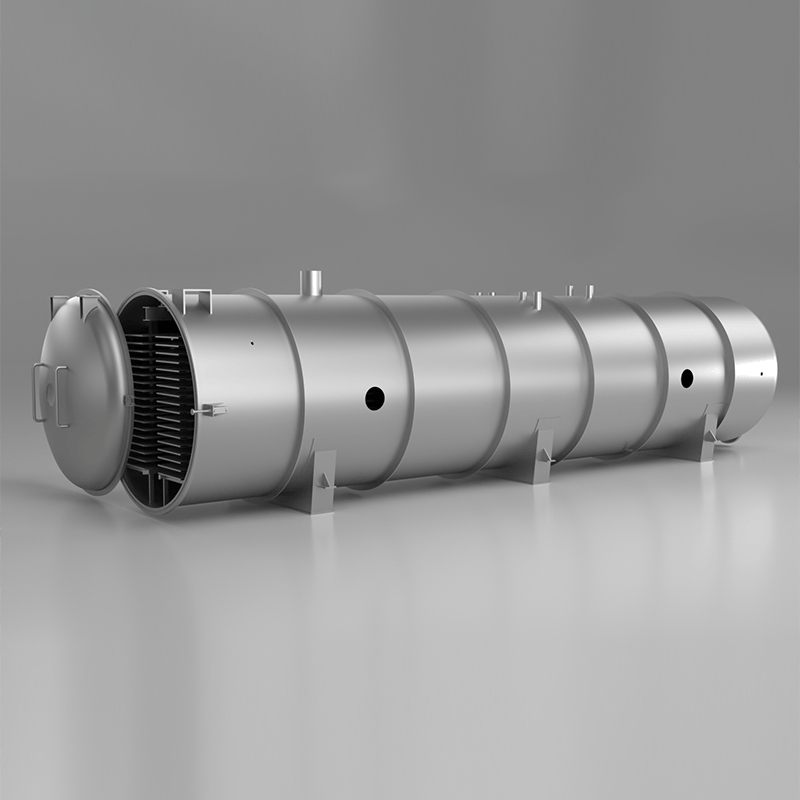
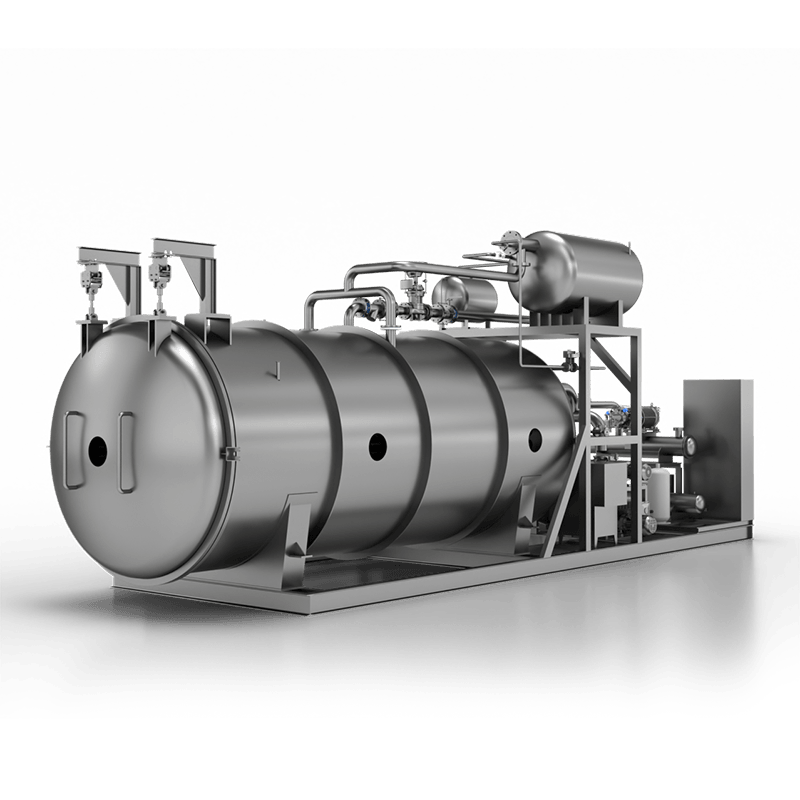
Freeze drying equipment scales from countertop appliances to production-line systems, and the right tier depends almost entirely on batch size and how often the machine will run.
| Tier | Batch Size | Typical Cycle | Price Range |
|---|---|---|---|
| Home / benchtop | 4-10 lbs | 20-40 hours | $2,500-$4,500 |
| Pilot / lab-scale | 10-50 lbs | 24-48 hours | $10,000-$60,000 |
| Industrial / production | 100-2,000+ lbs | 24-72 hours | $100,000-$1,000,000+ |
Home and benchtop units are self-contained, plug-and-run machines aimed at food storage and small business production. Pilot-scale systems, common in labs and pharmaceutical R&D, add finer control over shelf temperature ramp rates and often include stoppering shelves for sealing vials under vacuum. Industrial systems prioritize throughput, with automated loading, larger condenser coils to handle higher vapor loads, and cleaning-in-place systems for regulated environments like pharmaceutical manufacturing.
Cycle length depends on product thickness, water content, and how the trays are loaded. A dense, thick-cut item takes longer than a thin, porous one because sublimation has to travel further through the material to escape.
On average, a home unit consumes between 2 and 3 kWh per hour of operation, meaning a full 24-hour cycle can use roughly 50 to 70 kWh, comparable to running a central air conditioner for two full days. This is a meaningful factor when comparing freeze drying to lower-energy preservation methods like canning or standard dehydrating.
How a product is prepped before it goes into the chamber has a direct effect on both drying time and final quality. A few preparation habits consistently produce better, faster results.
Freeze dryers extend well beyond emergency food storage. Their ability to preserve structure and potency makes them valuable across several industries.
Freeze-dried food is highly hygroscopic, meaning it pulls moisture back out of the air almost immediately once removed from the chamber. Packaging it correctly matters as much as the drying cycle itself.
Products should be sealed within 30 to 60 minutes of the cycle ending. Mylar bags paired with oxygen absorbers are the standard for long-term storage: an absorber sized to roughly 300cc per quart-sized container is enough to remove residual oxygen and prevent oxidation. Glass jars with tight lids and a desiccant packet work for shorter-term storage of a few months. Once sealed and kept in a cool, dark location, properly freeze-dried food with moisture content below 4% can remain shelf-stable for 15 to 25 years, though nutritional quality and flavor gradually decline over that span even if the product remains safe to eat.
A simple way to check doneness before packaging is the crumble test: a fully dried piece should snap or crumble rather than bend or feel spongy. Anything that still feels pliable needs additional time in secondary drying before it goes into long-term storage.
Freeze dryers are mechanically simple compared to other kitchen or industrial appliances, but neglecting a few routine tasks can shorten pump life and increase cycle times significantly.
Oil-sealed rotary vane pumps need oil changes roughly every 3 to 6 cycles, or sooner if drying high-fat or high-sugar foods, since vapor from these products contaminates the oil faster and reduces vacuum strength. Cloudy or discolored oil is usually the clearest visual sign a change is overdue.
The chamber door gasket should be inspected for cracks, dryness, or debris before each run and wiped clean with a soft cloth. A compromised seal prevents the machine from reaching target vacuum pressure, which stalls sublimation and adds hours to the cycle.
Ice buildup on the condenser coil should be fully melted and drained between batches, which typically takes 1 to 2 hours on a home unit. Leftover ice reduces the coil's capacity to trap vapor in the next cycle, forcing the pump to work harder and shortening its lifespan.
Most freeze drying issues trace back to one of three causes: insufficient vacuum, excess moisture load, or heat applied too early in the cycle. Recognizing the symptom quickly saves an otherwise ruined batch.
| Symptom | Likely Cause | Fix |
|---|---|---|
| Product looks wet or shriveled ("meltback") | Heat applied before adequate vacuum was reached | Let the pump pull down fully before the heating stage begins |
| Cycle runs far longer than expected | Overloaded trays or slices cut too thick | Reduce load per tray and slice to under 1/2 inch |
| Pump won't reach target vacuum | Contaminated oil or a worn door gasket | Change the oil and inspect the gasket for cracks |
| Finished product still feels soft or leathery | Secondary drying stopped too early | Extend secondary drying and recheck with the crumble test |
| Freeze-dried food goes stale within weeks | Sealed too slowly or without an oxygen absorber | Package within an hour of cycle completion using an appropriately sized absorber |


Sieno's whole series of freeze-drying equipment, covering the experimental research to the industrial scale, is energy efficient, stable, and reliable, with flexible customization as the core, to production, optimization of process, and multiple fields with green manufacturing solutions.
Sieno, based on the research of intelligent freeze-dried food, provides with custom process for the whole chain of freeze-dried technology support (including pretreatment, freeze-dried, and packaging), helping enterprises realize multiple improvements in efficiency, quality, and environmental protection.
Equiment & Soiution
Food Industry Pharmaceuticals Industry Agricultural Industry Pet Industry Beauty Care Industry Chemical Engineering & Laboratory Environmental Protection & Circular EconomyContact Info.
 +86 18068757376
  bolaike@jsblk.com
  Zhenglu Town, Tianning District, Changzhou City, Jiangsu Province, China
Follow Us
Copyright ©
Sieno Freeze-drying Technology Research Institute (Jiangsu) Co., Ltd
All Rights
Reserved
Custom One-Stop Freeze Drying Equipment Suppliers