English
  русский
  中文简体
中文简体 
Request a Quote

Industry News
 Home / Recent News / Industry News / How Many Watts Does a Freeze Dryer Use? A Complete Power Consumption Guide
  2026.09.30
 Industry News
One of the first questions we hear from food producers, pet food manufacturers, and research labs is: how many watts does a freeze dryer use? It is an important question, because wattage affects circuit requirements, generator sizing, and daily operating cost. The honest answer is that no single wattage applies to every machine. A compact laboratory freeze dryer may draw roughly 500 to 800 watts during operation, while a mid-size production unit often runs between 1,000 and 2,000 watts, and large industrial lyophilizers can consume 5,000 watts or more. The exact number depends on the machine’s capacity, the refrigeration and heating systems, the vacuum pump, and where you are in the freeze-drying cycle.
In this guide, we break down the key variables, give typical wattage ranges for different equipment classes, and show you how to estimate energy use per cycle. Whether you are buying your first freeze dryer or scaling up an existing line, this will help you avoid surprises in both performance and electricity bills.
A freeze dryer is not like a heater or a motor that draws a steady load. Its power consumption changes throughout a batch, and five main factors shape the final number.
Larger units have more shelves, more space to cool, and bigger vacuum systems. A small benchtop lyophilizer with 0.1 square meters of shelf area will use far less power than a 20-square-meter industrial system. As a rule of thumb, wattage scales with both shelf area and condenser capacity.
The compressor that freezes shelves and traps water vapor is usually the biggest electrical load. Heating elements used to drive sublimation add a second significant demand. When both run at the same time, total wattage is higher than during a single-stage operation.
A rotary vane or dry scroll vacuum pump draws a continuous load while maintaining chamber pressure. Pump size and efficiency can add anywhere from 200 to 800 watts to the system.
More product means more water to freeze and more vapor to remove. A full load requires the refrigeration and vacuum systems to work harder and longer than a partial load.
During freezing, the compressor runs heavily. During primary drying, both vacuum pump and heating may be active. During secondary drying, load drops. Warm ambient temperatures also force the refrigeration system to work harder. These factors make real-world wattage fluctuate over a 24-hour cycle.
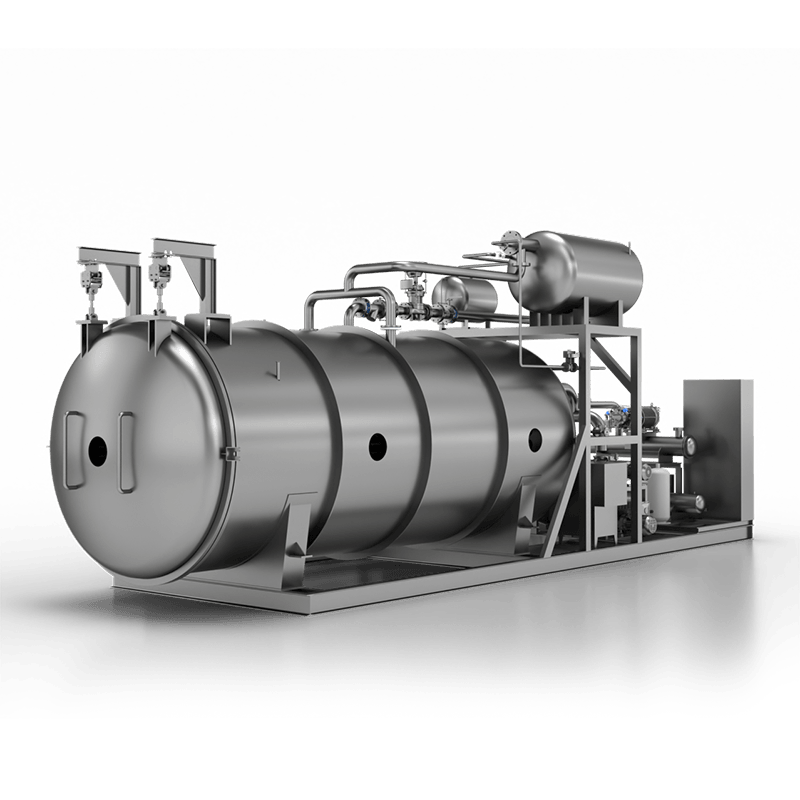
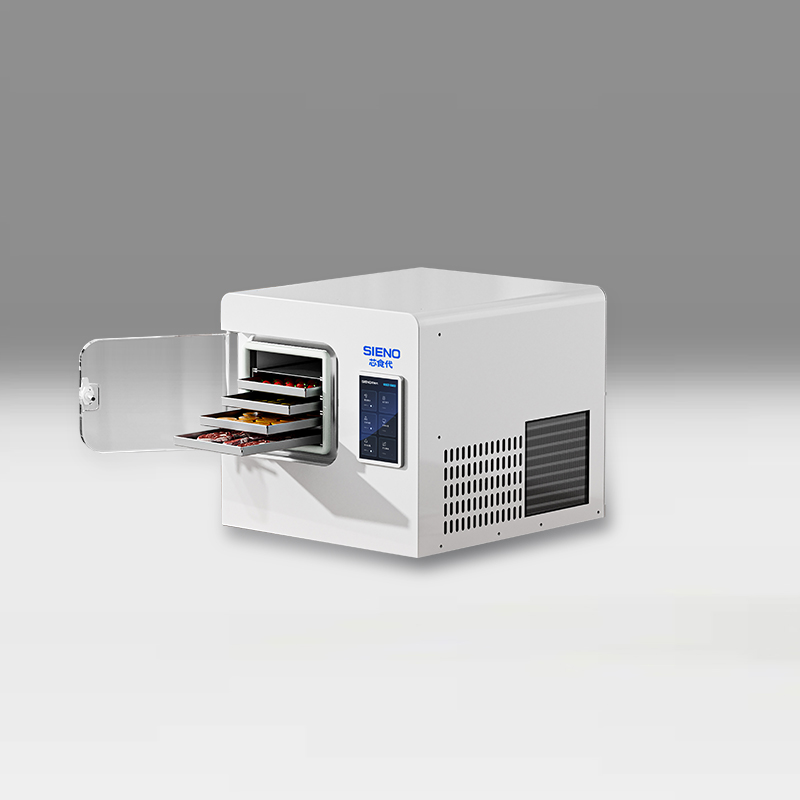 Compact Laboratory Freeze Dryer for Small-Batch ResearchThis 3-4 kg lab-scale unit with -45°C cold trap lets you measure real drying curves and power draw, helping you validate processes before scaling up.View Product →
For small-batch research and product development, it is often useful to start with a flexible laboratory unit. This lets you measure actual drying curves and power consumption before committing to a production-scale system.
To make the numbers easier to compare, we have put together a table based on common equipment categories. These figures are average operating wattages, not momentary startup peaks, and they will vary with manufacturer, configuration, and load density.
| Freeze dryer type | Typical shelf area | Typical operating wattage | Energy per 24-hour cycle |
|---|---|---|---|
| Laboratory / compact | 0.1 - 0.5 m2 | 400 - 900 W | 8 - 20 kWh |
| Home / small batch | 0.3 - 0.8 m2 | 900 - 1,500 W | 18 - 36 kWh |
| Pilot / medium industrial | 1 - 5 m2 | 1,500 - 5,000 W | 36 - 120 kWh |
| Large industrial | 10 - 40+ m2 | 5,000 - 20,000+ W | 120 - 480+ kWh |
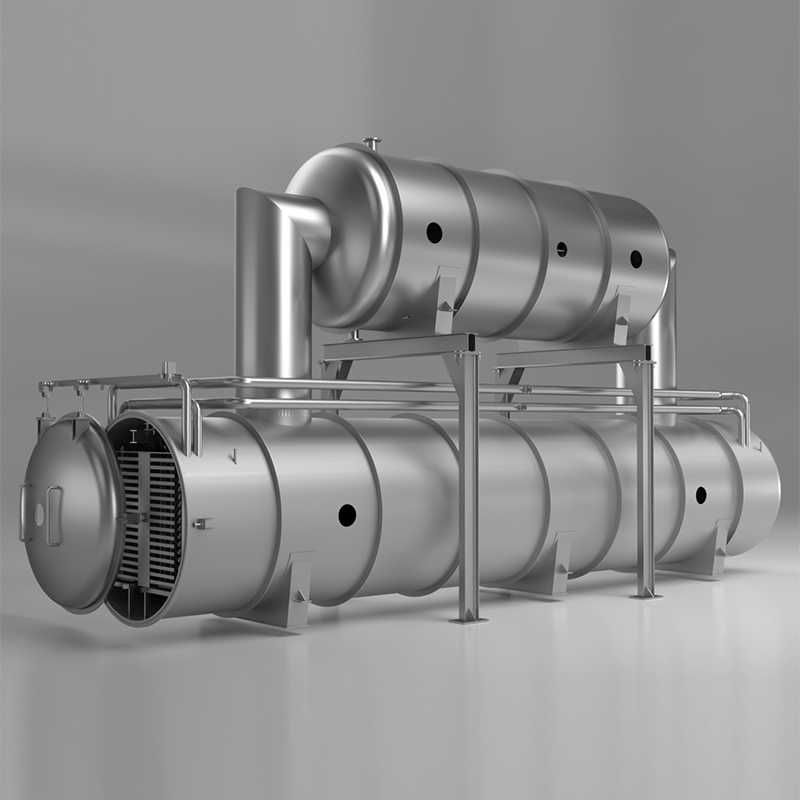
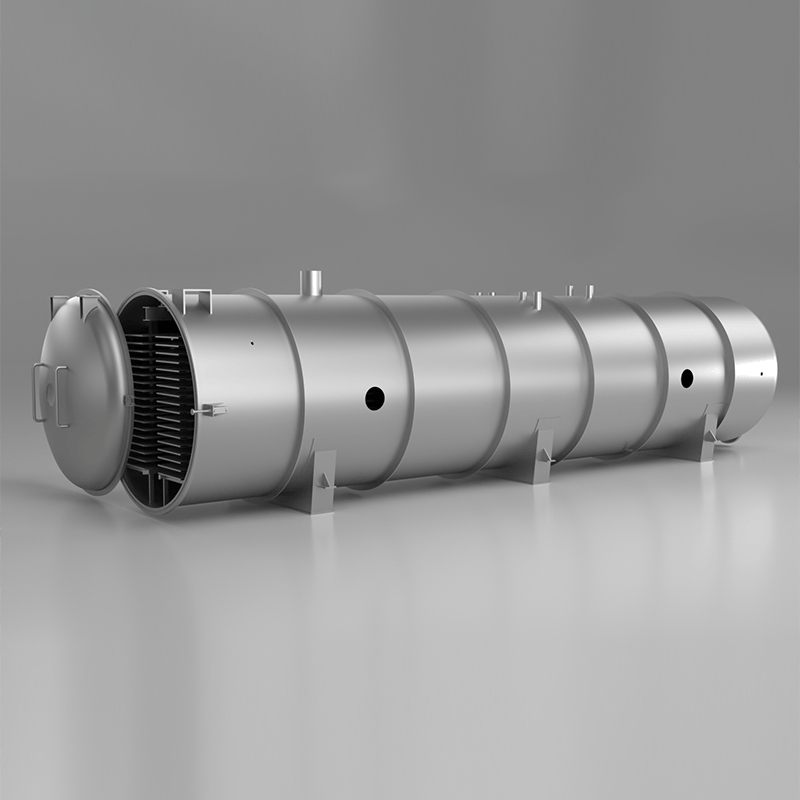
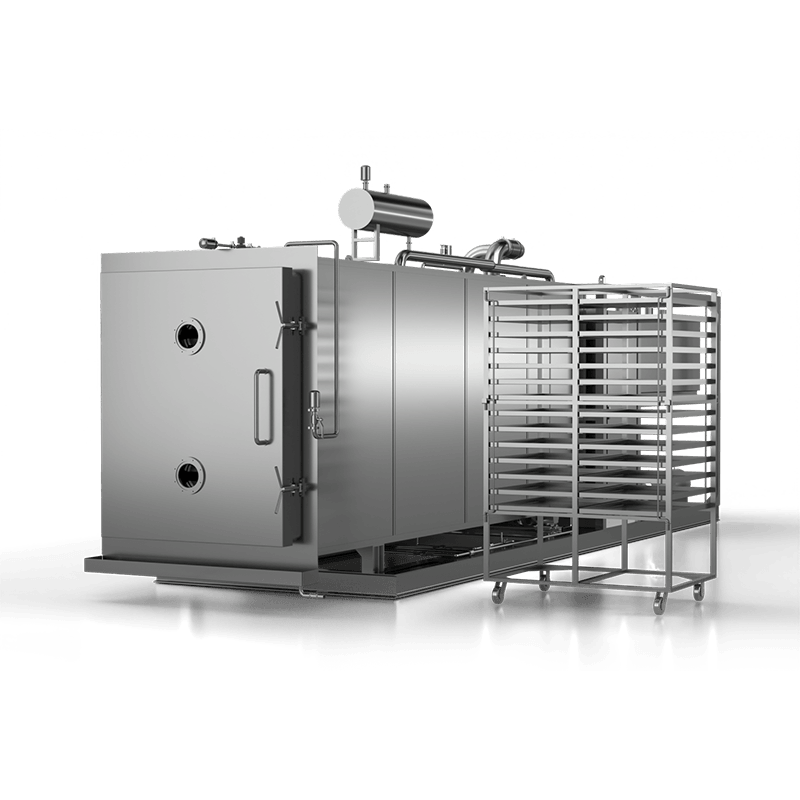
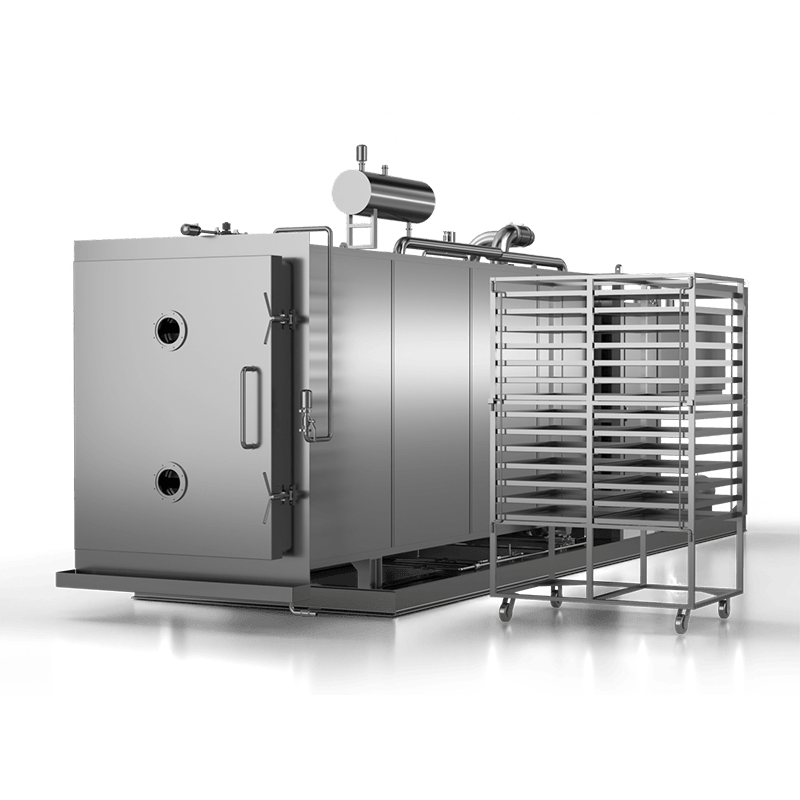
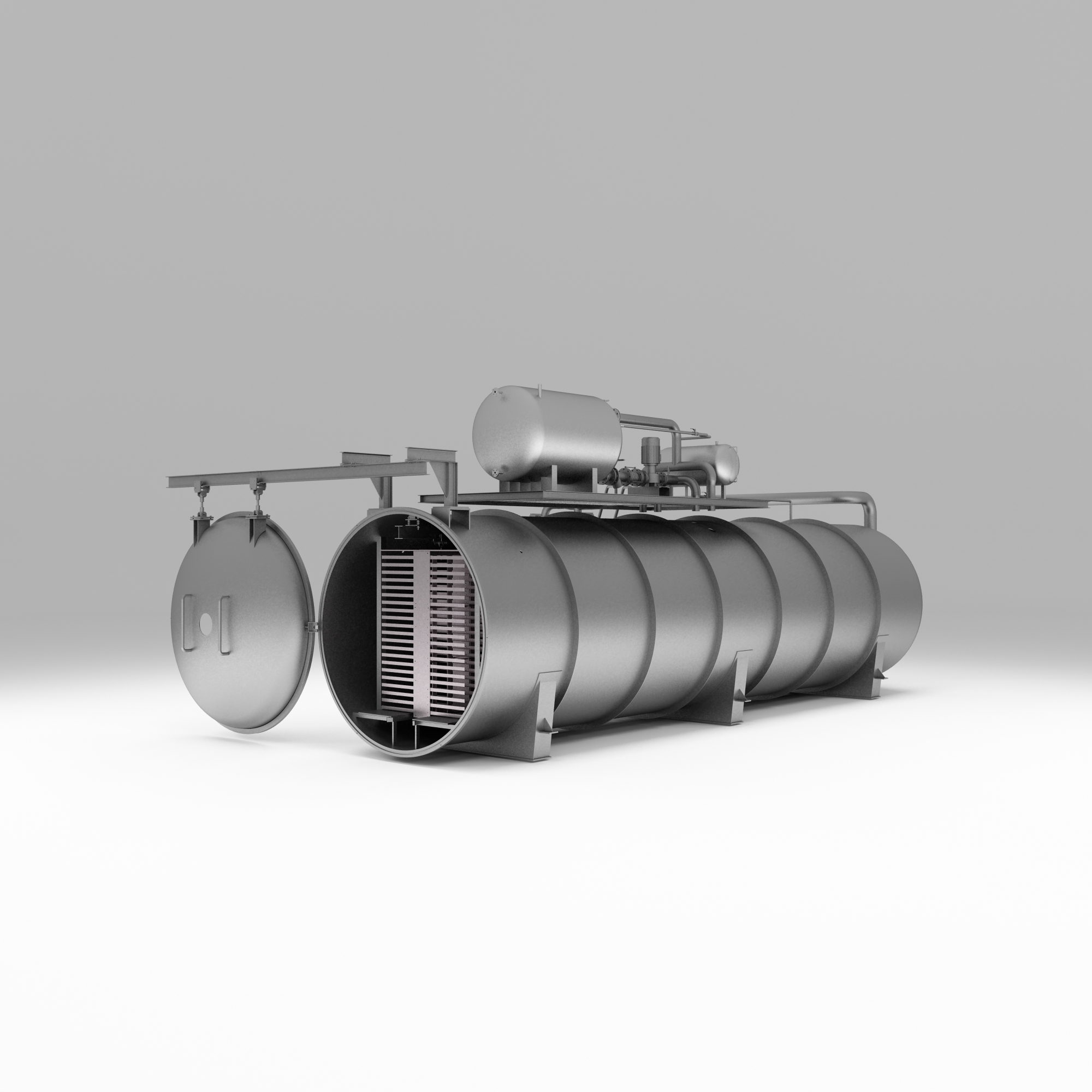 High-Capacity Industrial Freeze Dryer for Large-Scale ProductionDesigned for 1200 kg batches, this system combines heat recovery and smart controls to maximize output per kilowatt, ideal for food and beverage lyophilization.View Product →
If you are planning an industrial line, a large-scale unit with heat recovery and intelligent control can deliver more usable capacity per kilowatt of demand. Our 1,200 kg industrial freeze dryer, for example, is designed for high-efficiency lyophilization in food and beverage production.
Watts measure the rate of electrical power draw at a given moment. To convert wattage into energy consumption, multiply the average wattage by the operating time in hours and divide by 1,000. The result is kilowatt-hours (kWh). For example, a freeze dryer that averages 1,200 watts for a 24-hour cycle consumes 28.8 kWh. At an electricity price of $0.15 per kWh, the cycle costs about $4.32 in electricity.
Of course, real cycles are not perfectly flat. The compressor may run at near full load during freezing, then drop back as the chamber reaches temperature. Heating shelves will cycle on and off during sublimation. To get a reliable estimate, follow these steps:
If you already have a freeze dryer and want to know its real draw, a plug-in power meter is an inexpensive and practical tool. The meter records watts, cumulative kilowatt-hours, and runtime, so you can compare different load sizes and cycle settings. This is especially helpful when you are planning backup power or checking whether a new circuit is needed.
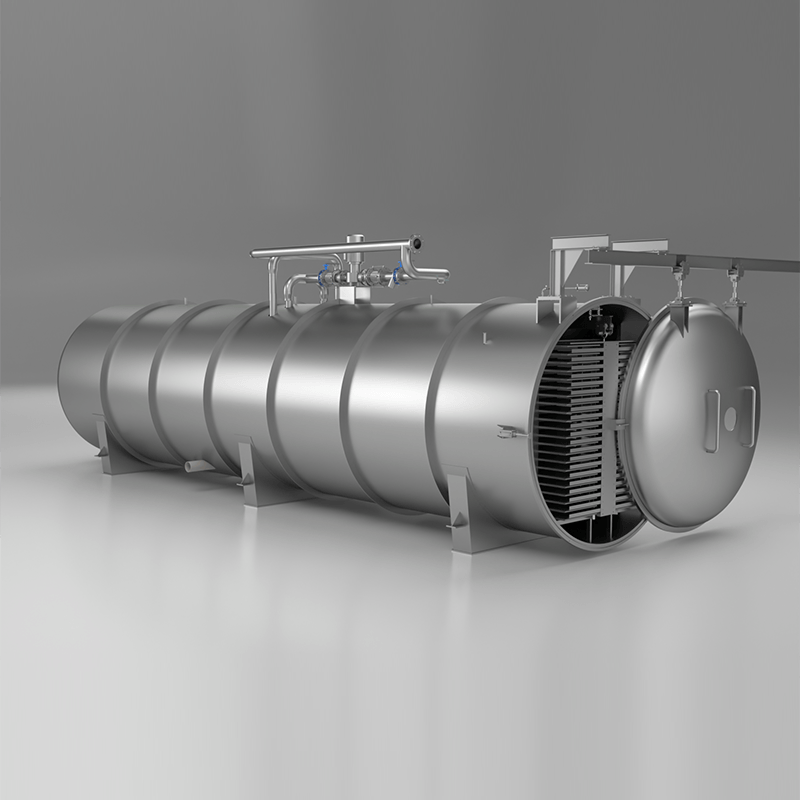
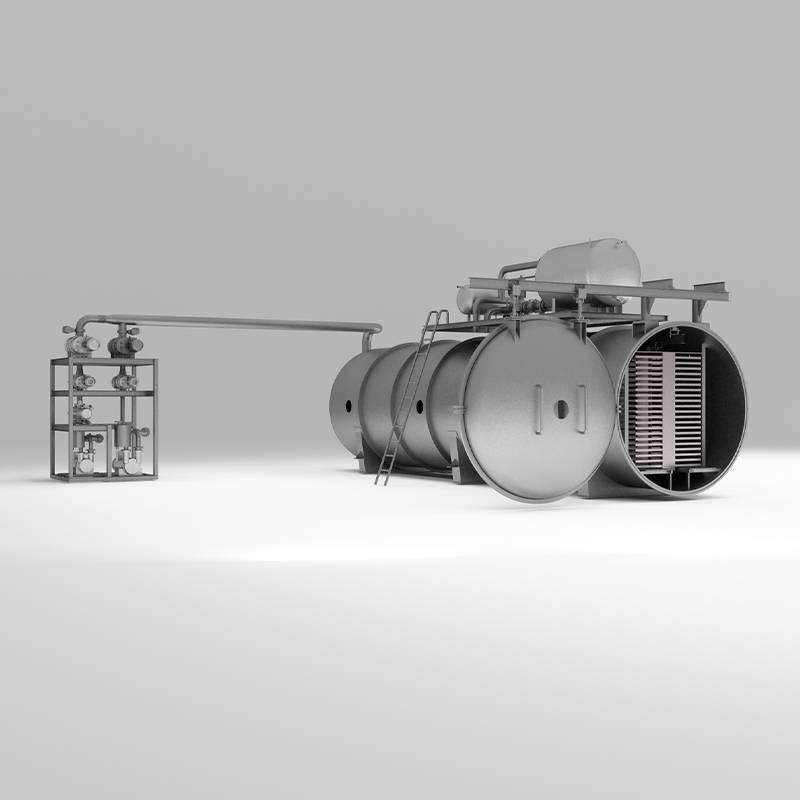 Vacuum Freeze Dryer for Fruit and Vegetable ProcessingTailored to high-moisture produce, this dryer preserves color, flavor, and nutrients while letting you match capacity to actual batch weights for efficient cycles.View Product →
For fruit and vegetable processors, the calculation is particularly important because high-moisture loads can extend the drying cycle. Choosing a freeze dryer sized to your actual batch weight will keep both cycle time and wattage within a practical range.
Lowering wattage without sacrificing quality starts with good process design. Pre-freezing product in a separate blast freezer or deep freezer reduces the compressor load during the early stage of the cycle. Even shelf loading, proper packaging, and avoiding overloading help the machine reach vacuum and control temperature more efficiently.
Operationally, keep the door gaskets clean, defrost the condenser regularly, and place the unit in a well-ventilated room. A cooler ambient environment reduces refrigeration work. On a facility level, heat recovery, efficient insulation, and intelligent control systems can cut energy use significantly. If you are building a new production line, exploring an energy-saving lyophilization plant design can be a worthwhile investment.
Wattage is not an isolated spec. It is tied to shelf area, condenser capacity, cycle time, and throughput. A machine that uses 1,500 watts but finishes a batch in 18 hours may consume less energy than a machine that uses 1,200 watts but needs 30 hours. The best solution depends on your product and production schedule.
At Sieno Freeze-drying Technology Research Institute, we help customers match equipment to real-world conditions. Our engineers can evaluate your raw material, moisture content, batch size, and available utilities to recommend a system with predictable power consumption and total cost of ownership. We also provide process development, pilot testing, and turnkey line integration. A good starting point is a commercial lyophilization consultation, where we can discuss your objectives and define the right equipment size.
There is no universal wattage answer for all freeze dryers, but by considering the machine type, product load, cycle stage, and operating environment, you can estimate power demand with confidence. Whether you are running a small lab or a large industrial plant, the goal is to choose a system that delivers the freeze-drying performance you need without wasting electricity. If you would like a more precise power assessment for a specific product and batch size, our engineers are ready to help.


Sieno's whole series of freeze-drying equipment, covering the experimental research to the industrial scale, is energy efficient, stable, and reliable, with flexible customization as the core, to production, optimization of process, and multiple fields with green manufacturing solutions.
Sieno, based on the research of intelligent freeze-dried food, provides with custom process for the whole chain of freeze-dried technology support (including pretreatment, freeze-dried, and packaging), helping enterprises realize multiple improvements in efficiency, quality, and environmental protection.
Equiment & Soiution
Food Industry Pharmaceuticals Industry Agricultural Industry Pet Industry Beauty Care Industry Chemical Engineering & Laboratory Environmental Protection & Circular EconomyContact Info.
 +86 18068757376
  bolaike@jsblk.com
  Zhenglu Town, Tianning District, Changzhou City, Jiangsu Province, China
Follow Us
Copyright ©
Sieno Freeze-drying Technology Research Institute (Jiangsu) Co., Ltd
All Rights
Reserved
Custom One-Stop Freeze Drying Equipment Suppliers