English
  русский
  中文简体
中文简体 
Request a Quote

Industry News
 Home / Recent News / Industry News / How Does a Freeze Dryer Work? A Complete Guide to the Science of Freeze Drying
  2026.09.23
 Industry News
Every time you stir a spoonful of premium instant coffee, feed your pet a crunchy piece of freeze-dried chicken, or sprinkle freeze-dried strawberries over breakfast, you are enjoying the results of one of the most elegant preservation processes ever engineered. Freeze drying, known in industry as lyophilization, removes water from a product while it is frozen, leaving its structure, nutrients, aroma, and flavor almost untouched. As a freeze-drying technology institute that builds vacuum freeze dryers and complete production lines for the food, agricultural, pharmaceutical, and advanced materials sectors, we are often asked a deceptively simple question: how does a freeze dryer actually work? Here is the answer, explained the way our engineers walk clients through it on the factory floor.
At the heart of every freeze dryer lies a physical phenomenon called sublimation. Under everyday conditions, water moves through three familiar states: ice melts into liquid, and liquid evaporates into vapor. When pressure falls below a certain threshold, however, the liquid state simply cannot exist. Below what scientists call the triple point of water—roughly 0.01°C and 6.1 millibars—ice transforms directly into vapor without ever melting.
This is exactly what a freeze dryer is designed to achieve. Because the product never passes through a liquid phase, dissolved solids do not migrate, delicate structures do not collapse, and volatile aroma compounds stay locked in place. Ice crystals inside the frozen material turn into vapor and are drawn away, leaving a dry, porous solid that keeps its original shape and internal microstructure. Add water later, and the product rehydrates rapidly, recovering a texture remarkably close to the fresh original. Conventional drying simply cannot match this fidelity.
In practice, every freeze drying cycle moves through three carefully controlled stages, each with its own temperature, pressure, and timing requirements.
The cycle begins in the drying chamber, where product trays rest on temperature-controlled shelves and are cooled rapidly, usually to between -30°C and -50°C. The target is to bring every part of the load below its eutectic point, the lowest temperature at which any liquid phase can persist. Freezing speed matters more than newcomers expect: rapid freezing forms small, fine ice crystals that minimize cellular damage, while slow freezing forms larger crystals that can rupture cell walls. For berries, probiotics, and injectable pharmaceuticals alike, this single decision shapes the final texture and survival rates.
With the product fully frozen, the chamber is sealed and the vacuum system pulls the pressure down to a small fraction of the triple point—often between 0.05 and 0.3 millibars in food applications. Gentle heat is then fed through the shelves, only enough to encourage sublimation without softening the structure. The ice inside the product converts directly into vapor, migrates out, and is captured by the ice condenser, a cold surface typically held at -50°C or lower that traps the vapor as frost. Primary drying is the longest stage of the cycle and removes roughly 95% of the water. The thermodynamics here are subtle; we take a closer look at thermodynamic sublimation profiles and condenser mechanics in a separate article for readers who want the full detail.
Once the bulk ice has disappeared, water molecules still cling to the product in bound form. Secondary drying raises the shelf temperature slightly while holding the vacuum as deep as possible, driving this residual moisture out through desorption. The goal is a carefully chosen end point—often 1% to 4% residual moisture for foods—low enough for long shelf life and microbial stability, yet not so dry that fragile products turn brittle.
| Stage | What Happens | Typical Conditions | Water Removed |
|---|---|---|---|
| Freezing | All free water solidifies below the eutectic point | -30°C to -50°C, normal pressure | 0% |
| Primary drying | Ice sublimes directly into vapor under deep vacuum | Shelves -30°C to +20°C, chamber 0.05–0.3 mbar | About 95% |
| Secondary drying | Bound water desorbs from the solid matrix | Shelves +20°C to +50°C, minimal pressure | Remaining 4–5% |
A freeze dryer looks deceptively simple from the outside, but it is a tightly coordinated system of core subsystems:
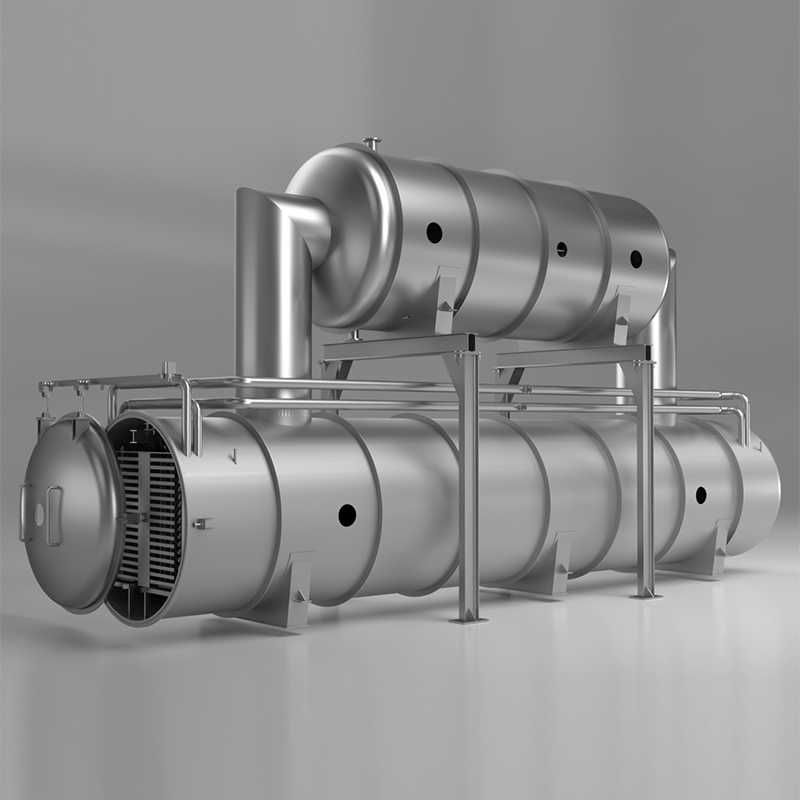
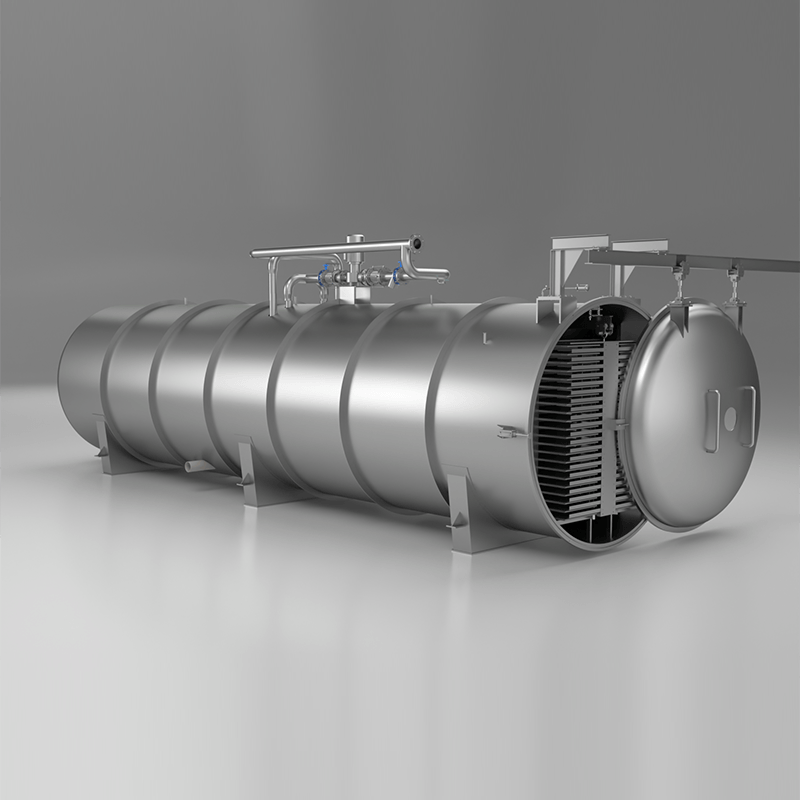
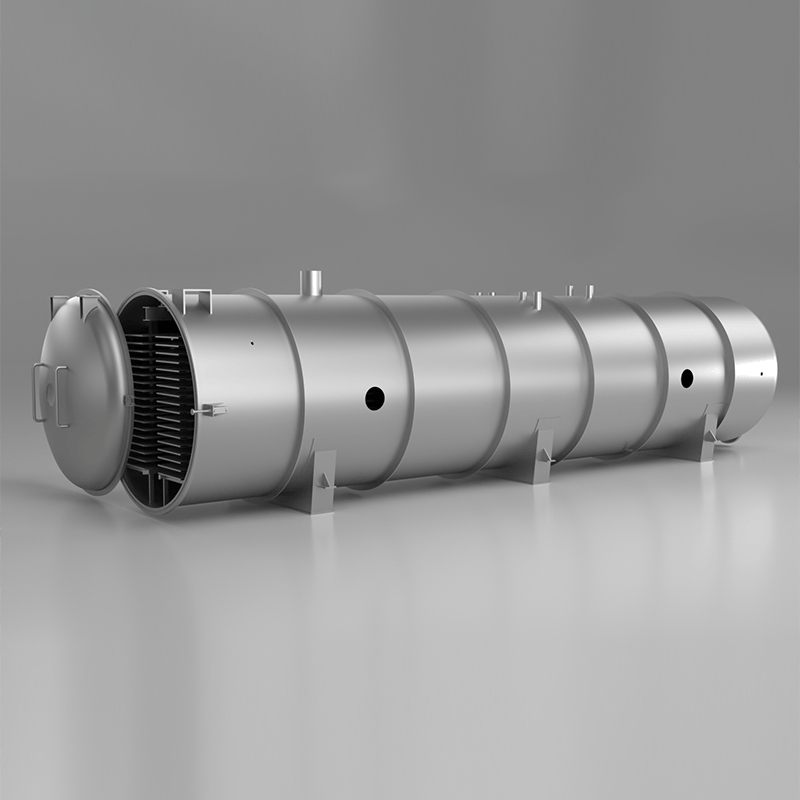
The engineering quality of these components shows up most clearly in long, dense cycles. A condenser with generous surface area and efficient refrigeration holds the pressure differential stable hour after hour, while weak thermal design appears as slow sublimation and inconsistent batches. Our vacuum freeze dryers for fruits and vegetables, for example, pair a stainless steel drying chamber with a large-format ice condenser so that high-moisture produce dries evenly from the first tray to the last.
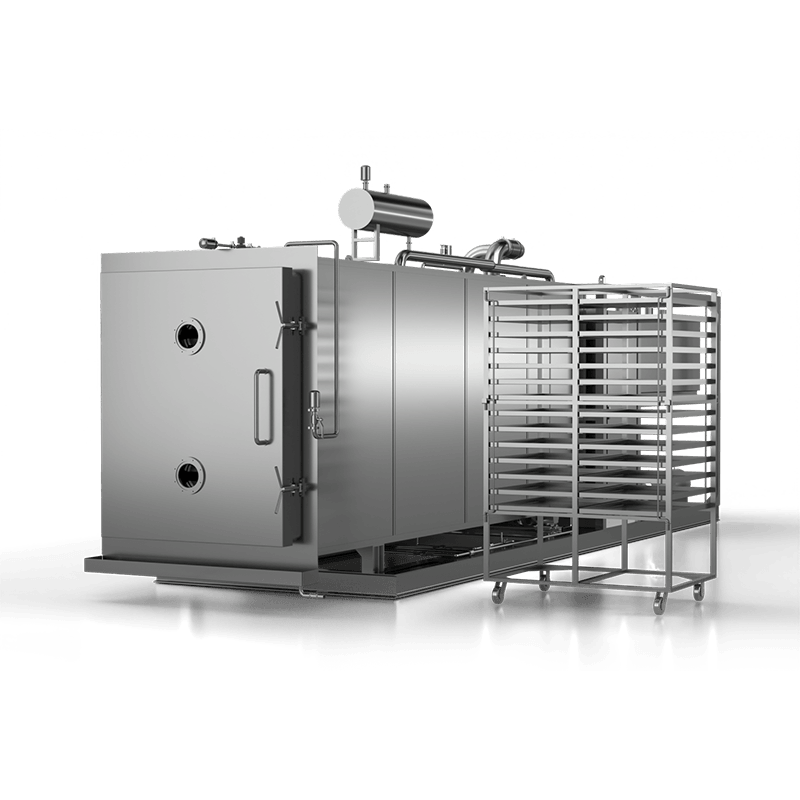
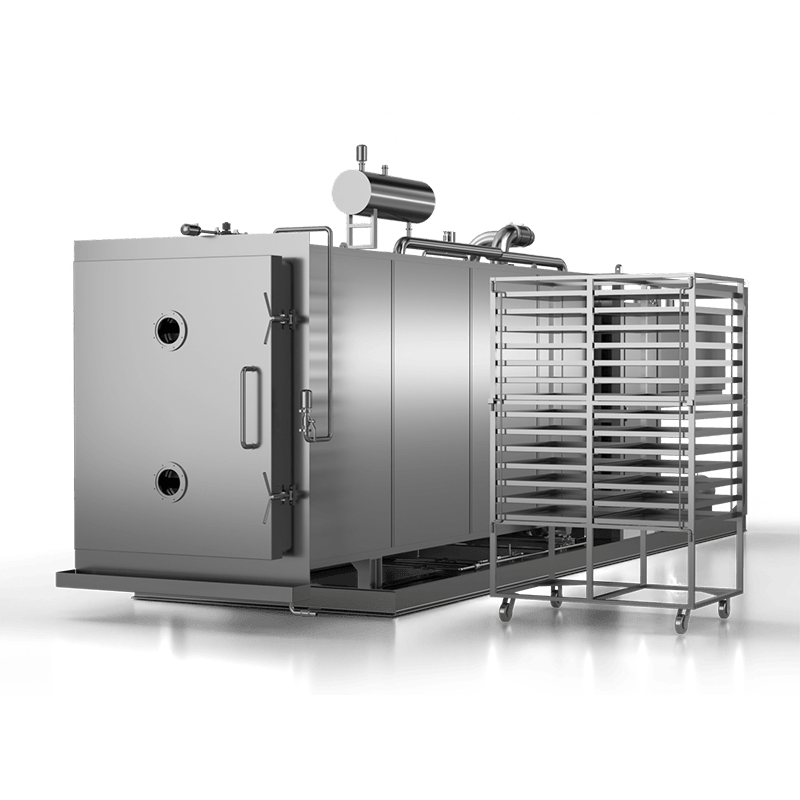
 Vacuum Freeze Dryer for Fruits and VegetablesThis industrial freeze dryer pairs a stainless steel drying chamber with a large-format ice condenser, keeping pressure stable through long sublimation cycles so high-moisture fruits and vegetables dry evenly from the first tray to the last.View Product →
Most industrial drying methods—hot-air, spray, and drum drying among them—remove water through evaporation, which forces the product through a liquid phase at elevated temperature. That is where shrinkage, case hardening, nutrient degradation, and aroma loss originate. Freeze drying sidesteps these problems by design, as the comparison below shows.
| Drying Method | Temperature Exposure | Shape & Structure | Aroma & Nutrient Retention | Rehydration |
|---|---|---|---|---|
| Freeze drying | Low (product stays frozen) | Excellent, original form kept | Excellent | Excellent |
| Hot-air drying | High, 50–80°C | Poor, shrinkage and case hardening | Moderate to poor | Moderate |
| Spray drying | High, brief contact | Powder only | Moderate | Not applicable |
| Drum drying | Very high, contact heating | Flakes or powder | Poor | Poor |
Freeze drying does demand more energy and time per kilogram than hot-air systems, which is why cycle optimization matters so much commercially. Shaving even a few hours off a cycle changes plant economics meaningfully, and that is where intelligent controls, well-matched condensers, and experienced process engineering earn their keep.
The same principle serves remarkably diverse products. Food processors rely on it for fruit and vegetable snacks, instant coffee, ready-to-eat meals, dairy cultures, and soup cubes. Pet food brands use it to retain the raw nutrition of meat and organ ingredients. Pharmaceutical manufacturers depend on lyophilization to stabilize vaccines, biologics, and probiotics that would never survive heat drying. Even ceramics, nanomaterials, and battery producers use freeze dryers to obtain ultra-fine, uniform powders.
What changes between a laboratory experiment and a production line is not the science but the engineering: shelf area, condenser capacity, loading automation, and cycle repeatability. A benchtop unit such as our XSDFD4 lets researchers refine recipes a few kilograms at a time, while industrial machines like the BLKFD10 scale the identical physics into commercial daily output. Between those poles sit pilot-scale machines that bridge recipe development and full production.
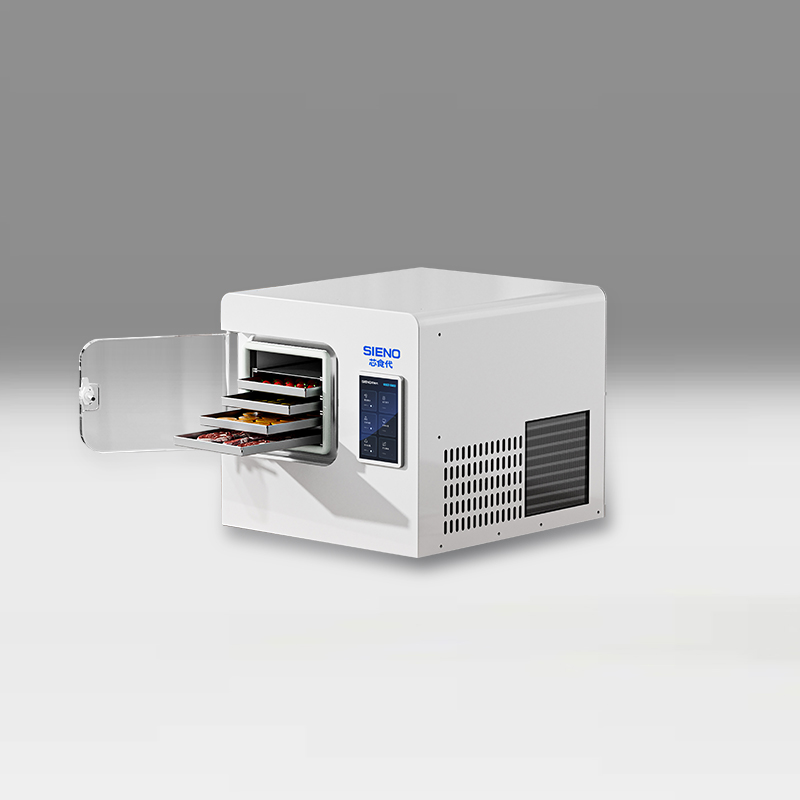 XSD-FD-4 Benchtop Freeze DryerA compact benchtop freeze dryer that processes 3-4 kg per batch on 0.27 m² of shelf area with a -45°C cold trap, letting researchers refine freeze-drying recipes a few kilograms at a time before scaling up.View Product →
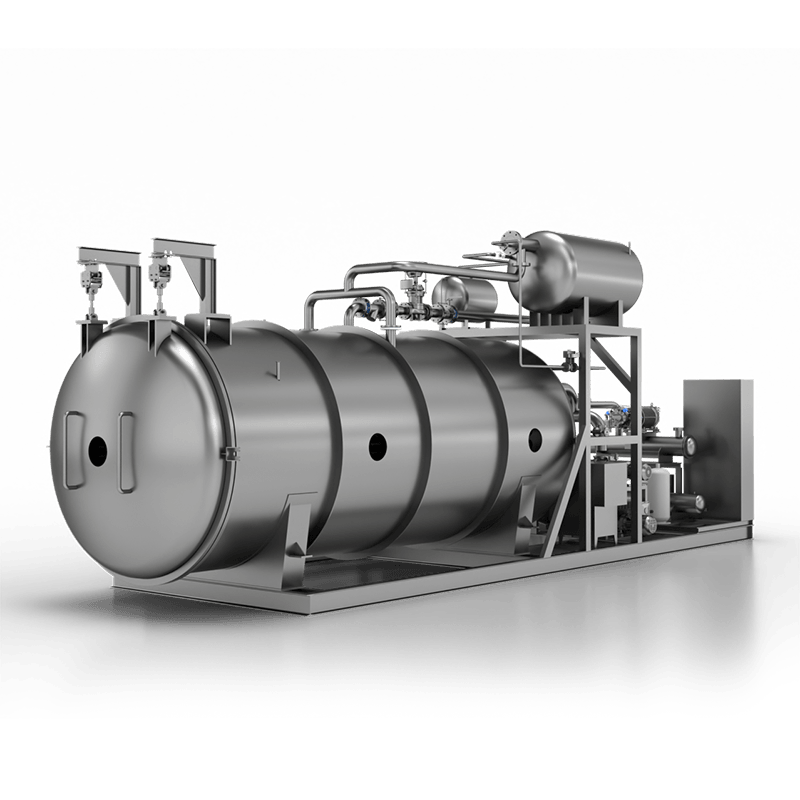
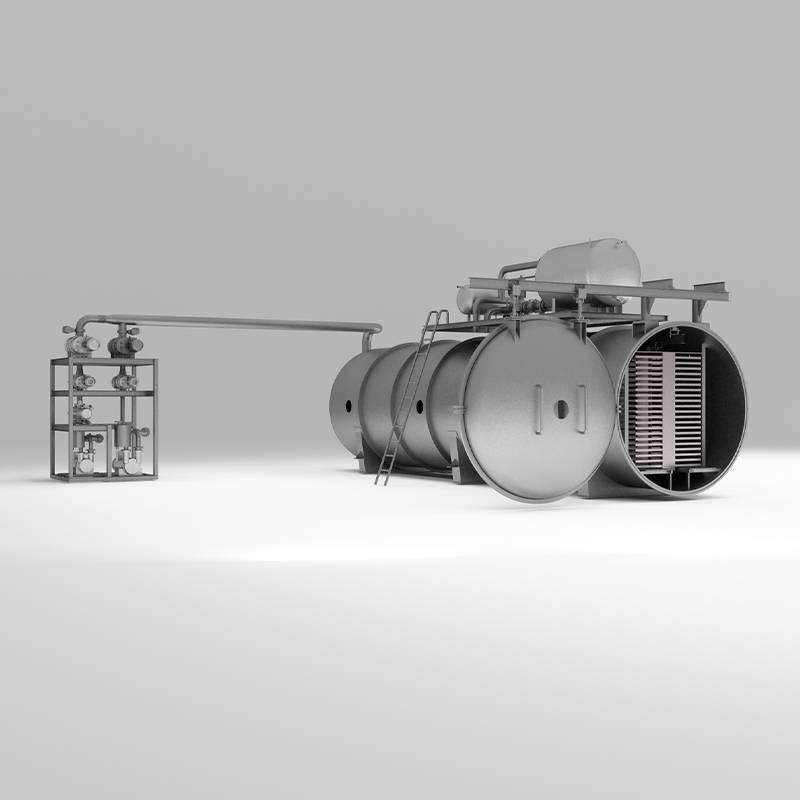
 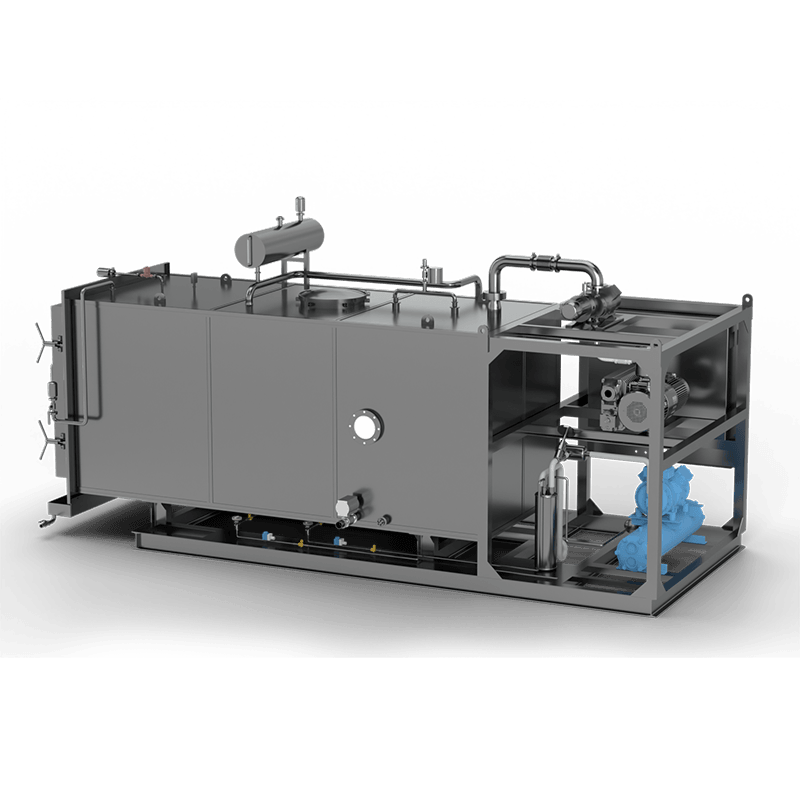 BLK-FD-10 Industrial Freeze DryerAn industrial-scale freeze dryer that applies the same sublimation physics as benchtop units to commercial daily output, bridging proven recipes and full production through larger shelf area, condenser capacity, and cycle repeatability.View Product →
So, how does a freeze dryer work? It freezes the product solid, drops the pressure below the triple point of water, applies precisely measured heat so that ice sublimes straight into vapor, captures that vapor on a cold condenser, and finishes by desorbing the last traces of bound moisture. The result is a lightweight, shelf-stable product that keeps its nutrition, aroma, and structure for years.
The physics is universal, but every product needs its own recipe. Freezing rate, shelf temperature ramp, vacuum setpoints, and end-point moisture must all be tuned to the material at hand. That tuning is exactly what our freeze-drying process development services deliver, from first laboratory trials to validated industrial cycles. If you are evaluating the technology for your own products, our engineering team is always glad to run the numbers with you.


Sieno's whole series of freeze-drying equipment, covering the experimental research to the industrial scale, is energy efficient, stable, and reliable, with flexible customization as the core, to production, optimization of process, and multiple fields with green manufacturing solutions.
Sieno, based on the research of intelligent freeze-dried food, provides with custom process for the whole chain of freeze-dried technology support (including pretreatment, freeze-dried, and packaging), helping enterprises realize multiple improvements in efficiency, quality, and environmental protection.
Equiment & Soiution
Food Industry Pharmaceuticals Industry Agricultural Industry Pet Industry Beauty Care Industry Chemical Engineering & Laboratory Environmental Protection & Circular EconomyContact Info.
 +86 18068757376
  bolaike@jsblk.com
  Zhenglu Town, Tianning District, Changzhou City, Jiangsu Province, China
Follow Us
Copyright ©
Sieno Freeze-drying Technology Research Institute (Jiangsu) Co., Ltd
All Rights
Reserved
Custom One-Stop Freeze Drying Equipment Suppliers