English
  русский
  中文简体
中文简体 
Request a Quote

Industry News
 Home / Recent News / Industry News / Thermodynamic Sublimation Profiles, Radiant Shelf Kinetics, and Vacuum Condenser Mechanics of Industrial Instant Meals Freeze-Drying Equipment
  2026.05.28
 Industry News
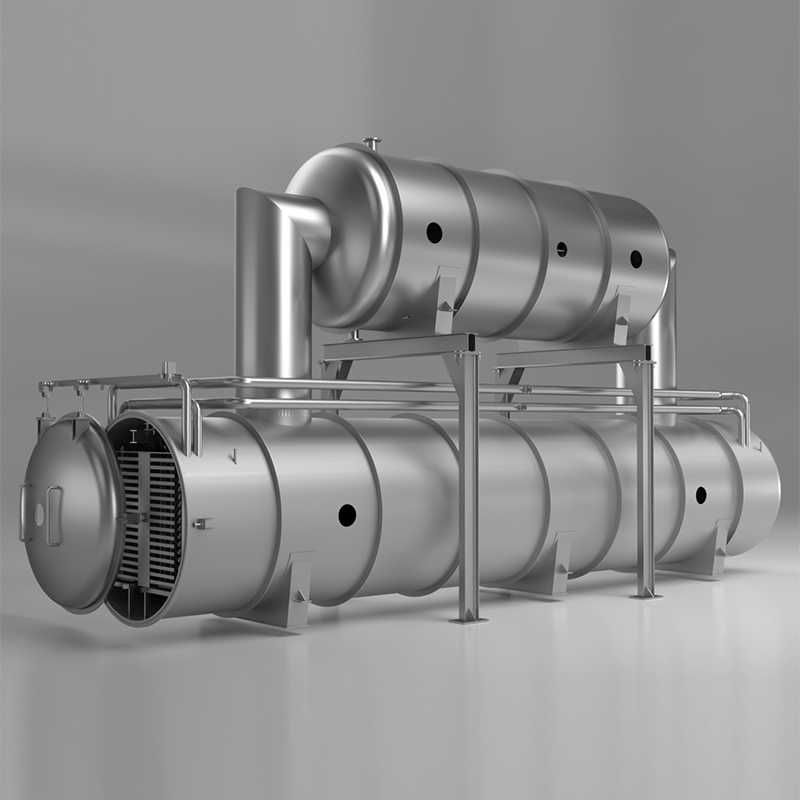
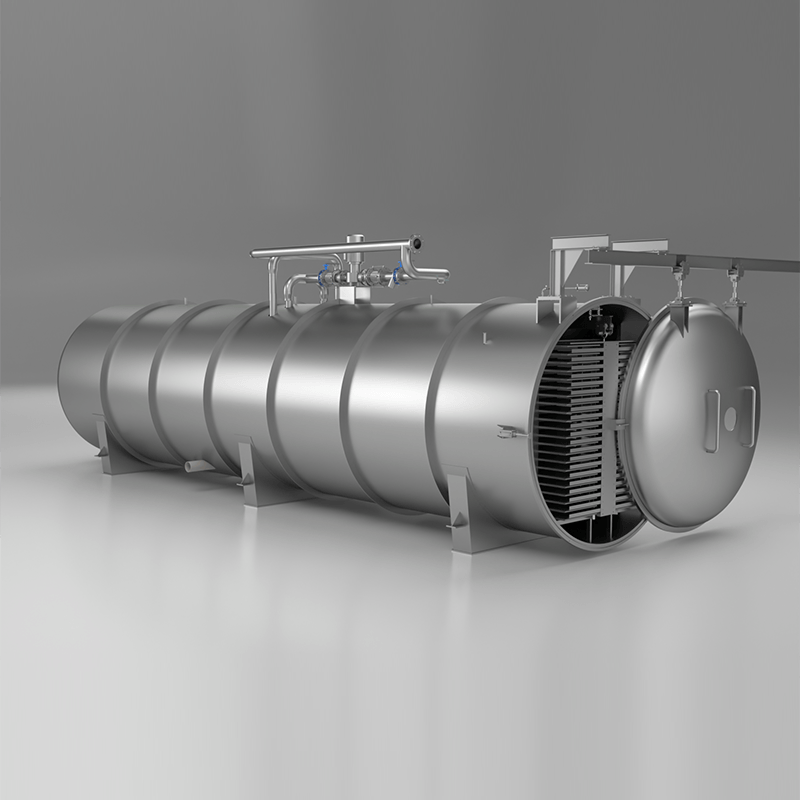
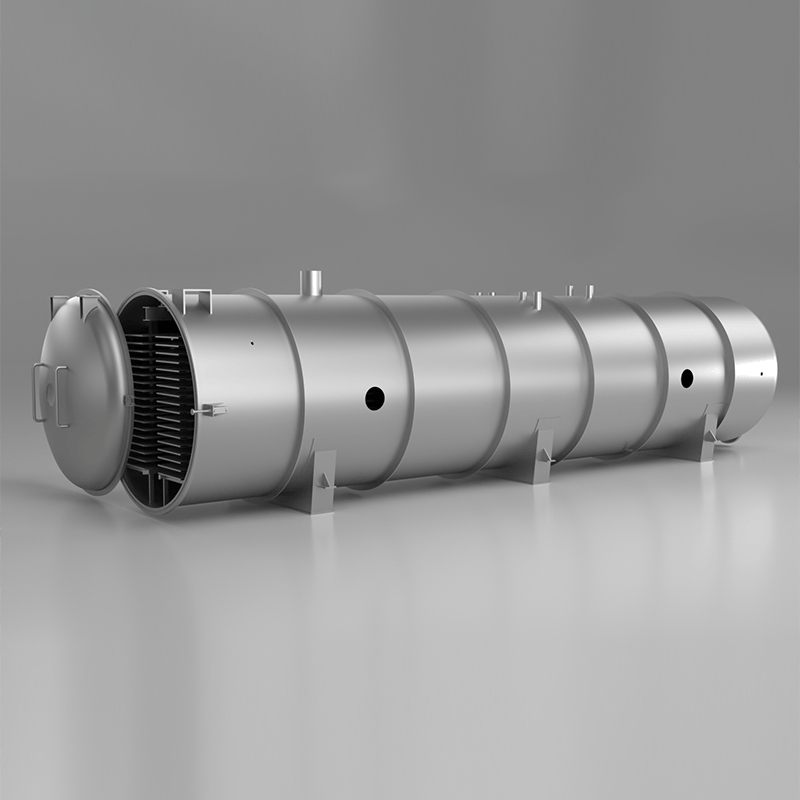
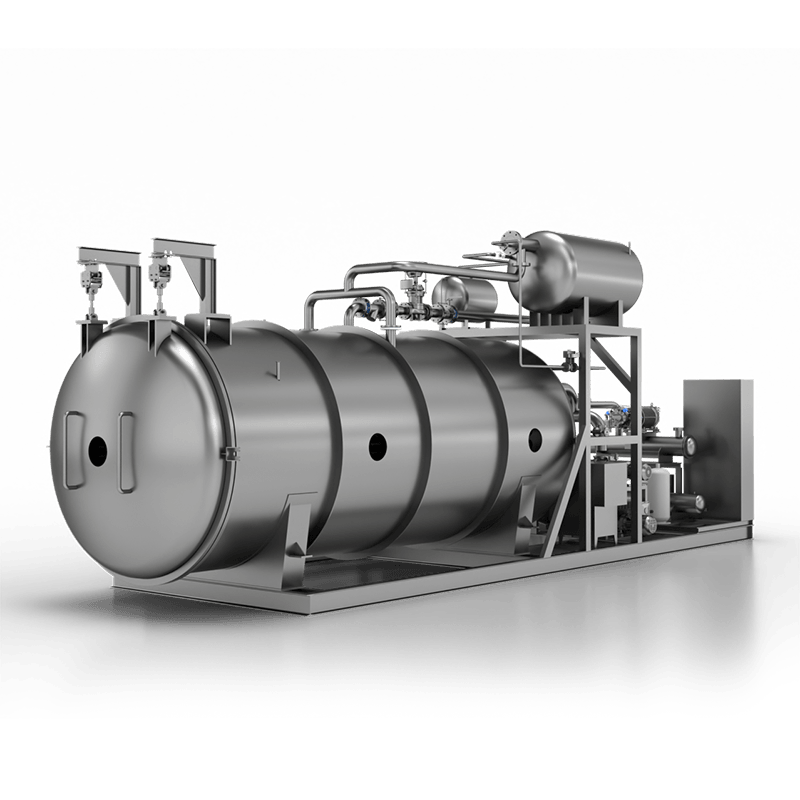
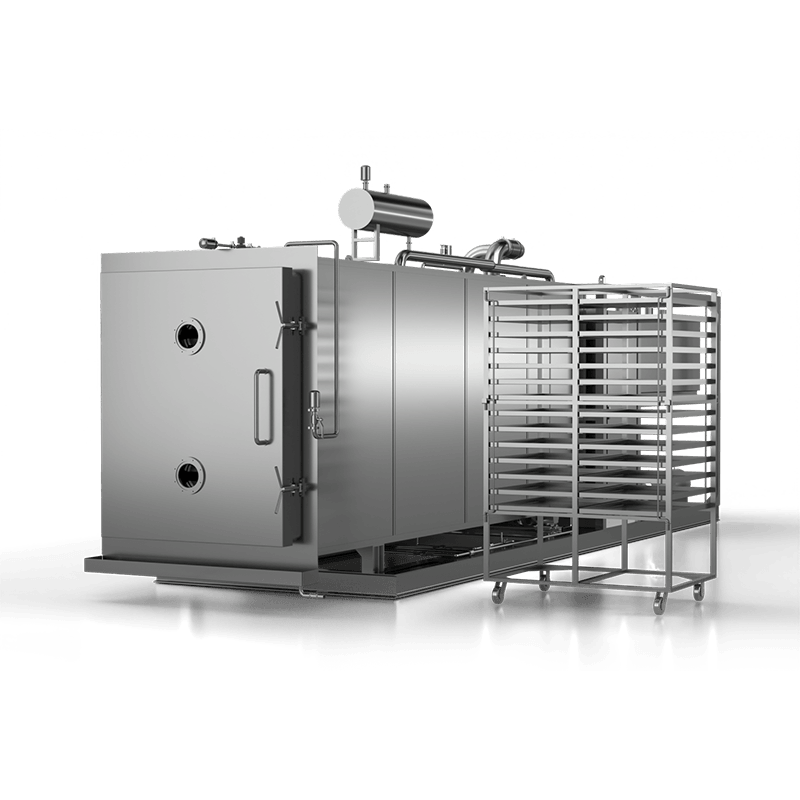
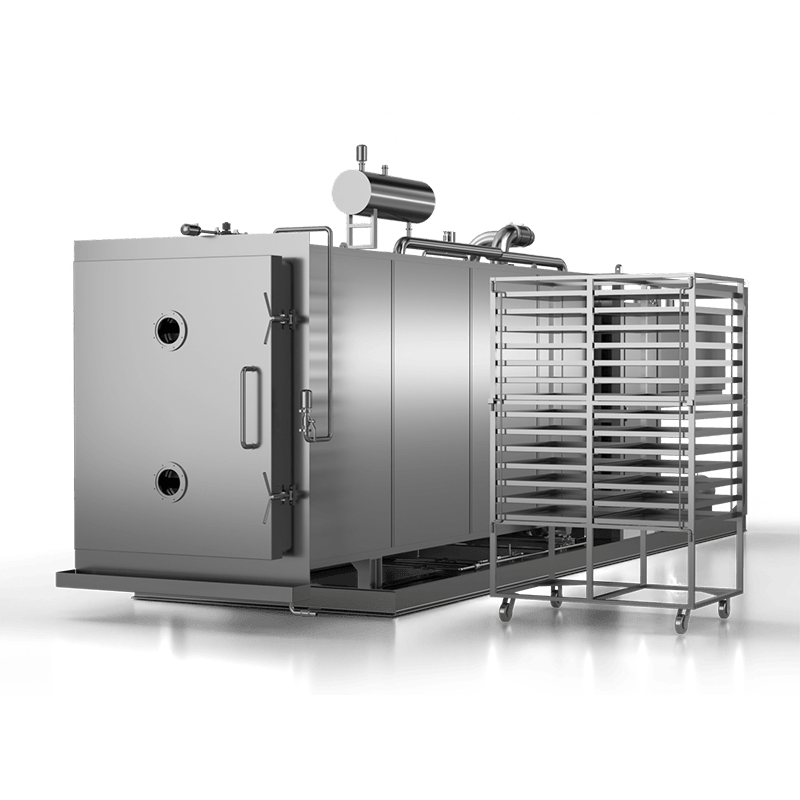
Scaling the production of clean-label convenience foods, outdoor rations, and emergency provisions requires preservation technology capable of removing moisture without degrading volatile flavor compounds, cellular textures, or heat-sensitive vitamins. Industrial-grade instant meals freeze-drying equipment represents the definitive technical framework for these processing lines, replacing high-heat spray drying or dehydration tunnels that cause food shrinkage, structural hardening, and nutritional loss. By subjecting prepared multi-component dishes to deep cryogenic freezing followed by ultra-low pressure vacuum sublimation, these advanced systems bypass the liquid water phase completely. This process leaves behind a highly porous structural matrix that rehydrates instantly upon contact with water while safely extending shelf life for years at room temperature.
The fundamental engineering goal of freeze-drying instant meals is to transition water directly from a solid ice phase to a gaseous vapor phase without letting it melt into liquid water. This specialized physical phenomenon, known as sublimation, requires strict control over the environment inside the processing chamber, keeping it safely below the thermodynamic triple point of water.
The triple point of pure water occurs at a specific temperature of 0.01°C and a pressure of 611.65 Pascals (about 0.006 atmospheres). Because ready-to-eat instant meals contain dissolved sugars, mineral salts, proteins, and fats, their chemical triple point drops lower than pure water. If the internal pressure inside the drying chamber rises above this critical line, or if the food temperature gets too warm, the ice crystals trapped inside the food matrix will melt into liquid water. This phase failure causes a structural defect known as "melt-back" or structural collapse. When melt-back occurs, the cellular walls of the food dissolve, ruining its shape, creating a tough, leathery texture, and sealing off the open pores needed for instant rehydration. To prevent this collapse, industrial freeze-drying plants must use heavy-duty vacuum systems to drop the operating pressure down to a tight range of 10 Pascals to 50 Pascals. This extreme vacuum ensures that sublimation continues smoothly throughout the production run.
Before starting the vacuum sublimation phase, the prepared instant meals must undergo a controlled blast freezing process to lock their structure in place. Every complex food recipe has a specific eutectic temperature, which is the exact point where the entire food mixture—including its water, oils, and dissolved solids—freezes into a completely solid block.
For complex meals like a beef and vegetable stew, the eutectic temperature typically sits between -25°C and -35°C. If any part of the food remains unfrozen when the vacuum pumps start, that liquid pocket will boil violently under the low pressure, tearing open the food's cellular structure and causing a blowout defect. Industrial blast freezers lower the product temperature at a calculated cooling rate of 0.5°C to 1.0°C per minute down to a target core temperature of -40°C. Freezing at this precise speed strikes the perfect balance: it creates ice crystals large enough to leave behind clear vapor escape paths, yet small enough to avoid tearing the delicate meat and vegetable cell walls.
Once the instant meals are frozen solid, they are moved into the main vacuum drying chamber to begin the drying cycle, which is divided into primary and secondary drying stages.
During the primary drying stage, the equipment removes the bulk of the frozen moisture—the unbound, free ice crystals—which accounts for roughly 90% to 95% of the total water content inside the food. Sublimation is an endothermic reaction, meaning it requires continuous heat input to keep going; if the system does not supply heat, the food will drop in temperature until sublimation grinds to a halt. To provide this energy safely, the product trays rest on hollow stainless steel shelves filled with circulating silicone thermal fluid. These radiant heating shelves gradually warm from -40°C up to a gentle positive temperature range of 20°C to 40°C. The heat must be applied carefully so the warming face of the food never gets close to its structural collapse limit.
Once all the visible ice crystals are gone, the process enters the secondary drying stage to remove the bound water molecules that are chemically trapped inside the food's cellular matrix. To drive off this stubborn moisture, the vacuum pressure is pulled down to its absolute lowest limit, and the shelf temperatures are raised to a higher range of 45°C to 60°C. This intense, low-pressure heating stage forces out the bound water molecules, dropping the final moisture level of the instant meal down to an exceptionally dry 1% to 3%, stopping all bacterial growth and chemical spoilage in its tracks.
Food processing engineers and facility managers must match the shelf surface areas, condenser cooling speeds, and vacuum pumping limits of the freeze-drying machinery to the daily production volumes of their processing plant. Selecting an undersized condenser or a weak vacuum pump array will stall the sublimation process, resulting in spoiled batches and ruined ingredients.
The table below details the shelf dimensions, condenser capacities, vacuum performance metrics, and target meal throughputs for standard industrial-grade instant meals freeze-drying equipment configurations:
| Freeze-Drying System Specification | Total Effective Shelf Surface Area | Vapor Condenser Ice Capacity | Minimum Chamber Vacuum Level | Daily Processing Batch Capacity |
|---|---|---|---|---|
| Pilot-Scale Modular Processor | 10 $m^2$ to 20 $m^2$ Stainless | $\ge$ 150 kg per 24 Hours | $\le$ 5.0 Pascals Ultimate | 100 kg to 200 kg specialty recipe meals |
| Medium-Output Industrial System | 50 $m^2$ to 100 $m^2$ Array | $\ge$ 1,000 kg per 24 Hours | $\le$ 1.0 Pascal Ultimate | 500 kg to 1,000 kg commercial instant entrees |
| High-Capacity Continuous Plant Link | 200 $m^2$ to 500 $m^2$ Matrix | $\ge$ 5,000 kg per 24 Hours | $\le$ 0.5 Pascal Ultimate | 2,000 kg to 5,000 kg institutional/military rations |
The vacuum pumps on a freeze dryer cannot handle large volumes of water vapor directly. If the massive clouds of steam generated during sublimation are allowed to reach the rotary vacuum pumps, the water will instantly mix with the pump oil, ruining the machinery and causing the entire vacuum system to fail.
To catch this moisture before it reaches the pumps, the equipment features a high-capacity cryogenic vapor condenser tank located between the main drying chamber and the vacuum pump loop. This condenser is lined with heavy stainless steel cooling coils chilled by a multi-stage refrigeration system down to an ultra-cold operating temperature of -60°C to -80°C. As the warm water vapor rushes out of the food matrix and passes over these freezing coils, it undergoes desublimation, snapping instantly from a gas back into solid ice crystals on the metal surface. This rapid condensation creates a natural drop in pressure that helps pull more vapor out of the food, keeping the drying chamber clear and protecting the vacuum pump array so it can maintain the stable low pressures required for production.
The defining commercial advantage of freeze-drying ready-to-eat instant meals is the unmatched speed and quality of their rehydration compared to standard heat-dehydrated foods.
When a prepared meal is hot-air dried, the evaporating water pulls the food's outer skin inward, causing the structural cells to shrivel and harden into a dense, tough layer. This shrunken exterior acts as a barrier that slows down water absorption, often requiring the food to be boiled for 15 to 20 minutes to soften. Freeze drying avoids this issue completely. Because the ice crystals sublimate directly out of their frozen positions, they leave behind an open network of microscopic pores where the ice used to sit. The final food item retains 100% of its original shape and volume without shrinking. When hot water is poured onto the freeze-dried meal, these microscopic pores act like tiny straws, pulling water deep into the core through capillary action and fully rehydrating the entire dish in a mere 2 to 3 minutes.
Operating industrial freeze-drying equipment requires a systematic, step-by-step process to ensure complete moisture removal and preserve food safety. Following precise plant management protocols protects the food from spoiling, keeps energy costs down, and ensures every batch meets consumer quality expectations.
When a batch of instant meals emerges from the drying chamber with wet spots, collapsed centers, or poor rehydration behaviors, plant operators can quickly trace and correct the root cause of the failure by analyzing pressure changes and temperature logs.
A common mechanical problem discovered during production is a sudden pressure spike inside the drying chamber midway through the primary drying cycle, which can cause the food to melt and ruin the batch. This fault is typically caused by overloading the ice condenser coils beyond their maximum thickness limit. If processing teams pack too much wet food into the chamber, the evaporating water vapor will build up a thick, insulating layer of ice on the condenser coils. This ice layer blocks heat transfer, causing the condenser temperature to rise and allowing water vapor to escape back into the main chamber. Operators can fix this issue by strictly matching batch weights to the condenser's rated ice limits or by adjusting the defrost schedule to clear the coils between processing runs.
Another frequent system issue is a "vacuum stall" error, where the pumps fail to pull the chamber pressure down below 100 Pascals during the initial startup sequence. This performance failure points directly to hardened or dirty silicone door gaskets or loose fittings along the vacuum lines. Because freeze dryers operate under extreme vacuum pressures, even a tiny scratch in a door seal or a speck of food grit on a gasket will let outside air leak in, overwhelming the vacuum pumps. Maintenance teams can find and fix these leaks by wiping down all rubber door seals with lint-free cloths, checking the seals for micro-cracks, and using a portable helium leak detector along the pipe joints to ensure the entire chamber stays completely airtight.


Sieno's whole series of freeze-drying equipment, covering the experimental research to the industrial scale, is energy efficient, stable, and reliable, with flexible customization as the core, to production, optimization of process, and multiple fields with green manufacturing solutions.
Sieno, based on the research of intelligent freeze-dried food, provides with custom process for the whole chain of freeze-dried technology support (including pretreatment, freeze-dried, and packaging), helping enterprises realize multiple improvements in efficiency, quality, and environmental protection.
Equiment & Soiution
Food Industry Pharmaceuticals Industry Agricultural Industry Pet Industry Beauty Care Industry Chemical Engineering & Laboratory Environmental Protection & Circular EconomyContact Info.
 +86 18068757376
  bolaike@jsblk.com
  Zhenglu Town, Tianning District, Changzhou City, Jiangsu Province, China
Follow Us
Copyright ©
Sieno Freeze-drying Technology Research Institute (Jiangsu) Co., Ltd
All Rights
Reserved
Custom One-Stop Freeze Drying Equipment Suppliers