English
  русский
  中文简体
中文简体 
Request a Quote

Industry News
 Home / Recent News / Industry News / How a Lyophilizer Works: The Freeze-Drying Stages & Equipment Explained
  2026.10.07
 Industry News
A lyophilizer — also called a freeze dryer — is the machine behind the crisp strawberries in your cereal, the instant coffee that dissolves in seconds, and the vaccines that stay active for years. Its job is to remove water from a product while the product remains frozen, using a process called sublimation. Understanding how a lyophilizer works is essential for anyone involved in freeze-dried food production, pharmaceutical processing, or laboratory research, because the equipment design and the process recipe ultimately decide the quality of the dried product.
Sublimation is the physical process in which a solid turns directly into a gas without passing through the liquid state. In a lyophilizer, the solid is ice, and the gas is water vapor. For sublimation to occur, two conditions must be met. First, the product must be held below the freezing point of its free water. Second, the pressure inside the chamber must be lowered to a point where the vapor pressure of ice is sufficient to allow water molecules to escape. A vacuum pump creates this low-pressure environment, while the condenser acts as a moisture trap. Ice molecules that leave the product migrate toward the cold condenser coils, where they refreeze. By continuously removing vapor, the lyophilizer keeps the ice in the product sublimating rather than melting.
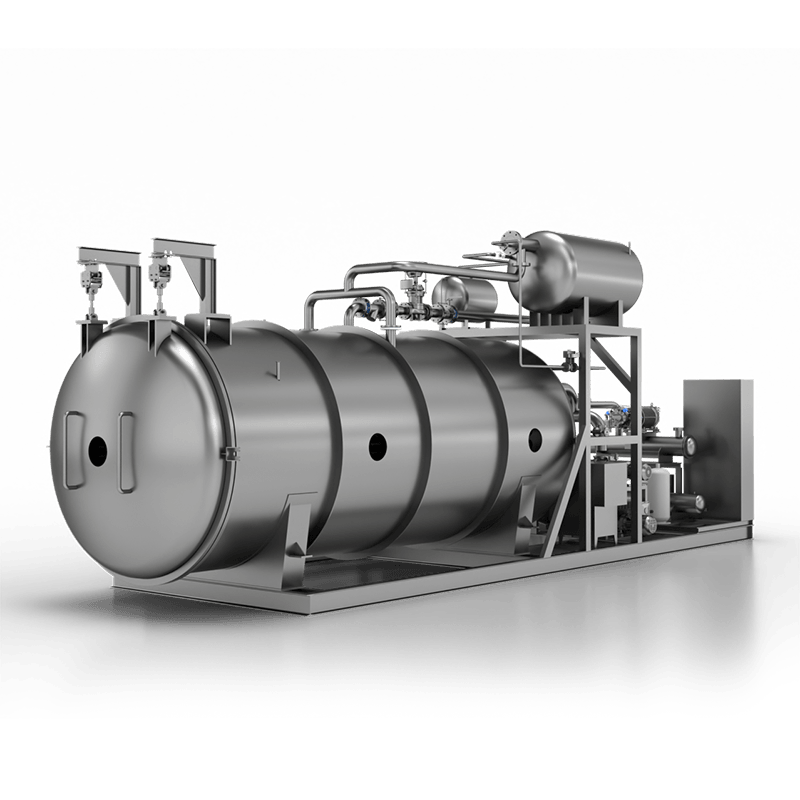
To understand how a lyophilizer works as a complete system, it helps to look at its major components. Each part plays a specific role in controlling the temperature of the product and removing moisture from the chamber. The table below summarizes the key components of a modern lyophilizer and their functions.
| Component | Role in the Lyophilizer |
|---|---|
| Drying chamber | Sealed enclosure with temperature-controlled shelves where product trays are loaded |
| Temperature-controlled shelves | Heat or cool the product to follow the designed process curve |
| Refrigeration system | Circulates cold fluid to freeze the product and cool the condenser |
| Condenser (ice trap) | Captures sublimated vapor by freezing it onto low-temperature coils |
| Vacuum pump | Lowers chamber pressure so ice can sublimate at practical temperatures |
| Control system | Monitors temperature, pressure, and cycle time and adjusts them automatically |
Every freeze-drying run follows a three-stage path: freezing, primary drying, and secondary drying. Each stage has a distinct purpose, and the way a lyophilizer works changes from one stage to the next.
Freezing takes place before the vacuum is applied. The product is cooled until all free water is locked into ice. For most foods and biological materials, this means temperatures of -30°C to -50°C or lower. Cooling rate matters. Slow cooling produces large ice crystals that can pierce cell walls, while rapid cooling produces smaller crystals and better retention of cellular structure. Some lyophilizer control programs add an annealing step, in which the temperature is intentionally raised for a short period to let small crystals merge into larger ones, making the next drying stage faster and more consistent.
During primary drying, vacuum is applied and the shelves are gradually heated. This is the sublimation stage, where the bulk of the water escapes from the product as vapor. As ice turns to gas, the surface of the product is continuously cooled by the evaporation itself, so the heat supplied by the shelves must be carefully balanced. If too much heat is added, the frozen matrix may collapse; if too little, the drying time becomes uneconomic. The condenser is vital here: it traps the vapor that leaves the product, preventing moisture from re-entering the chamber and maintaining the vacuum. For any new product, the ideal shelf temperature and chamber pressure are usually established through a freeze-drying recipe development program.
After primary drying, the product may still contain four to ten percent moisture, mostly water molecules bound to proteins, starches, and other solids. Secondary drying removes this residual bound water by raising the shelf temperature and holding the vacuum for several more hours. Only a small amount of additional moisture is removed in this stage, but it is essential for reaching final moisture levels of one to three percent. Low residual moisture is what gives freeze-dried products their long shelf life and crisp texture.
How heat is delivered to the product is one of the most important design decisions in a lyophilizer. Two main approaches are used in modern equipment.
Contact heating is the most common method. The product sits directly on metal shelves through which a temperature-controlled fluid circulates. Heat flows from the shelves, through the container and the frozen product, by conduction. Because the product is in direct contact with the heat source, contact heating is efficient and predictable, making it suitable for diced fruits, vegetables, powders, and most pharmaceutical vials.
Radiant heating heats the product without direct contact. Heated plates or panels are placed above or beside the product trays, and energy is transferred as infrared radiation. Radiant systems are often chosen when very uniform heat distribution is needed across wide trays, or when the product is sensitive to localized overheating.
Both methods require precise control, because the temperature of the product must stay safely below its collapse point. Modern lyophilizers combine both heating configurations with automated control loops that adjust shelf temperature and chamber pressure in real time. Intelligent control systems can even use product temperature sensors to close the loop and optimize each batch automatically. At Sieno, we engineer industrial lyophilizers around the product's needs, offering both contact and radiant heating options so the drying behavior matches the material precisely.
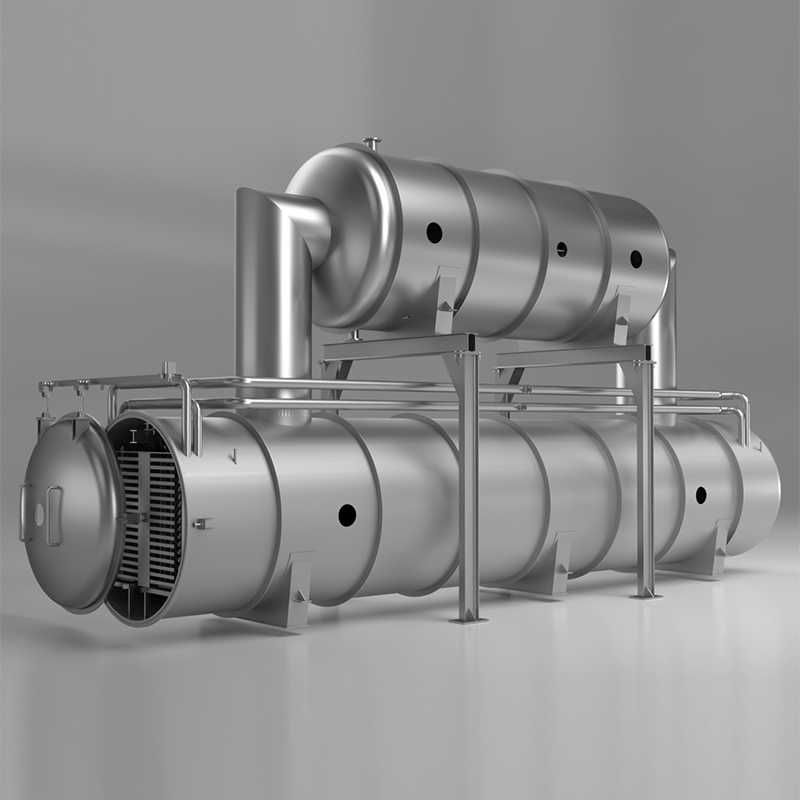
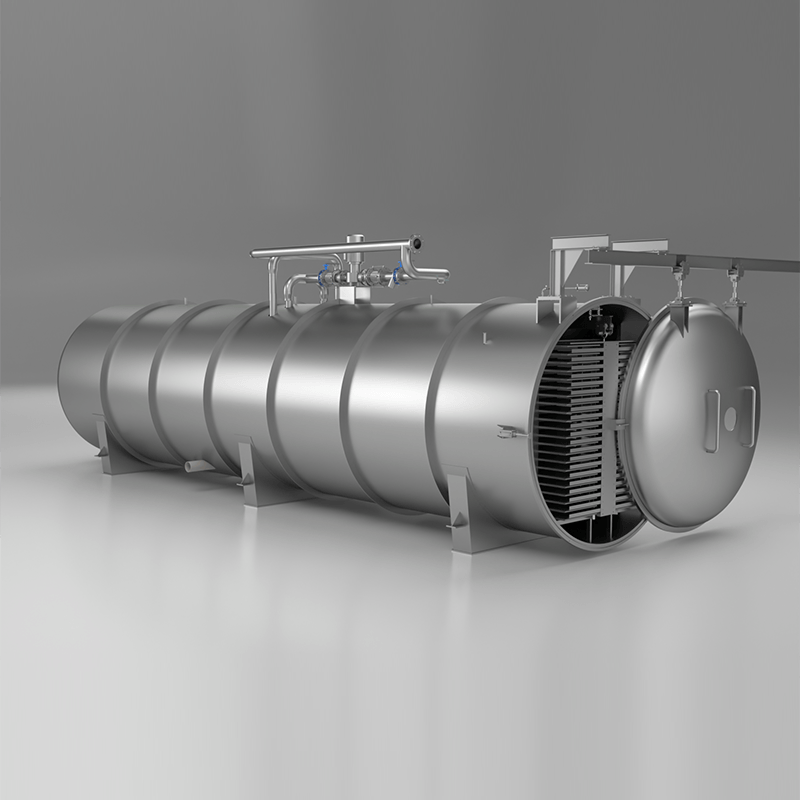
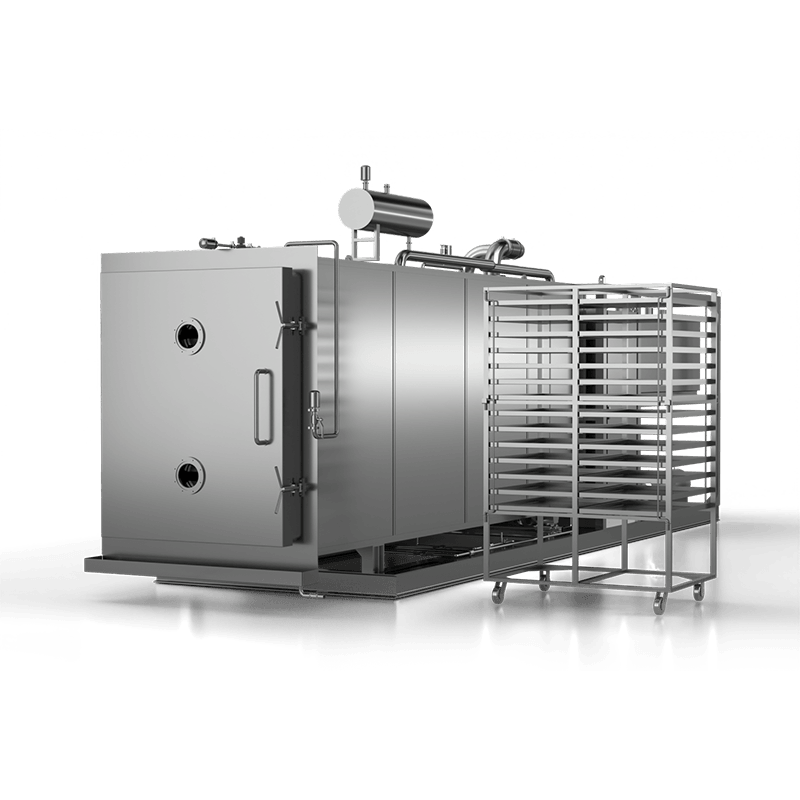
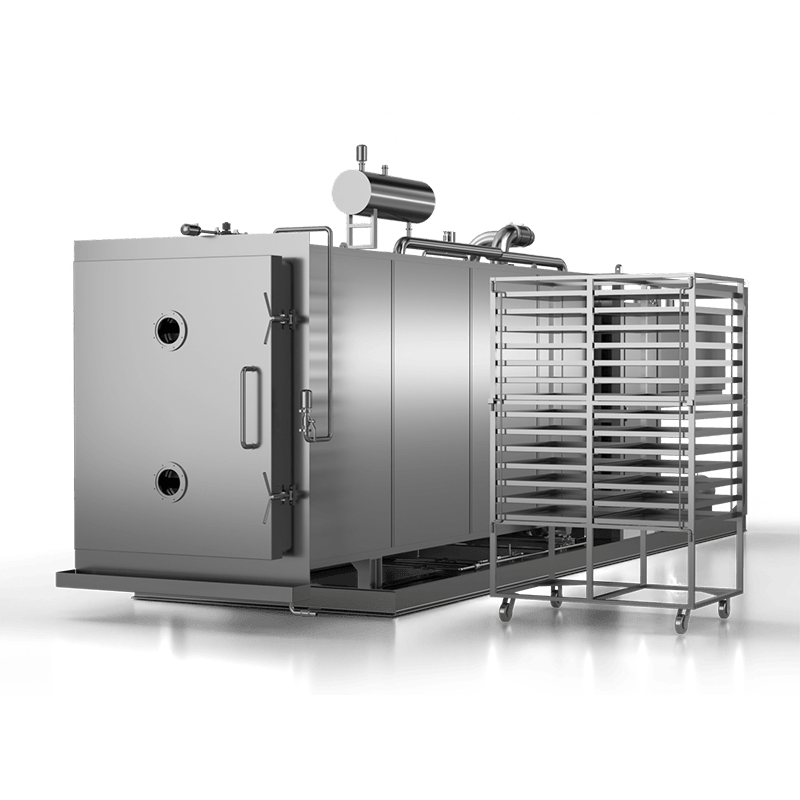
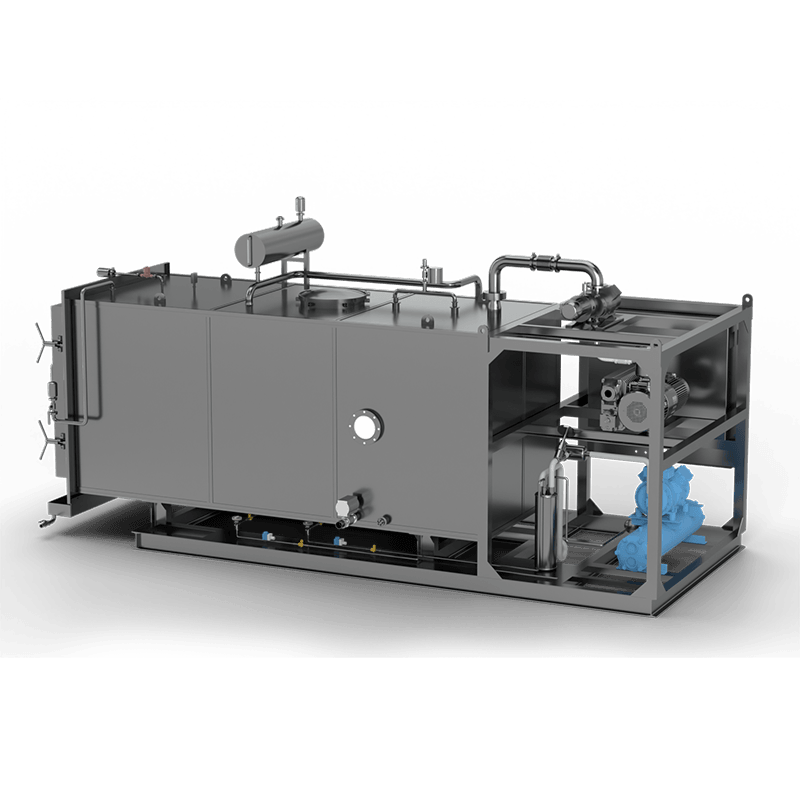 BLK-FD-10 Industrial Freeze Dryer with Flexible Heating OptionsThis industrial-scale lyophilizer supports both contact and radiant heating, allowing precise temperature control for large-scale production while adapting drying behavior to the specific product.View Product →
The lyophilizer you choose depends on the product you want to dry, the throughput you need, and the quality you expect. A lab scientist validating a new formulation has very different requirements from a factory manager running 24-hour production shifts.
For food applications, a lyophilizer usually operates alongside pre-treatment and post-treatment equipment. Fruits and vegetables are washed, sliced, and sometimes blanched before loading, and then packed in nitrogen-flushed aluminum bags after drying. Coffee and instant beverages take a different path: liquid concentrate is placed in trays, frozen, and dried, resulting in porous granules that dissolve quickly in hot water. Dedicated coffee freeze-drying equipment is designed for exactly this process, with carefully controlled freezing and heating that preserve the volatile aroma compounds.
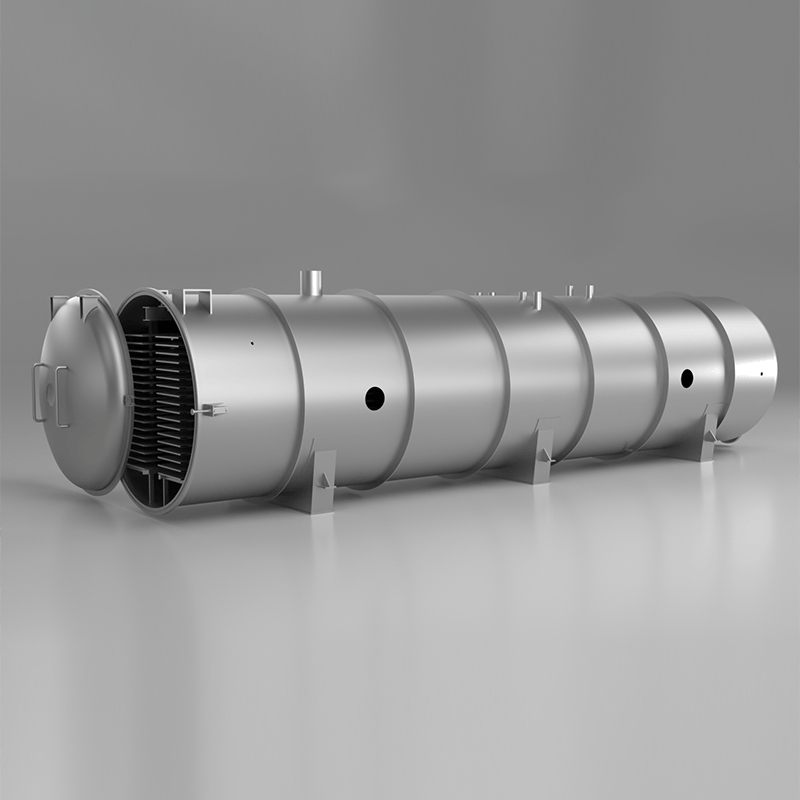
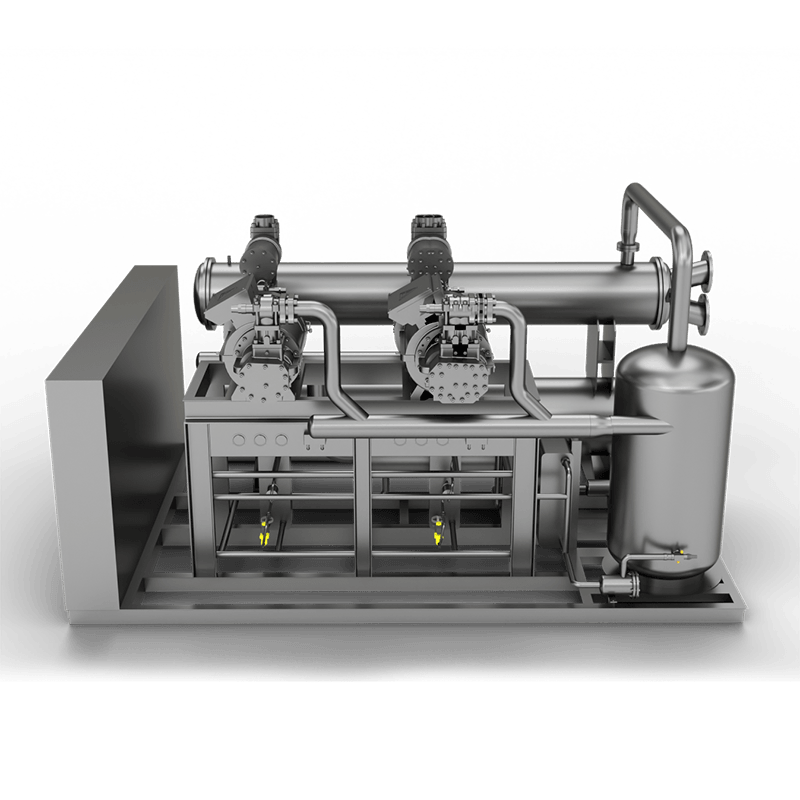 Coffee Freeze-Drying Equipment for Batch and Continuous ProductionDesigned for converting liquid coffee concentrate into soluble granules, this equipment offers batch and fully automatic continuous systems to preserve aroma and achieve high solubility.View Product →
Laboratory and pilot units, on the other hand, allow process development and small-scale production with limited quantities of valuable material. A laboratory freeze dryer is an affordable way to develop a freeze-drying process before scaling it up to industrial equipment.
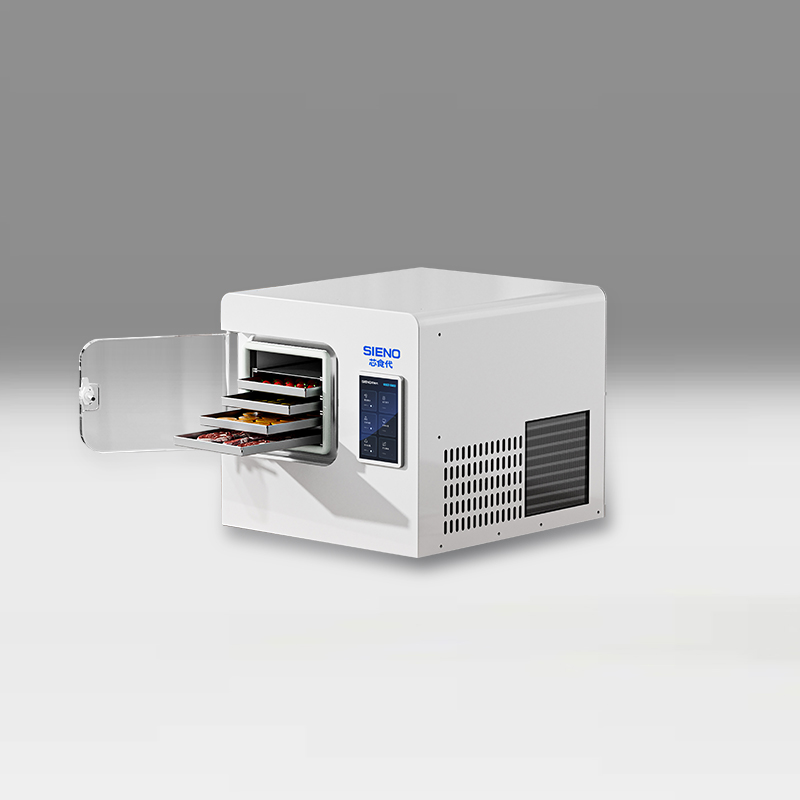 XSD-FD-4 Laboratory Freeze Dryer for Process DevelopmentA compact lab-scale lyophilizer with a 4 kg capture capacity and -45°C cold trap, ideal for developing freeze-drying protocols before scaling up to industrial equipment.View Product →
At the end of a successful cycle, the lyophilizer opens to reveal a product that looks nearly identical to the material that was loaded, but weighs only a fraction of the original. Water was removed without passing through a liquid stage, so the structure, nutrition, aroma, and active ingredients remain intact. Whether the application is freeze-dried fruits for snacks, premium instant coffee, pharmaceutical vials, or delicate research materials, the same physical principles apply: freeze the product, pull a vacuum, sublimate the ice, and hold the conditions long enough to reach the target moisture. That is how a lyophilizer works.


Sieno's whole series of freeze-drying equipment, covering the experimental research to the industrial scale, is energy efficient, stable, and reliable, with flexible customization as the core, to production, optimization of process, and multiple fields with green manufacturing solutions.
Sieno, based on the research of intelligent freeze-dried food, provides with custom process for the whole chain of freeze-dried technology support (including pretreatment, freeze-dried, and packaging), helping enterprises realize multiple improvements in efficiency, quality, and environmental protection.
Equiment & Soiution
Food Industry Pharmaceuticals Industry Agricultural Industry Pet Industry Beauty Care Industry Chemical Engineering & Laboratory Environmental Protection & Circular EconomyContact Info.
 +86 18068757376
  bolaike@jsblk.com
  Zhenglu Town, Tianning District, Changzhou City, Jiangsu Province, China
Follow Us
Copyright ©
Sieno Freeze-drying Technology Research Institute (Jiangsu) Co., Ltd
All Rights
Reserved
Custom One-Stop Freeze Drying Equipment Suppliers