English
  русский
  中文简体
中文简体 
Request a Quote

Industry News
 Home / Recent News / Industry News / Intelligent Freeze Drying Solution: Smart Controls, Lower Costs, Better Batches
  2026.09.02
 Industry News
A single industrial freeze drying batch routinely runs 18 to 24 hours. If shelf temperature drifts a few degrees above the product's collapse point during primary drying, the load can lose its porous structure and turn into a dense, sticky mass that no packaging line can salvage. That single risk explains why plant owners now ask for an intelligent freeze drying solution rather than a plain vacuum freeze dryer.
The definition is simpler than the marketing suggests: an intelligent freeze drying solution is a system in which sensors, control software, and connectivity manage freezing, primary drying, and secondary drying automatically, so the cycle follows how your material actually behaves instead of a fixed timetable. In practice, that means fewer collapsed batches, lower energy consumption per kilogram of finished product, and complete batch records you can hand to a customer or auditor without weeks of manual paperwork. The sections below break down how that intelligence works, where the payback appears first, and which points to verify before you commit to a purchase order.
Freeze drying, or lyophilization, removes water by sublimation: the material is frozen first, then held under deep vacuum so ice converts directly into vapor, and finally warmed gently to drive off bound water. The physics is well understood. The difficulty is that every stage has a narrow safe window, and the window moves with each formulation. A berry puree, a probiotic powder, and a slice of cooked beef behave nothing alike under identical shelf temperatures.
An intelligent solution handles that variability with three layers working together.
Stored recipes define ramp rates, holding plateaus, vacuum setpoints, and condenser targets for each product. During the run, cascade control lets the measured product temperature correct shelf output automatically instead of waiting for a scheduled step change. At the end of secondary drying, an automatic pressure rise test determines the true endpoint rather than relying on a fixed timer.
Modern systems log every parameter, push deviation alarms to a supervisor's phone, and allow remote access so one engineer can oversee several chambers from an office. For a deeper look at how these layers interact, our overview of intelligent control in freeze drying walks through the architecture in practical detail.
Manual operation depends on an operator noticing drift and reacting in time. In a small laboratory that works fine. In a plant with several chambers running overnight, it does not, because the consequences of a late reaction are severe in both directions:
The table below summarizes where automation changes day-to-day results.
| Control Aspect | Manual Operation | Intelligent Control |
|---|---|---|
| Shelf temperature ramping | Adjusted on a fixed schedule or by visual checks | Corrected in real time from product probe feedback |
| Endpoint detection | Fixed timer, often padded with safety hours | Pressure rise test terminates the cycle at the true endpoint |
| Deviation response | Depends on operator presence at 3 a.m. | Automatic alarm plus safe-state shutdown |
| Batch documentation | Handwritten logs, prone to gaps | Timestamped electronic records for every cycle |
| Energy per batch | Inflated by conservative margins | Reduced through precise heating and early fault shutdown |
Energy is usually the largest operating cost in freeze drying after labor, because refrigeration compressors and vacuum pumps run continuously for most of the cycle. Intelligent control attacks that cost from two directions. First, terminating a batch at its measured endpoint routinely saves two to three hours per cycle compared with a padded timer, and across two hundred or more cycles per year that is a large block of compressor time recovered. Second, condenser and defrost management keeps vapor-capture efficiency stable instead of letting ice buildup quietly stretch every run.
Yield is the second gain. A collapsed batch cannot be reprocessed; it is written off completely. Cutting the collapse rate to nearly zero protects margin in a business where a single chamber load of freeze-dried fruit or seafood can represent thousands of dollars of raw material. Labor follows the same logic: with automated records and connected alarms, one technician can supervise multiple chambers, and shift handovers stop depending on verbal notes. Buyers comparing systems can also review our notes on remote monitoring for lyophilization to see what daily operation looks like in practice.
The most common procurement mistake we see is jumping straight from benchtop curiosity to a full production chamber. A staged path reduces that risk: develop the recipe on a laboratory unit, confirm the economics on pilot equipment, then scale to industrial chambers using the same control platform so validated curves carry over.
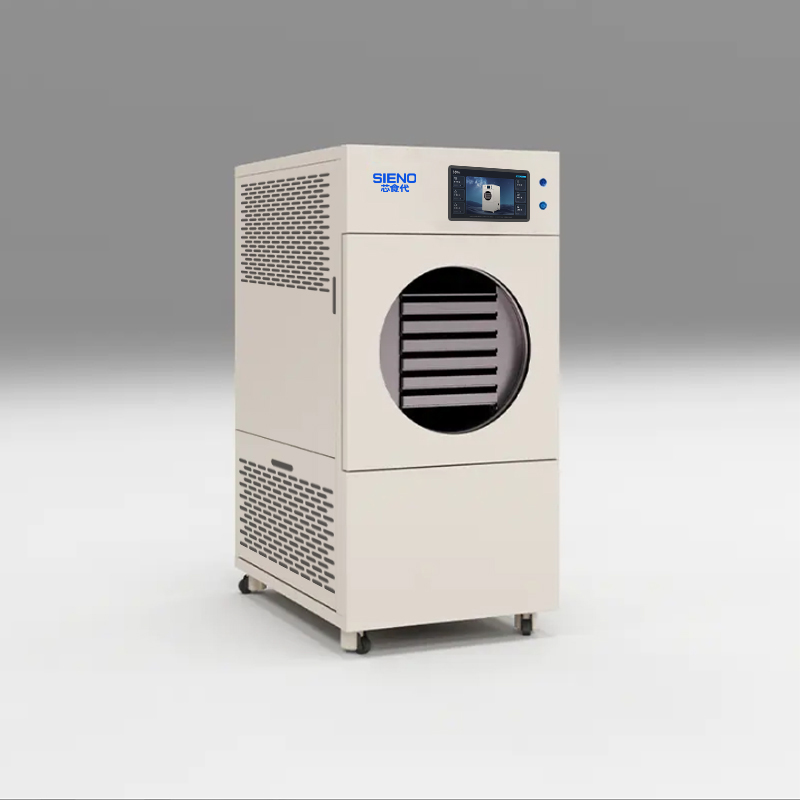 Sieno XSD-LD-FD-20 Integrated Laboratory Freeze DryerA square integrated lab unit with -45°C cooling, 6+1 shelves at -35°C to 80°C, and 535x315 mm trays. It suits the staged procurement path, letting teams validate recipes on laboratory equipment before pilot investment.View Product →
Laboratory units in the XSDFD class let a formulation team run small, repeatable trials and record the collapse behavior of a specific recipe before any major capital decision is made.
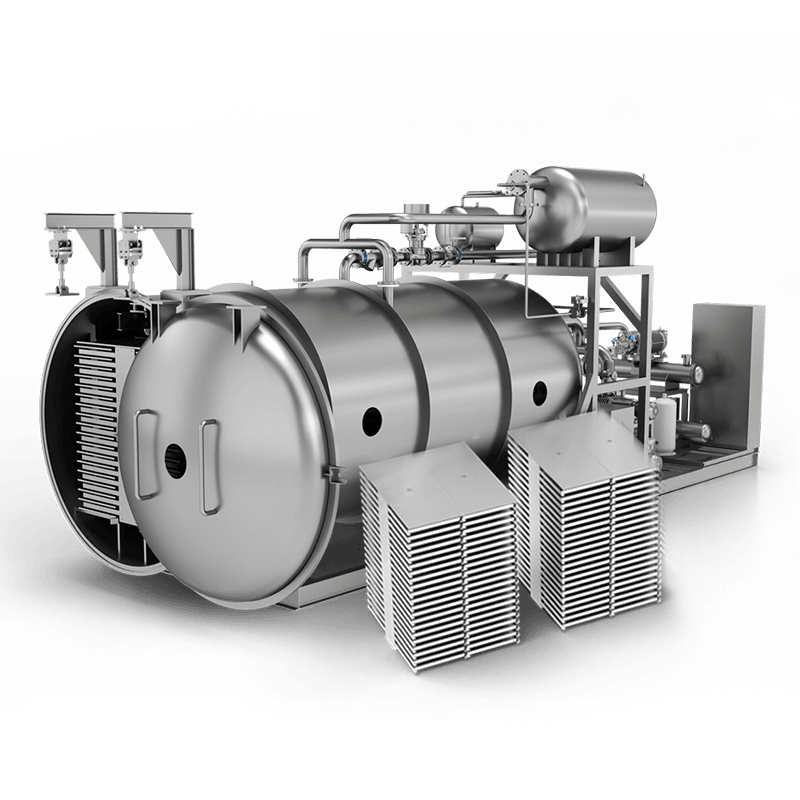 Sieno BLK-FD-50 Production-Scale Freeze DryerPart of the BLK-FD production series spanning roughly 10 to 200 square meters of chamber area, this mid-scale model fits the pilot stage, confirming recipe economics while sharing the same control platform as lab and industrial units.View Product →
At production scale, the BLKFD series covers chamber areas from roughly 10 up to 200 square meters, and automated loading, defrosting, and monitoring options keep larger systems manageable with the same small crew. The critical detail is consistency: when the laboratory, pilot, and production machines share one control architecture, the recipe you validated at small scale survives the scale-up with far fewer surprises.
Not every product justifies the same level of investment. High-value, heat-sensitive materials recover the cost of smart control quickest, because quality losses there are the most expensive. Freeze-dried coffee and instant beverages, premium berries, probiotic and gastrointestinal health formulations, pet food, and traditional medicine extracts all fall into this group. A fruit and vegetable line illustrates the point well: the dryer must hold each product's delicate cellular structure so slices keep their shape, color, and rehydration speed on the retail shelf.
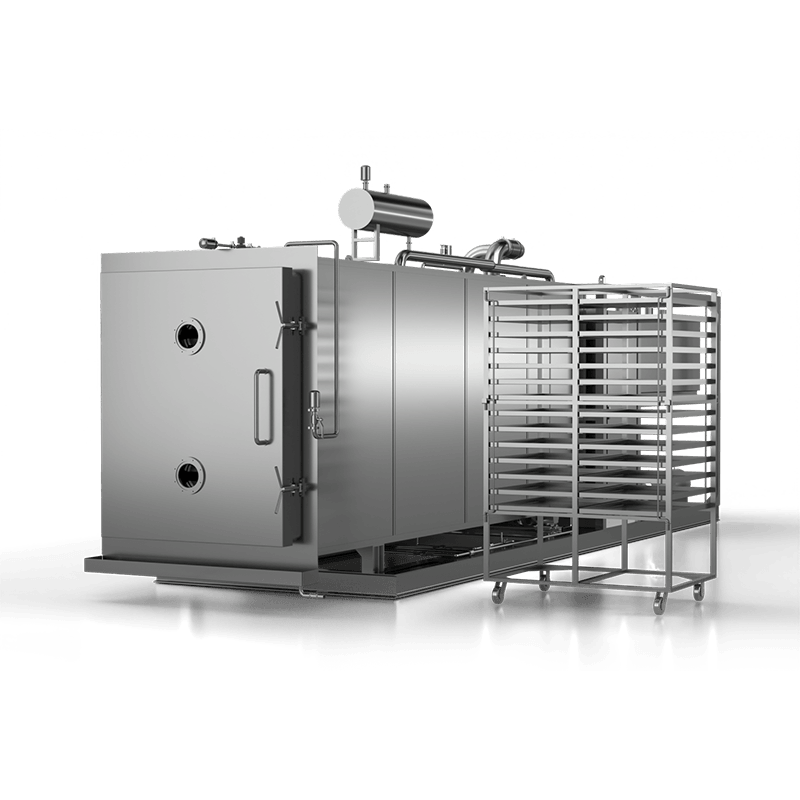
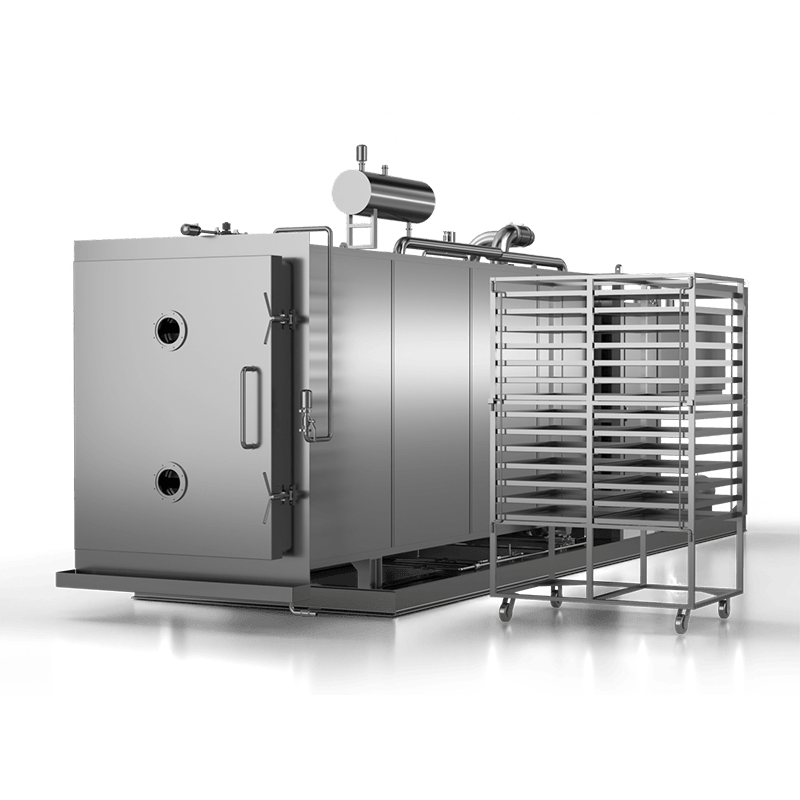
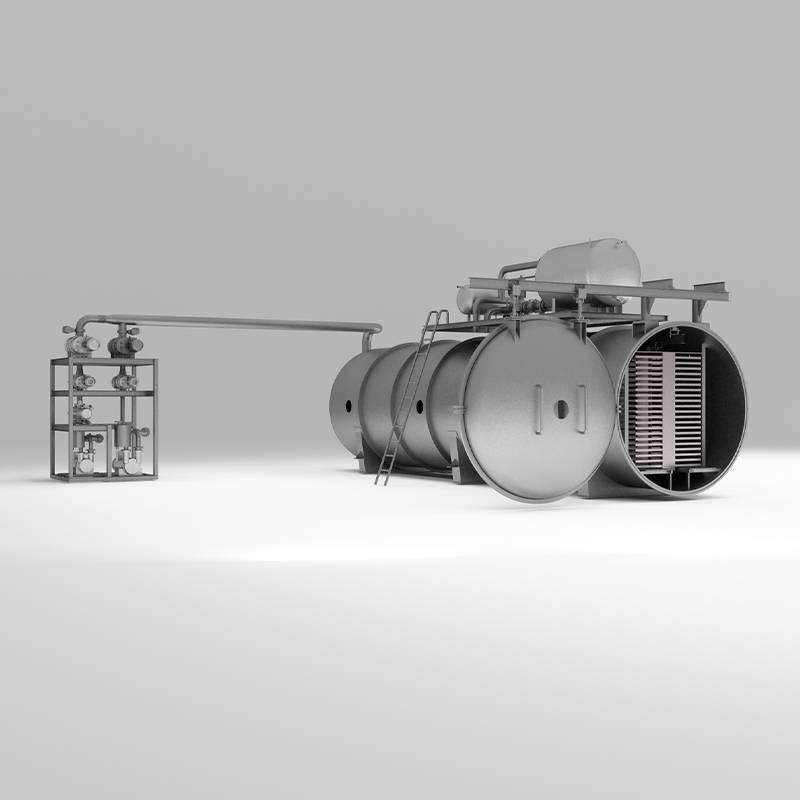 Vacuum Freeze Dryer for Fruits and VegetablesCombining low-temperature freezing with vacuum sublimation, this dryer preserves color, shape, and rehydration quality of mango slices, berries, and vegetable cuts. Accurate probing and stored recipes help premium, heat-sensitive products reach top grade.View Product →
For these categories, the combination of accurate product probing, stored recipes, and endpoint testing is what turns acceptable output into premium-grade output that commands a higher price.
An intelligent freeze drying solution is ultimately judged in your own plant, on your own recipe. The most reliable first step is a sample trial: send representative material, have it dried under a proposed cycle, and measure moisture content, rehydration, and appearance against your specification. Compare those results with your current process, calculate the energy and yield difference, and the purchasing decision becomes arithmetic rather than persuasion. When you are ready to test, the team at Sieno can run trials on matched equipment and help translate laboratory results into a production line configuration that fits your budget and output targets.


Sieno's whole series of freeze-drying equipment, covering the experimental research to the industrial scale, is energy efficient, stable, and reliable, with flexible customization as the core, to production, optimization of process, and multiple fields with green manufacturing solutions.
Sieno, based on the research of intelligent freeze-dried food, provides with custom process for the whole chain of freeze-dried technology support (including pretreatment, freeze-dried, and packaging), helping enterprises realize multiple improvements in efficiency, quality, and environmental protection.
Equiment & Soiution
Food Industry Pharmaceuticals Industry Agricultural Industry Pet Industry Beauty Care Industry Chemical Engineering & Laboratory Environmental Protection & Circular EconomyContact Info.
 +86 18068757376
  blk@jsblk.com
  Zhenglu Town, Tianning District, Changzhou City, Jiangsu Province, China
Follow Us
Copyright ©
Sieno Freeze-drying Technology Research Institute (Jiangsu) Co., Ltd
All Rights
Reserved
Custom One-Stop Freeze Drying Equipment Suppliers