English
  русский
  中文简体
中文简体 
Request a Quote

Industry News
 Home / Recent News / Industry News / Industrial Food Freeze Drying Equipment: Selection, Capacity, Cost Guide
  2026.08.26
 Industry News
A fruit processor walked into our test center with 40 kg of frozen durian slices, a rejected batch from a competitor's production dryer, and a simple question: why did the first two hours of the cycle look normal and then the chamber pressure drifted up until the product started to soften?
The answer had nothing to do with the freeze-drying principle and everything to do with the ice condenser. That machine's refrigeration module could not keep up with the sublimation rate at the chosen shelf temperature, so the condenser surface warmed, the chamber pressure rose, and the drying front stalled. It is the kind of failure that does not show up in a spec brochure, but it shows up in every batch after the first year of operation.
Put simply, the equipment freezes the product, then lowers the pressure so that ice sublimates directly to vapor without melting. In a production freeze dryer this happens in three phases: freezing, typically down to -35°C to -50°C; primary drying, where sublimation occurs under vacuum around 50 to 130 Pa; and secondary drying, where remaining bound water is desorbed at gradually rising shelf temperatures.
For buyers, the practical conclusion is that a freeze dryer is not a sealed box with heated shelves. It is a coordinated refrigeration, vacuum, and heating system, and the weakest component sets the quality ceiling. Shelf temperature uniformity is one example: a spread of ±2°C across the shelves is acceptable for most food products, while ±5°C creates visible differences in color and moisture between trays. Condenser performance and heating rate control matter just as much.
Capacity planning is where most purchasing mistakes happen. People choose a machine by chamber volume or raw material input, but the honest measure of throughput is the amount of water the equipment can remove per batch, and per hour, at the product temperature your recipe requires.
| Scale | Typical Shelf Area | Representative Models | Primary Use |
|---|---|---|---|
| Laboratory | 1–2 m² | 1 m² laboratory freeze dryer, XSDFD4, XSDFD812 | Recipe development, small trials, studies |
| Pilot | 3–20 m² | XSDFD20, pilot-scale lyophilizers | Process validation, small commercial batches |
| Industrial | 10–200 m² | BLKFD10 through BLKFD200 | Full batch or continuous production lines |
As a working estimate for sliced fruits and vegetables, plan on roughly 5 to 10 kg of finished freeze-dried product per square meter of shelf area per batch; dense items such as meat cubes or thick tubers come out lower because drying time is longer. If your daily target exceeds a few hundred kilograms of finished product, you are looking at industrial-scale freeze dryers with automated loading and centralized control rather than standalone units.
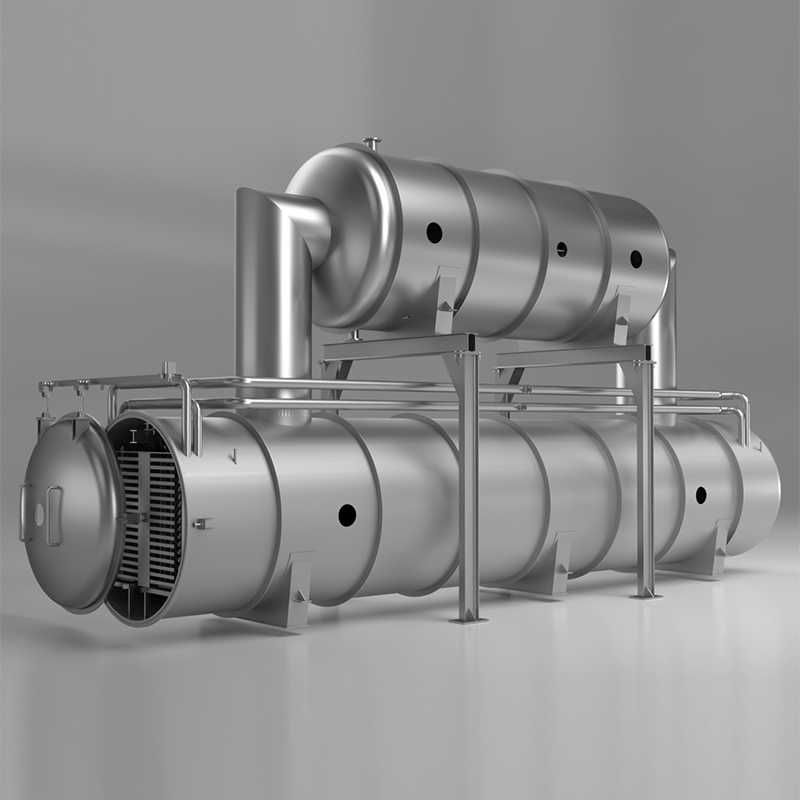
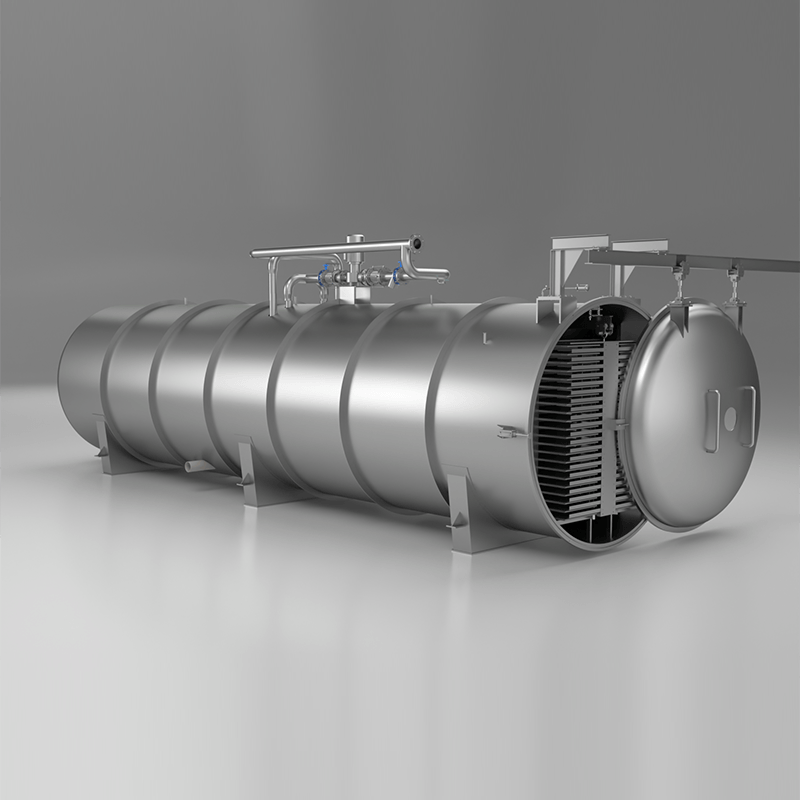
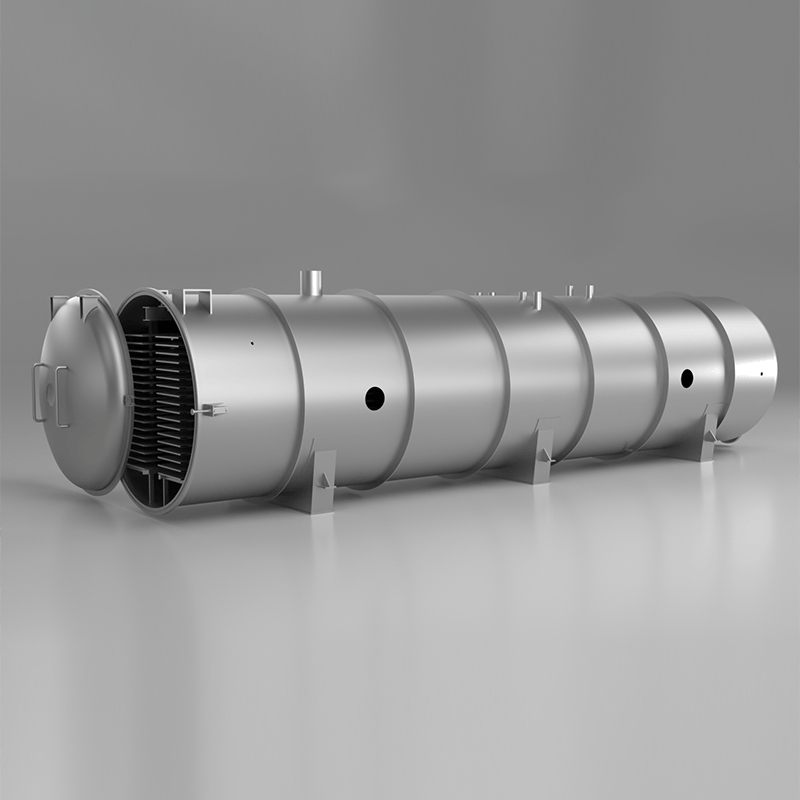
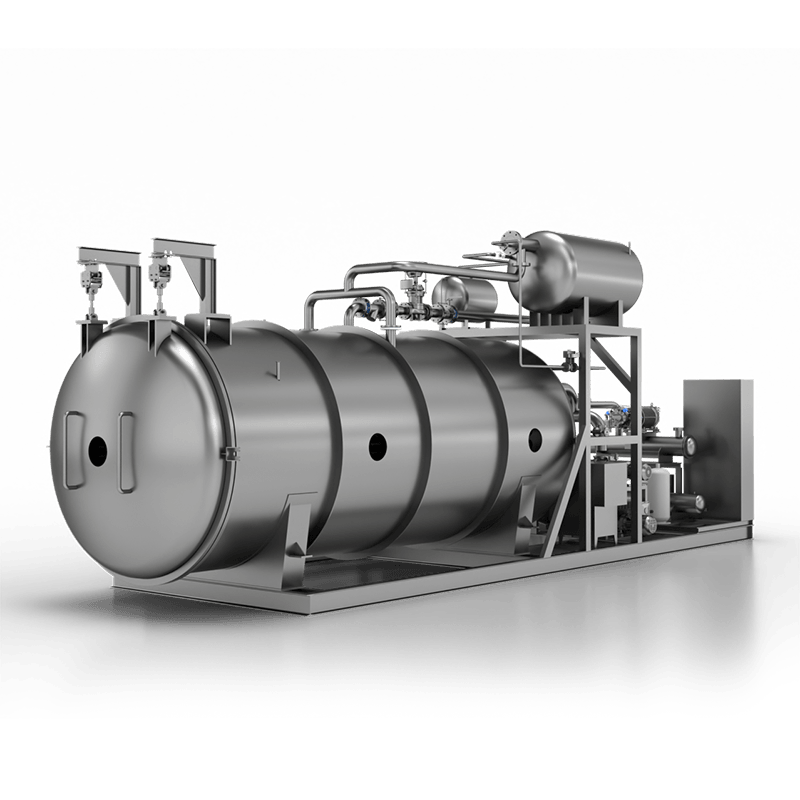
For a full production setup, a 1200 kg large-scale industrial freeze dryer can handle heavy daily throughput when paired with proper pre-freezing and packaging equipment. The critical number to compare is not the nominal load but the ice capacity: how many kilograms of ice the condenser can accumulate before defrosting is required.
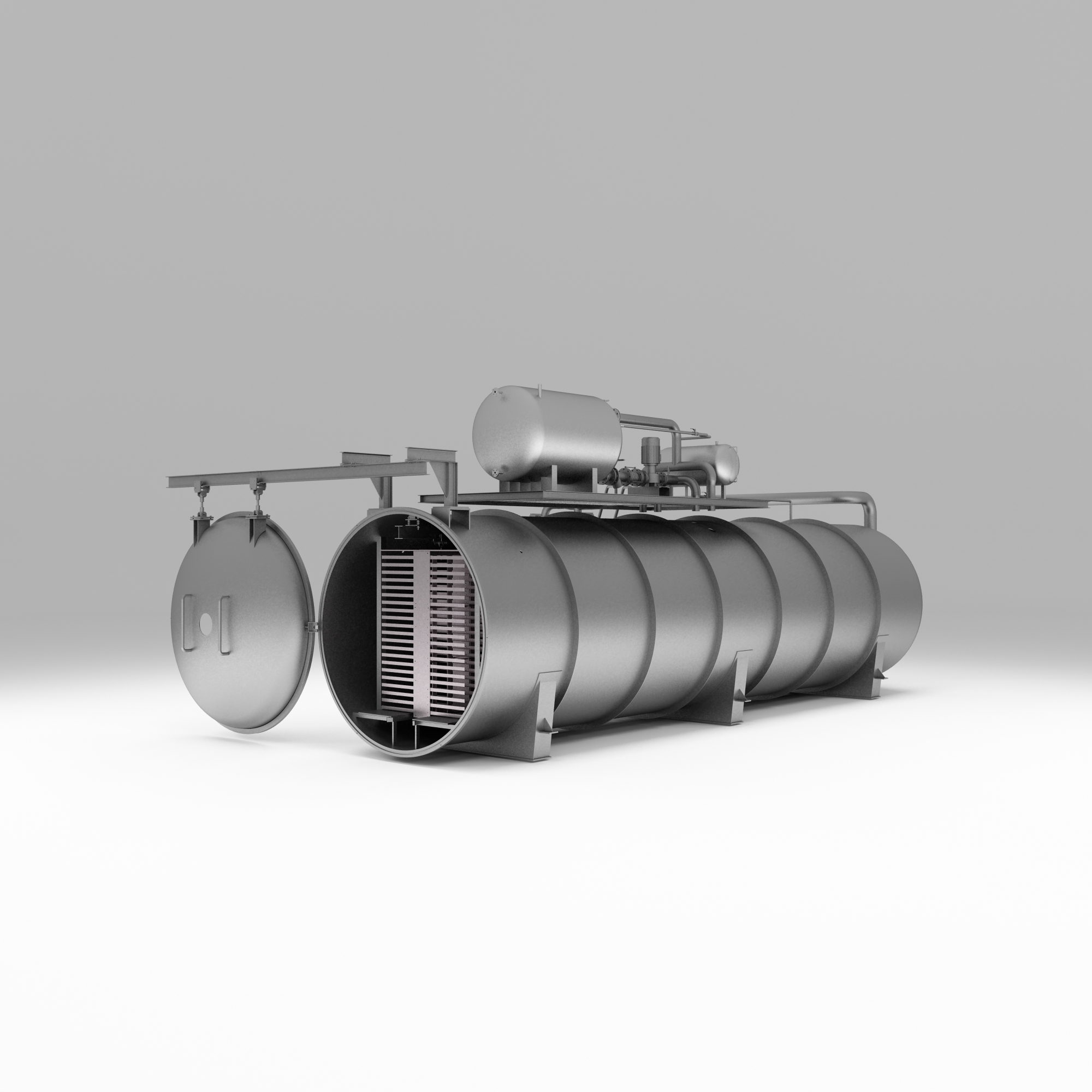 Custom 1200kg Large-Scale Industrial Freeze Dryer – High Efficiency Vacuum LyophSieno Freeze-drying Technology Research Institute (Jiangsu) Co., Ltd is China 1200kg Large-Scale Industrial Freeze Dryer – High Efficienc...View Product →
The ice condenser is the component most buyers ignore and the one that most directly controls cycle time. During primary drying, the condenser surface is cooled well below the product shelf, typically 10 to 15°C lower than the freeze front temperature, so that water vapor from the product condenses as ice on the coils. If the condenser falls behind, chamber pressure rises and sublimation slows.
Ask suppliers for two numbers: the condenser's ice capacity per batch and its condensing rate in kilograms per hour at a defined chamber pressure. A machine with a large chamber but a small condenser will run long cycles and consume more energy per kilogram of product. Also ask how defrosting works. An automated defrosting system that cleans the condenser coils between batches in minutes rather than hours can add a full extra cycle per day at scale.
Energy is the largest variable cost in freeze-dried food production. For most industrial equipment, expect around 3 to 6 kWh per kilogram of water removed, which translates into a significant line item when each batch removes hundreds of kilograms of water.
Three choices have the largest influence on that number. First, the heating mode: contact heating through stainless steel shelves is usually more energy-efficient and uniform than radiant heating for dense food pieces. Second, the vacuum and refrigeration control: variable-frequency drives on vacuum pumps and staged refrigeration capacity let the system follow the batch phase instead of running at full power constantly. Third, defrosting frequency and scheduling. An energy-saving lyophilization plant design also optimizes batch scheduling so that freeze, dry, and defrost cycles overlap across multiple units rather than hitting peak demand at the same time.
When comparing quotes, ask for energy data at partial load, not only at nominal capacity. The stated power consumption of the compressor package is not the same as the draw per kilogram of finished product, and that difference is where operating budgets either hold or break.
A freeze dryer operates between two processes that are equally important: preparation and packaging. Raw material must be cleaned, sorted, cut, sometimes blanched or mixed with protective agents, and often fully frozen before loading. After drying, the product is hygroscopic and fragile, so it must move into moisture-proof packaging under controlled humidity, usually with nitrogen flushing, and pass through metal detection or X-ray inspection.
Buying these units from different suppliers creates interface risk: belt heights do not match, cycle times do not align, and responsibility for a failed line is always somewhere else. A single supplier with a complete equipment range and turnkey delivery simplifies engineering and commissioning. For frozen fruit and vegetable lines, a vacuum freeze dryer designed for fruits and vegetables combined with a bubble cleaner, dicer, and nitrogen-filled packaging machine forms a coherent production system rather than a collection of independent machines.
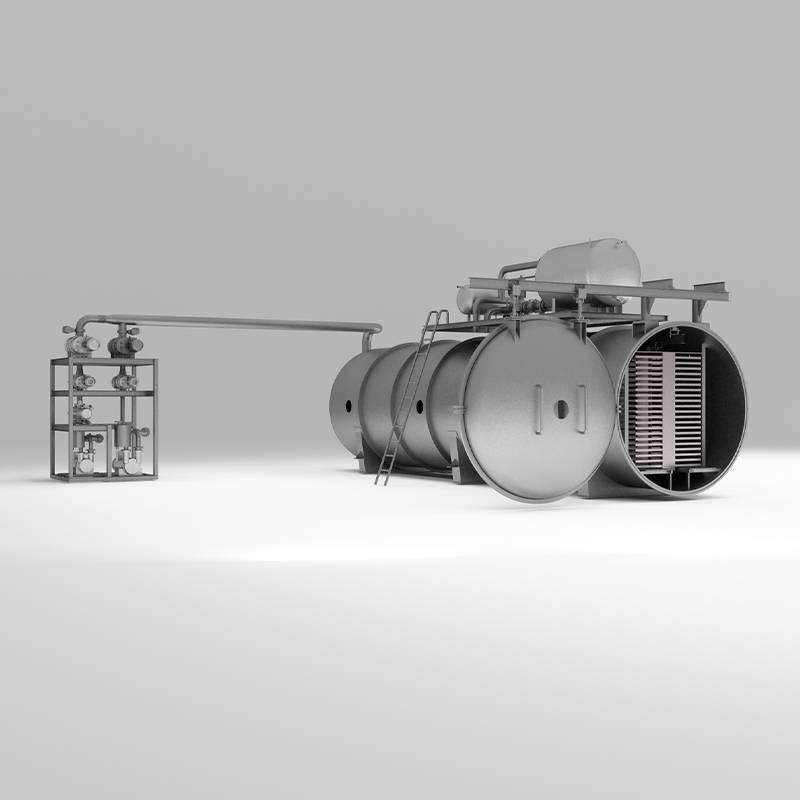 Custom Vacuum Freeze Dryer for Fruits and Vegetables Suppliers, OEM/ODM Factory Sieno Freeze-drying Technology Research Institute (Jiangsu) Co., Ltd is China Vacuum Freeze Dryer for Fruits and Vegetables Suppliers and...View Product →
Beverage powders follow a different route. Coffee and tea require extraction, concentration, and sometimes aroma recovery before freezing, and the grinding step after drying controls the particle size. In that case, dedicated coffee freeze drying equipment with pre-integrated concentration and sifting modules is a more reliable path than adapting a standard dryer to a process it was never designed for.
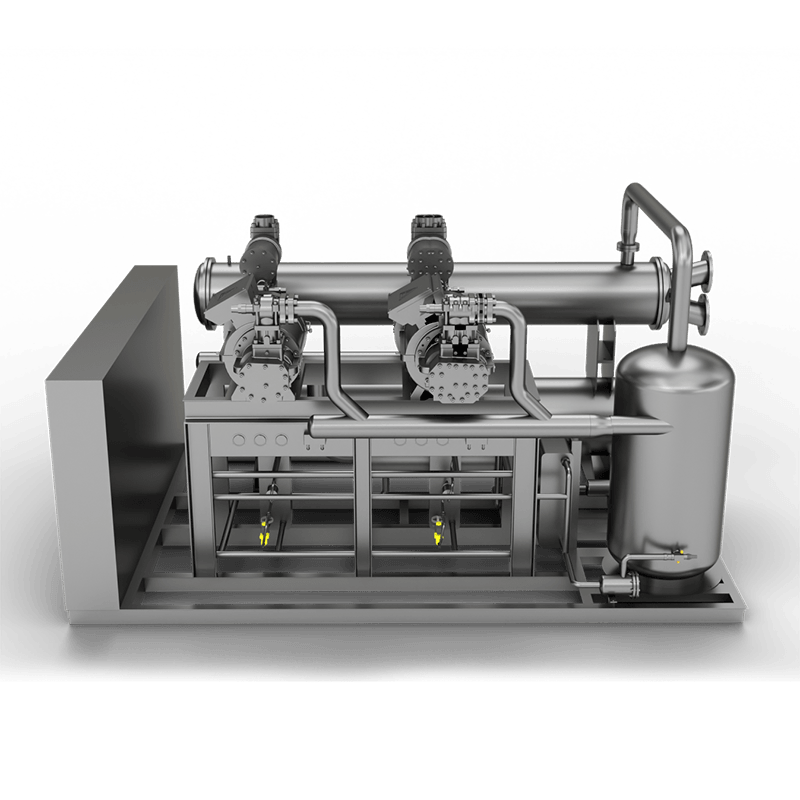 Custom Coffee Freeze-Drying Equipment Suppliers, OEM/ODM Factory - Sieno Freeze-Sieno Freeze-drying Technology Research Institute (Jiangsu) Co., Ltd is China Coffee Freeze-Drying Equipment Suppliers and OEM Factory, d...View Product →
Freeze drying is a process technology, not just a machine purchase. A material that behaves well in a lab freeze dryer may fail in production because the freezing rate, annealing step, or heating ramp needs adjustment at larger scale. Suppliers that offer lyophilization recipe development and test runs with your actual product are worth far more than those that only sell the chamber.
Look for a supplier that can run trials, define the freeze curve and drying ramp, and then transfer that recipe to the production unit. Custom engineering also matters in food plants: some facilities need automatic loading and unloading, clean-in-place systems, or modular chambers to fit constrained floor plans. Confirm that the supplier can adapt the machine layout, controls, and recipe management to your facility before signing.
Before approving a purchase, work through the following points with the supplier:
The right food freeze drying equipment keeps your product quality stable, your energy bill predictable, and your line running. The wrong one, as the durian processor learned, looks fine in the brochure and fails between the second and third hour of every cycle.


Sieno's whole series of freeze-drying equipment, covering the experimental research to the industrial scale, is energy efficient, stable, and reliable, with flexible customization as the core, to production, optimization of process, and multiple fields with green manufacturing solutions.
Sieno, based on the research of intelligent freeze-dried food, provides with custom process for the whole chain of freeze-dried technology support (including pretreatment, freeze-dried, and packaging), helping enterprises realize multiple improvements in efficiency, quality, and environmental protection.
Equiment & Soiution
Food Industry Pharmaceuticals Industry Agricultural Industry Pet Industry Beauty Care Industry Chemical Engineering & Laboratory Environmental Protection & Circular EconomyContact Info.
 +86 18068757376
  blk@jsblk.com
  Zhenglu Town, Tianning District, Changzhou City, Jiangsu Province, China
Follow Us
Copyright ©
Sieno Freeze-drying Technology Research Institute (Jiangsu) Co., Ltd
All Rights
Reserved
Custom One-Stop Freeze Drying Equipment Suppliers