English
  русский
  中文简体
中文简体 
Request a Quote

Industry News
 Home / Recent News / Industry News / Types of Freeze Dryers: Lab, Pilot, Industrial & Continuous Systems Compared
  2026.08.19
 Industry News
Walk into almost any freeze-drying facility and you will see machines that look nothing alike: a benchtop unit on a laboratory bench, a 40-square-meter batch system in the main production hall, and a tunnel that loads at one end and discharges at the other. All of them are freeze dryers, and that variety is exactly why the types of freeze dryers matter more than the equipment name itself. The right machine for your situation is decided by three variables: the batch size you need, the way heat reaches the material, and the physical form of the product being dried. Once those three points are clear, the range of suitable equipment narrows very quickly.
The most practical way to compare freeze dryers is by scale, because scale determines everything downstream: shelf area, refrigeration capacity, vacuum pumping speed, loading method, and even the floor space you need to reserve. Home-use models exist as a smaller consumer category, but the selection logic for commercial and industrial buyers is still the same: scale, heating method, and product form.
Laboratory and benchtop freeze dryers are where most companies start. They dry from a few hundred grams to a few kilograms per cycle and come in two basic forms: manifold dryers, which attach flasks to a central ice collector, and small shelf dryers, which hold samples on temperature-controlled plates. These units are built for formulation trials, stability testing, and feasibility studies. A compact machine such as the laboratory-scale vacuum freeze dryer provides the same vacuum, refrigeration, and control logic as a production system, but in a fraction of the space. What a benchtop unit cannot do is produce marketable volumes, and its results should never be treated as ready-made production parameters without pilot verification.
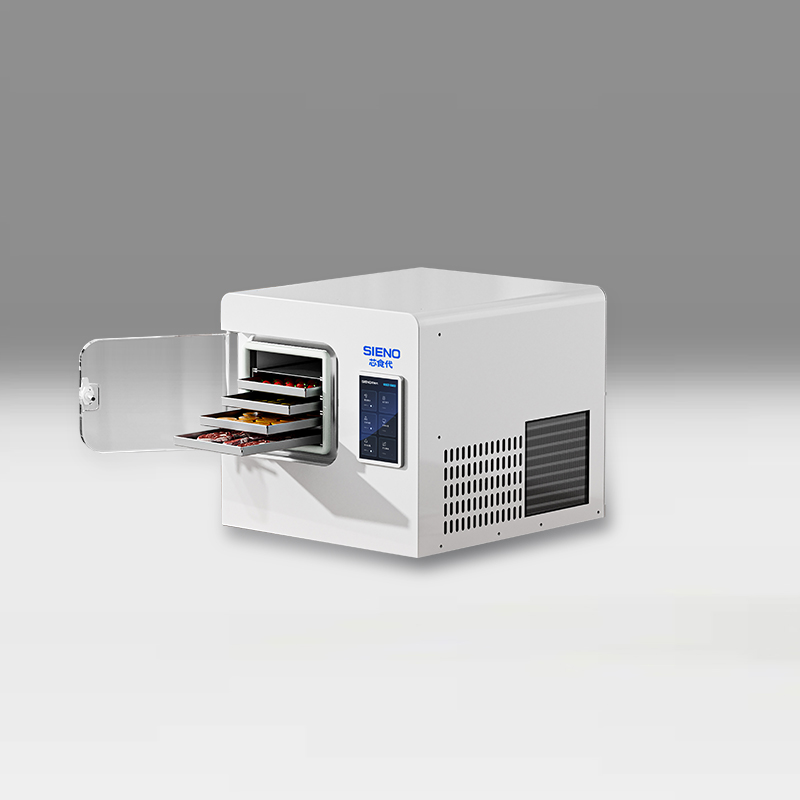 Custom XSD-FD-4 Suppliers, OEM/ODM Factory - Sieno Freeze-drying Technology ReseSieno Freeze-drying Technology Research Institute (Jiangsu) Co., Ltd is China XSD-FD-4 Suppliers and OEM Factory, details:View Product →
The next rung is pilot-scale equipment, usually defined by shelf areas from about 1 to 10 square meters. A pilot freeze dryer looks like a small industrial system and behaves like one: it has real process control, clean-in-place options, and enough capacity for shelf-life studies and small commercial batches. Its real job is to generate transferable cycle data. When you later move to industrial equipment, you will need ramp rates, shelf temperature setpoints, chamber pressure, and secondary drying endpoints that were developed on similar hardware. Choosing a pilot unit from the same supplier family as your future production machine avoids the costly step of redeveloping a recipe on different control software.
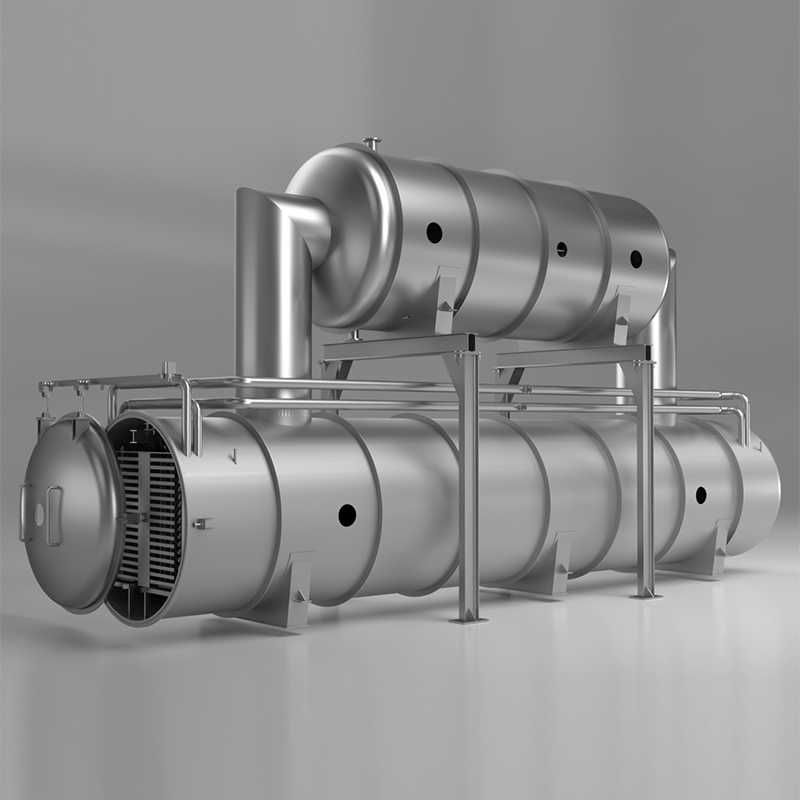
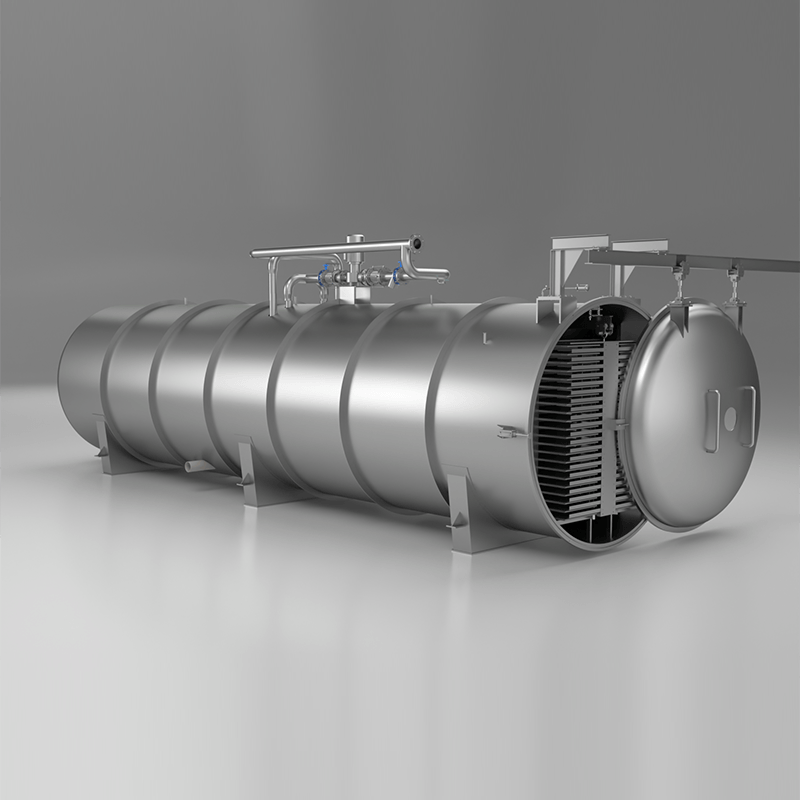
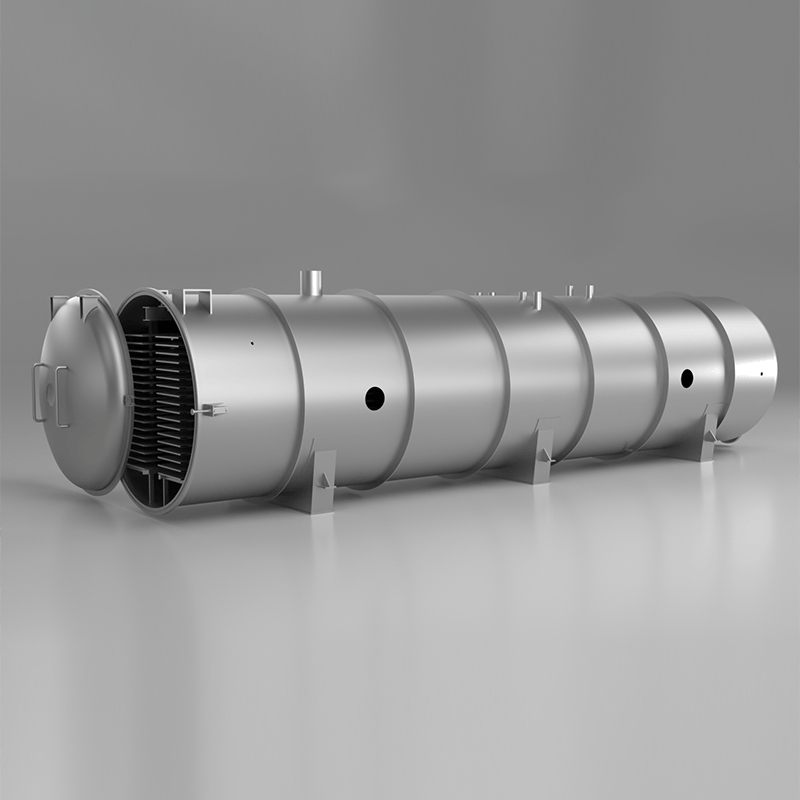
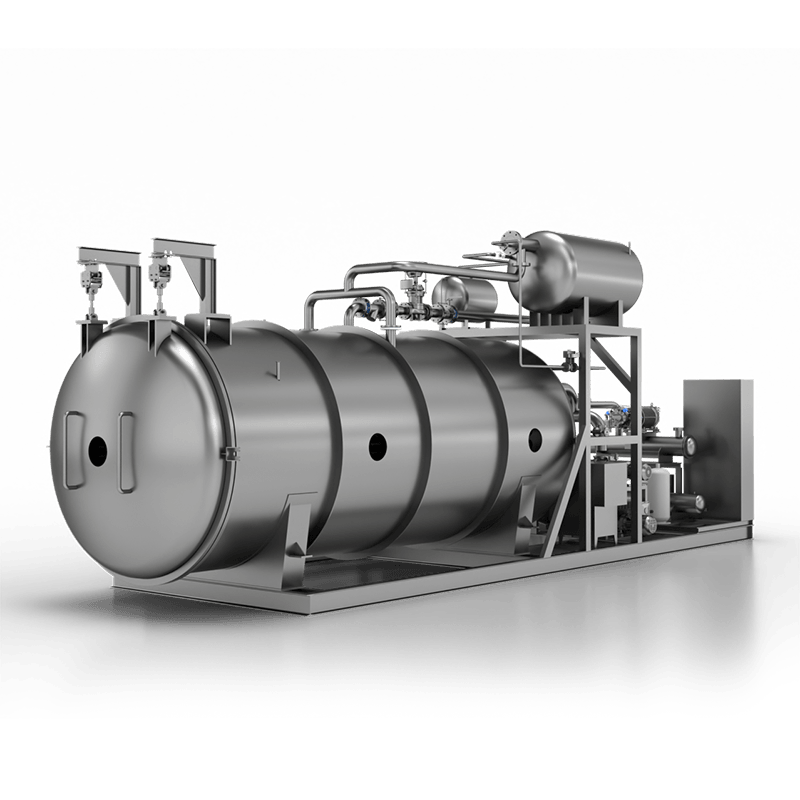
Industrial batch freeze dryers, with shelf areas from roughly 10 square meters up to 200 square meters or more, are the workhorses of food, pet food, and pharmaceutical production. Inside that category, the most important technical difference is how heat is supplied to the frozen product.
In contact heating systems, trays sit directly on shelves through which a heated fluid circulates. Heat conducts from the shelf into the product, which is efficient and gives good uniformity when the shelves are flat and the fluid distribution is even. Most fruits, vegetables, meat, seafood, and ready meals are dried on this type of equipment. In radiant heating systems, heat is delivered from radiation plates mounted above the product rather than through the tray bottom. That gentler top-down heat transfer suits heat-sensitive materials and products that should not stick to a hot surface. Many modern industrial units, including large-capacity industrial freeze dryers with precision thermal control, can handle both kinds of loads in a single machine.
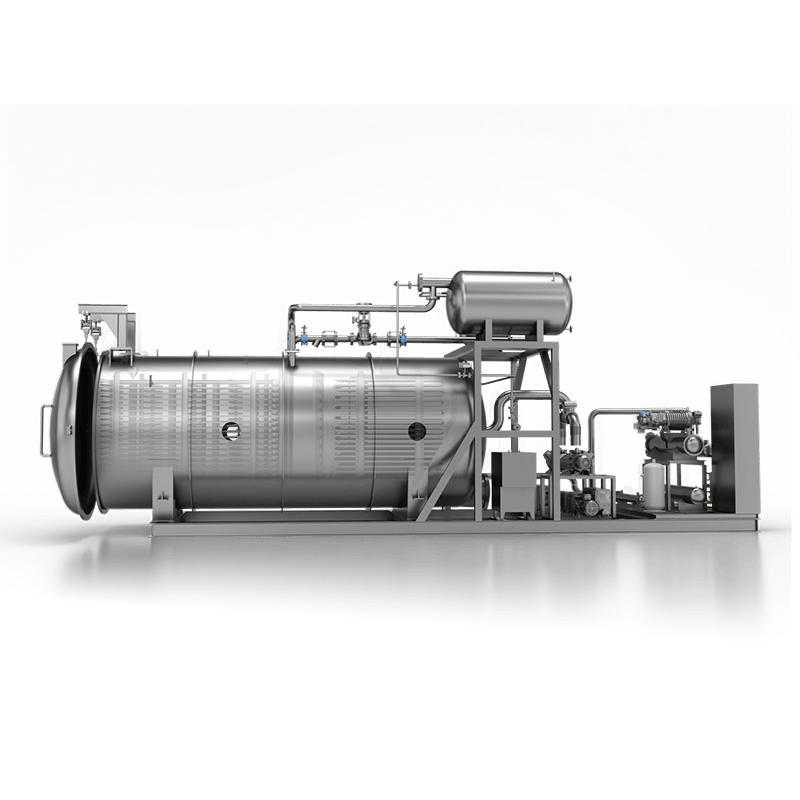 Custom BLK-FD-100 Suppliers, OEM/ODM Factory - Sieno Freeze-drying Technology ReSieno Freeze-drying Technology Research Institute (Jiangsu) Co., Ltd is China BLK-FD-100 Suppliers and OEM Factory, details:View Product →
A third, less common heating mode is microwave-assisted drying, which generates heat inside the product and shortens cycle times for certain high-value materials. It is worth studying for specialized applications, although industrial-scale implementation remains more complex than conventional shelf heating.
Whichever heating mode you choose, check three details before committing to a supplier:
These details separate a machine that dries consistently from one that leaves wet spots in the same position of every tray.
Batch dryers share one weakness: loading and unloading create idle time, and the chamber must be pulled down to vacuum and back to atmosphere for every cycle. When a product is made in very high volumes and the recipe is stable, continuous freeze dryers, often called freeze-drying tunnels, are the better fit. In a tunnel system, trays or a belt move through a series of zones with progressively different temperatures and pressures, so the machine runs continuously while products enter and leave without breaking vacuum. This design is common for instant coffee, tea concentrates, soups, and large quantities of fruit pieces that need to run day and night. The tradeoff is that a tunnel is a larger engineering commitment: you need a consistent feed rate, accurate residence time control, and a clean-in-place strategy. For many producers, the right path is to start with industrial batch equipment and move to continuous freeze-drying tunnels only when the product mix and forecast volumes justify the investment.
Beyond scale and heating method, the product itself often dictates a specialized configuration. Fruits and vegetables carry high initial moisture and need rapid freezing before drying to protect cellular structure, so their freeze dryers are sized around high sublimation loads. Meat and seafood require careful temperature control through the freezing stage to avoid protein denaturation. Coffee and instant beverages are often dried from concentrates, which changes the loading method and demands very low residual moisture. Probiotics and active ingredients need protection from light, oxygen, and temperature variation, which shapes both the drying chamber and the downstream packaging line.
For produce, the freeze dryer is rarely purchased alone. It is usually paired with cleaning lines, slicers or dicers, and nitrogen-flushed packaging equipment. In that case, an integrated line built around freeze dryers for fruits and vegetables will deliver more reliable throughput than a standalone dryer retrofitted into an improvised workflow. The same logic applies to pet food, where vacuum freeze dryers are specified together with mixing, extrusion, and bagging machines, or to active ingredients, where the dryer is matched with microencapsulation and ampoule filling equipment to protect sensitive compounds from the moment the cycle ends.
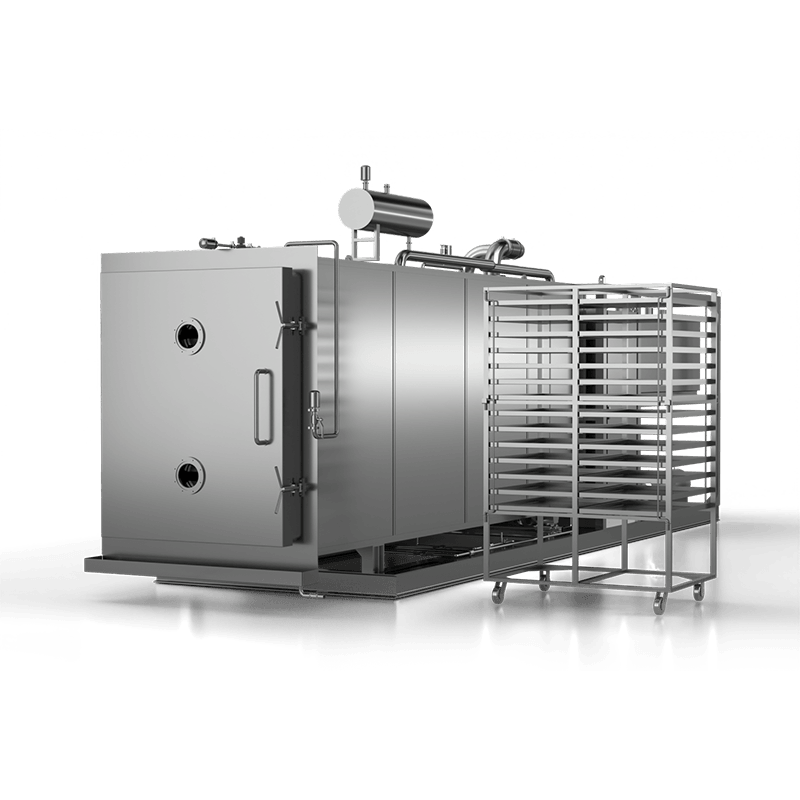
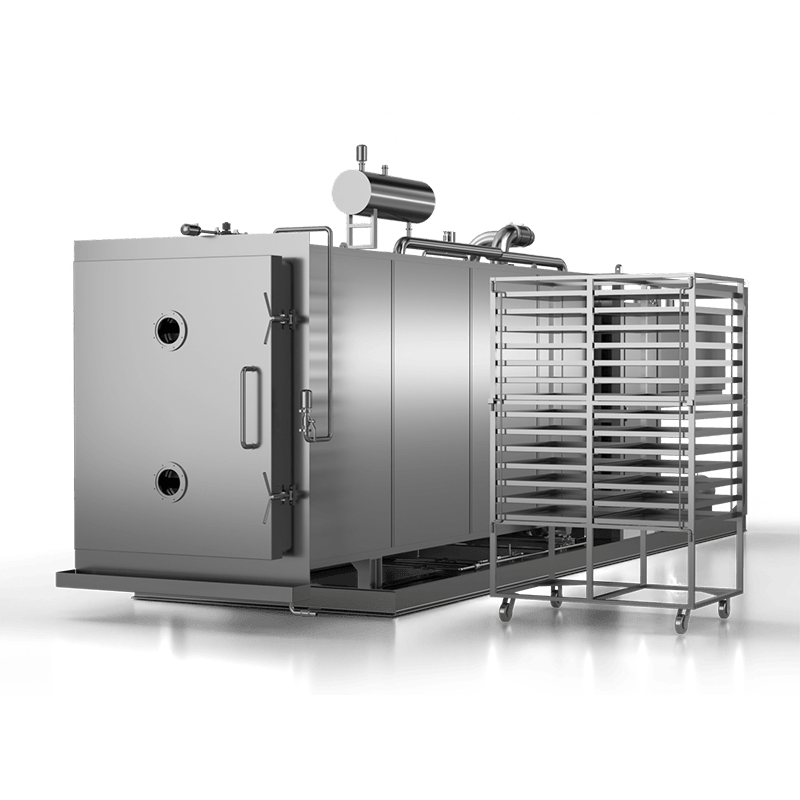
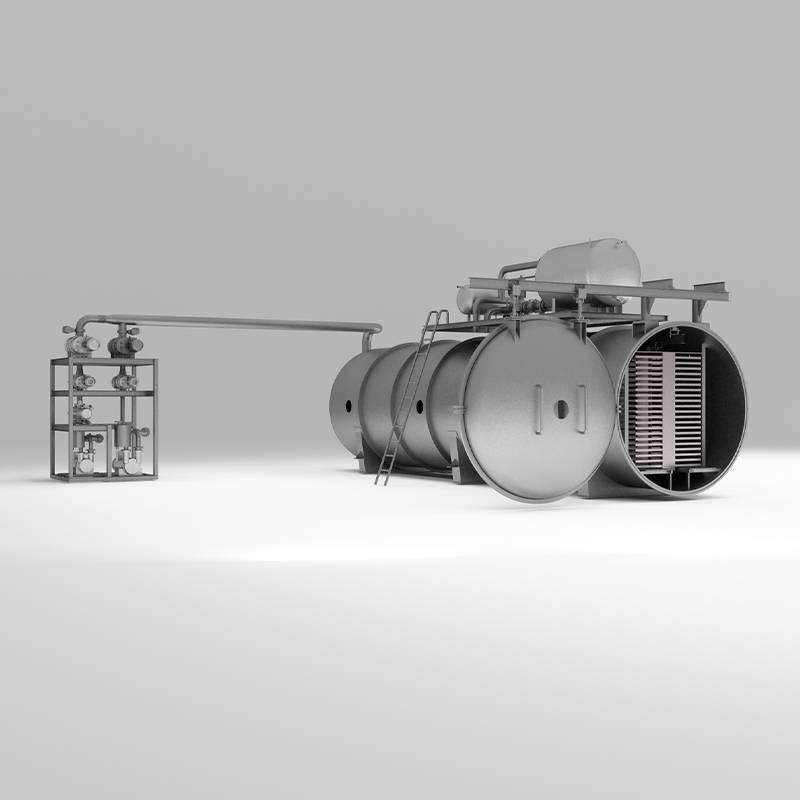 Custom Vacuum Freeze Dryer for Fruits and Vegetables Suppliers, OEM/ODM Factory Sieno Freeze-drying Technology Research Institute (Jiangsu) Co., Ltd is China Vacuum Freeze Dryer for Fruits and Vegetables Suppliers and...View Product →
The table below summarizes the categories discussed, their typical scale, the products they suit, and the main specification to verify before purchase.
| Type | Typical scale | Best suited for | Main specification to verify |
|---|---|---|---|
| Benchtop manifold | 0.1–0.5 m² equivalent; multiple flasks | R&D, small trials, analytical samples | Achievable vacuum level and condenser temperature |
| Laboratory shelf | 0.5–2 m² shelf area | Formulation studies, stability testing | Shelf temperature uniformity and programming flexibility |
| Pilot scale | 1–10 m² shelf area | Scale-up trials, small production lots | How closely the control system mirrors industrial units |
| Industrial batch, contact heating | 10–200+ m² | Fruits, vegetables, meat, seafood, dairy, ready meals | Fluid circulation design and shelf flatness |
| Industrial batch, radiant heating | 5–50 m² | Heat-sensitive materials, active ingredients | Radiation uniformity and tray loading pattern |
| Continuous / tunnel | Continuous throughput in kg/h | Instant coffee, soups, high-volume fruit processing | Residence time control and clean-in-place access |
Capacity is only one line in the table. Two machines with the same shelf area can produce completely different results when one has larger condenser capacity or a more precise control loop, so use the table as a starting point rather than a final verdict.
No comparison sheet replaces running your own material. The most reliable way to choose between types of freeze dryers is to test the actual product on equipment from the category you are considering, and ideally on the specific model you plan to buy. Run samples at different shelf temperatures and chamber pressures, then evaluate cycle time, residual moisture, rehydration ratio, color, and structure. If the product changes texture between the lab trial and the pilot run, that tells you the scale-up method matters as much as the dryer type.
Also look at the supplier's ability to support scale-up. A company that offers both laboratory and industrial-scale freeze dryers, together with process development and technical training, is in a better position to help you transfer a cycle from a bench test to full production. The goal is not simply to buy a machine, but to install a process that keeps quality consistent at every step of the journey.


Sieno's whole series of freeze-drying equipment, covering the experimental research to the industrial scale, is energy efficient, stable, and reliable, with flexible customization as the core, to production, optimization of process, and multiple fields with green manufacturing solutions.
Sieno, based on the research of intelligent freeze-dried food, provides with custom process for the whole chain of freeze-dried technology support (including pretreatment, freeze-dried, and packaging), helping enterprises realize multiple improvements in efficiency, quality, and environmental protection.
Equiment & Soiution
Food Industry Pharmaceuticals Industry Agricultural Industry Pet Industry Beauty Care Industry Chemical Engineering & Laboratory Environmental Protection & Circular EconomyContact Info.
 +86 18068757376
  blk@jsblk.com
  Zhenglu Town, Tianning District, Changzhou City, Jiangsu Province, China
Follow Us
Copyright ©
Sieno Freeze-drying Technology Research Institute (Jiangsu) Co., Ltd
All Rights
Reserved
Custom One-Stop Freeze Drying Equipment Suppliers