English
  русский
  中文简体
中文简体 
Request a Quote

Industry News
 Home / Recent News / Industry News / Raw to Shelf-Stable: The Engineering of Pet Care Freeze Drying Equipment
  2026.06.11
 Industry News
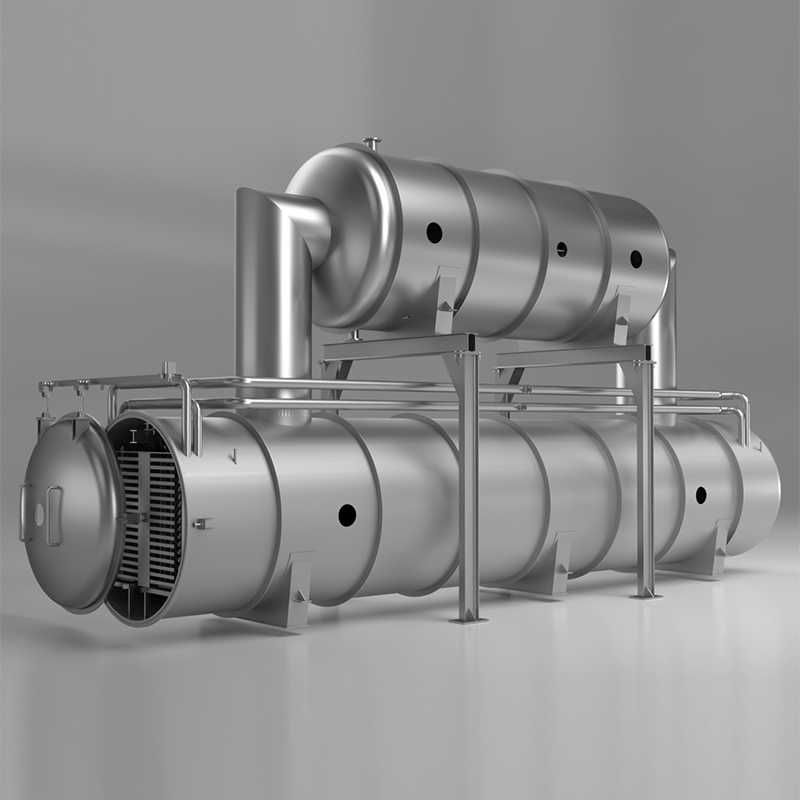
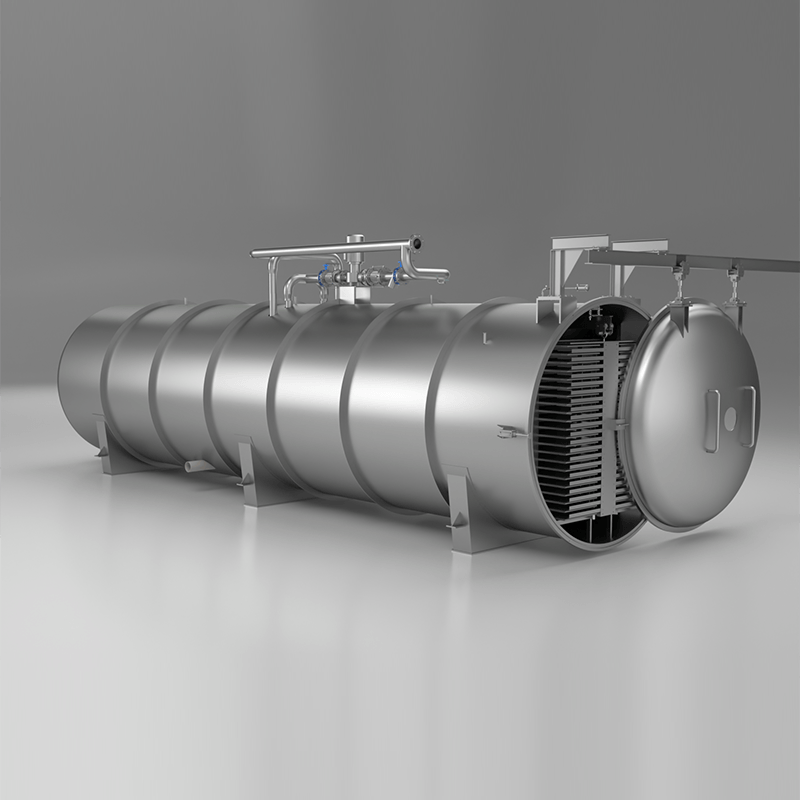
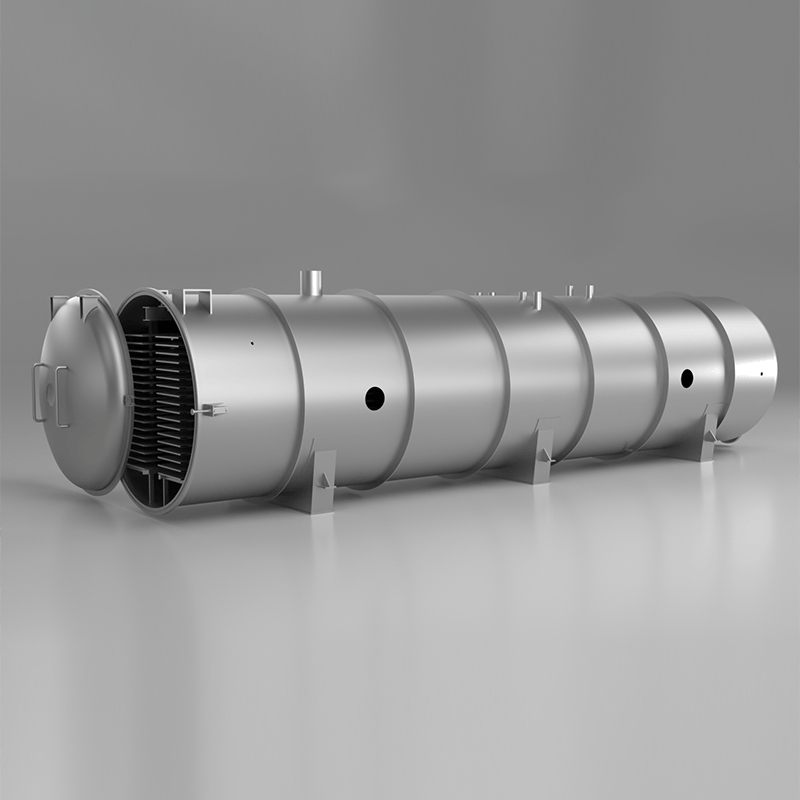
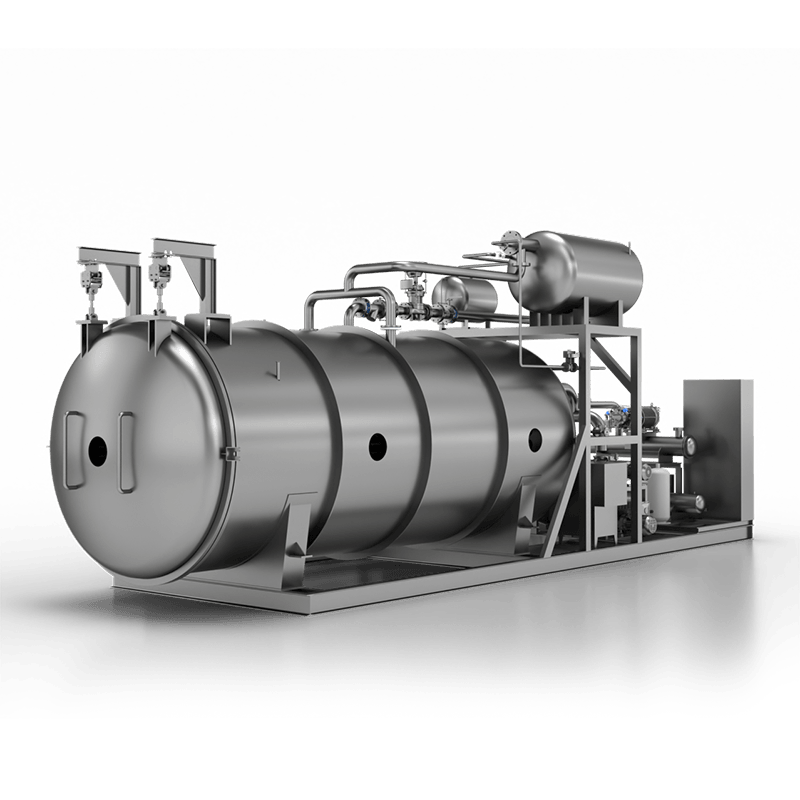
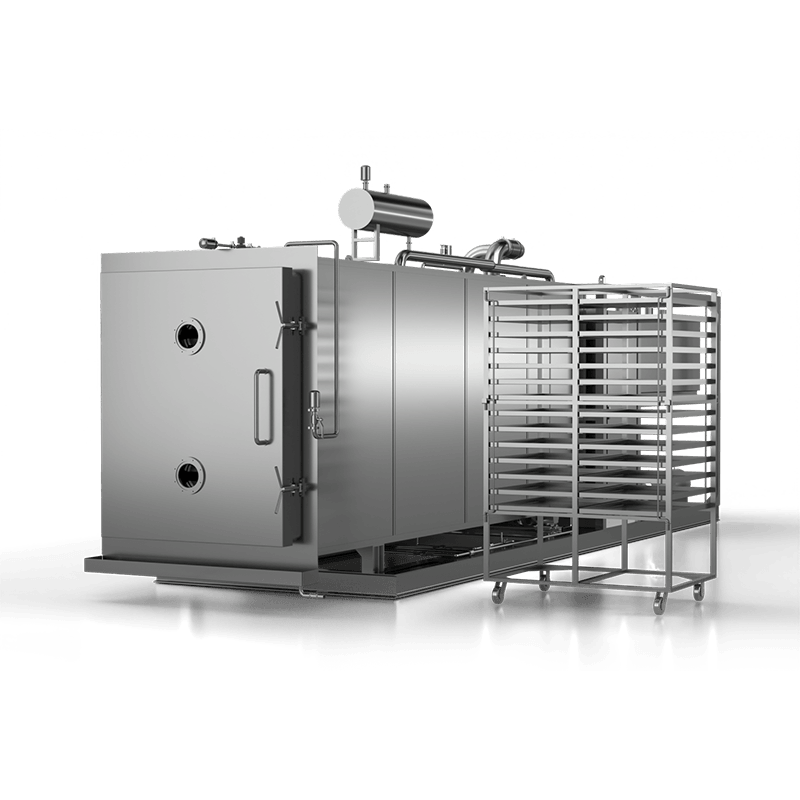
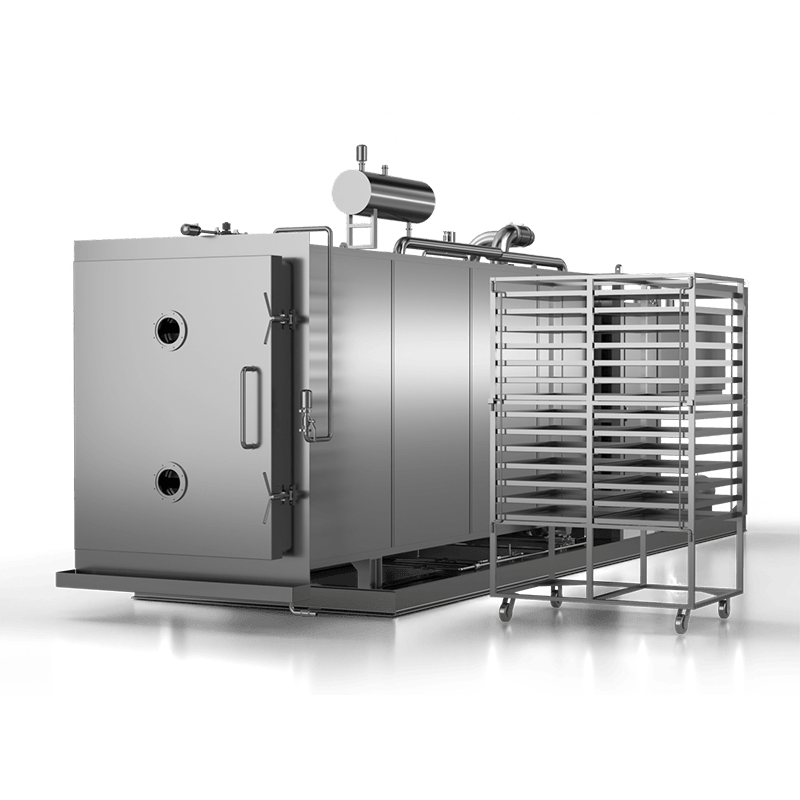
For pet food manufacturers seeking to produce shelf-stable raw diets without cooking or chemical preservatives, freeze drying is the only industrial method that retains nutritional integrity. Comparative testing shows freeze-dried raw pet food retains 94-97% of original vitamins, enzymes, and amino acids, compared to 20-40% retention in extruded or heat-dried products. The direct conclusion: pet care freeze drying equipment with proper shelf temperature control (-30°C to -40°C freezing, +40°C to +60°C primary drying) and vacuum pressure below 100 mTorr produces finished products with less than 4% moisture content and 12-24 month ambient shelf life. This article provides specific selection criteria based on batch size, product type (meat chunks, whole prey, toppers), and throughput requirements for pet food applications.
Pet care freeze drying equipment operates on the principle of sublimation: converting frozen water directly to vapor without passing through a liquid phase. The process has three distinct phases: freezing, primary drying (sublimation), and secondary drying (desorption). The freezing phase must achieve core product temperatures of -30°C to -40°C to ensure complete crystallization of free water. Meat and organ tissues freeze at different rates; equipment must have programmable ramp-down rates of 1-3°C per minute to prevent ice crystal formation that damages cell walls. Primary drying accounts for 85-90% of total cycle time, typically 24-48 hours for 1-inch thick meat pieces. Secondary drying removes bound water to achieve final moisture below 4%, requiring an additional 4-8 hours at +50°C to +60°C shelf temperature.
The vacuum system is the most critical component. Industrial pet care freeze drying equipment must achieve chamber pressure below 100 mTorr (0.0133 kPa) during primary drying. Higher pressures raise the sublimation point, causing frozen product to melt and boil rather than sublime, resulting in collapsed structure and nutrient loss. Vacuum pump capacity should be sized to evacuate the chamber from atmospheric pressure to 500 mTorr within 20 minutes; slower evacuation allows surface ice to melt before sublimation begins.
Pet food freeze dryers use heated shelves (platens) with product loaded on trays. Shelf temperature uniformity is non-negotiable: all shelves in the chamber must maintain temperature within ±2°C across the entire surface. Temperature variation above ±3°C causes uneven drying: product on hot spots scorches (surface temperatures exceeding 65°C denature proteins), while product on cold spots remains wet, requiring extended cycle times that reduce throughput by 20-30%. Request thermal mapping data for the specific chamber configuration before purchase; suppliers should provide 16-point thermocouple maps at three shelf levels.
Heat transfer to the product occurs through three mechanisms: conduction from the shelf to the tray, radiation from shelves above, and convection through the reduced-pressure gas. For maximum sublimation rate, shelf heating should be provided by silicone oil circulating through the platens, not electric resistance heaters. Oil-heated shelves achieve 5-8°C per minute ramp rates and maintain ±1°C stability. Electric heated shelves typically have ±5°C variation and slower ramp rates, adding 4-8 hours to each cycle. For a facility running 300 cycles per year, this difference represents 1,200-2,400 additional operating hours annually.
| Production Scale | Shelf Area (m²) | Batch Size (kg raw) | Cycle Time (hours) | Annual Throughput (kg) |
|---|---|---|---|---|
| Startup/Artisanal | 2-5 | 10-25 | 36-48 | 2,000-8,000 |
| Small Commercial | 8-15 | 40-75 | 32-40 | 15,000-50,000 |
| Mid-Scale Production | 20-40 | 100-200 | 30-36 | 50,000-200,000 |
| Industrial Large Scale | 50-100+ | 250-500 | 28-32 | 200,000-1,000,000+ |
Different pet food ingredients require different freeze drying parameters. Ground meat and organ blends (30-50% fat content) freeze and dry differently from whole muscle pieces or bone-in products. Fat has no bound water and does not sublime; high-fat products require longer secondary drying to prevent residual moisture from being trapped beneath fat layers. For raw pet food containing 40% fat (e.g., duck, lamb blends), extend secondary drying by 6-8 hours and maintain shelf temperature at 55°C to ensure fat-capillary moisture release. Failure to do so results in spoilage within 3-4 months despite achieving target moisture content of 4%.
Whole prey items (mice, chicks, fish) present unique challenges. The internal cavity retains moisture longer than external tissue. Whole prey freeze drying requires an additional 12-24 hours of primary drying compared to ground product of equivalent mass. Equipment must accommodate multi-height loads; shelves with adjustable spacing (minimum 50mm clearance above product) are essential for whole prey. Without adequate clearance, sublimated water vapor cannot escape from the product surface, creating a localized vapor barrier that slows drying by 50-70% and allows bacterial growth in the temperature danger zone (0-40°C) during the transition from freezing to drying.
Pet care freeze drying equipment requires two-stage rotary vane vacuum pumps with ultimate pressure below 10 mTorr (0.0013 kPa). Pump displacement (CFM) must be sufficient to evacuate the chamber volume to 500 mTorr within 15 minutes for batch sizes under 100 kg, 20 minutes for larger batches. Under-sized pumps extend evacuation time, allowing frozen product surfaces to warm above -20°C before vacuum is established, causing surface ice to melt into the product. This melted water then boils when vacuum reaches 4,000 mTorr, creating steam bubbles that rupture cell walls and produce a spongy, unattractive texture that pet owners perceive as low quality.
Vacuum pump oil degrades rapidly due to moisture absorption from the chamber. For pet food freeze drying, change pump oil every 100-150 operating hours, versus 500 hours for pharmaceutical freeze dryers. Pet food loads contain 70-80% water by mass, and despite condenser traps, some moisture reaches the vacuum pump. Contaminated pump oil loses ultimate vacuum capability; a pump that achieved 50 mTorr with fresh oil may only achieve 500 mTorr after 200 hours of pet food use. Install an oil filtration system (1 micron nominal rating) and oil mist eliminator to extend pump service intervals to 250-300 hours. Annual vacuum pump maintenance costs for a 100 kg batch freeze dryer typically run $1,500-2,500.
The condenser (cold trap) captures water vapor sublimated from the product. Condenser capacity must be sized for 150% of the maximum water load in a single batch. For a 100 kg batch of raw meat (75 kg water content), the condenser must capture at least 110 kg of ice without reaching capacity and losing vacuum. Undersized condensers force premature defrost cycles, interrupting drying and destroying batch integrity. Specify a condenser with surface temperature below -50°C throughout the ice accumulation zone; warmer condensers allow ice to form an insulating layer that reduces capture efficiency by 50% after 2 cm of accumulation.
Hot gas defrost versus electric defrost: Hot gas defrost completes in 30-45 minutes versus 2-3 hours for electric defrost. For facilities running 2-3 batches per day, electric defrost consumes 8-9 hours daily, effectively reducing throughput by 30-40%. Hot gas defrost uses compressor discharge gas to heat the condenser coil, requiring additional valving but paying for itself within 6-12 months through increased production capacity. However, hot gas defrost requires larger refrigerant charge (30-50% more) and increases annual maintenance costs by $500-1,000 for valve servicing.
The relationship between batch size and cycle time is non-linear. Doubling the load from 50 kg to 100 kg typically increases cycle time by 50-70%, not 100%. The optimal load for most pet care freeze drying equipment is 70-80% of maximum shelf capacity. At 100% load, air circulation between trays is restricted, increasing drying time by 30-40% for the same product mass. For 1-inch thick meat pieces on 20 m² of shelf area, maximum practical load is 150-180 kg; exceeding this causes the bottom trays to finish 8-12 hours after top trays, forcing operators to either over-dry the top product or accept under-dried bottom product.
Tray configuration affects drying uniformity. Stainless steel mesh trays (2mm wire spacing) dry 15-20% faster than solid trays because water vapor escapes from both top and bottom surfaces. Solid trays require product turning at 50% of cycle time, adding labor costs of $15-25 per batch and potentially introducing contamination. For pet food applications, mesh trays are recommended despite higher initial cost ($200-400 per tray versus $50-100 for solid). Mesh trays last 5-10 years with proper cleaning; solid trays develop pitting and contamination traps within 2-3 years.
Pet care freeze drying equipment requires cleaning between batches when switching protein sources or at minimum every 72 hours of continuous operation. Failure to clean leads to biofilm formation in chamber crevices, with studies showing 1,000-10,000 CFU/cm² of aerobic bacteria after 7 days of raw pet food processing. The cleaning protocol must be validated for the specific chamber design:
Equipment designed for clean-in-place (CIP) with spray balls on all internal surfaces reduces cleaning time from 4-6 hours to 1-2 hours. CIP adds 15-25% to equipment cost but reduces labor costs by $15,000-25,000 annually for a facility running 300 batches per year. For manual cleaning, ensure all chamber internal surfaces are accessible; shelving systems with fixed supports that create blind spots are unacceptable for pet food use.
Pet care freeze drying equipment is energy-intensive. A 20 m² freeze dryer consuming 25-35 kW during operation requires 0.8-1.2 kWh per kg of raw product processed. At $0.12/kWh, energy cost is $0.10-0.14 per kg of raw input. Since freeze drying removes 70-80% of weight as water, finished product energy cost is $0.50-0.70 per kg—significantly higher than heat drying (0.05-0.10 per kg) but justified by nutritional retention.
Refrigeration system COP (coefficient of performance) significantly affects operating cost. Scroll compressors for the refrigeration loop achieve COP of 2.5-3.0; reciprocating compressors achieve 1.8-2.2. A scroll compressor unit consuming 18 kW for refrigeration versus a reciprocating unit consuming 24 kW saves $0.72 per operating hour at $0.12/kWh, or $5,000-6,000 annually for a 7,000-hour/year operation. The premium for scroll compressors ($3,000-5,000) pays back in less than one year. For facilities in warm climates (annual average ambient >25°C), specify water-cooled condensers for the refrigeration system rather than air-cooled; water cooling improves COP by 15-20% and reduces annual energy costs by $3,000-8,000.
Modern pet care freeze drying equipment includes programmable logic controllers with recipe storage and data logging. Minimum control features: shelf temperature profile (minimum 10 programmable segments), vacuum setpoint with automatic control, condenser temperature monitoring, and product temperature input (minimum 4 thermocouple probes per batch). For pet food processing, the system must generate complete cycle reports including temperature and pressure traces at 5-minute intervals. These reports are essential for food safety audits and batch traceability under FSMA and similar regulations.
Remote monitoring and alarm notification are strongly recommended. Automated alerts for vacuum pump failure (chamber pressure rising above 500 mTorr), refrigeration failure (condenser temperature above -40°C), or power interruption prevent batch loss. A single batch of raw pet food ingredients costing $5,000-20,000 can be salvaged if a power interruption is detected within 30 minutes; without notification, the batch may thaw and spoil before operators return. Cellular or Ethernet-based monitoring systems cost $500-1,500 initial plus $200-400 annual subscription; one prevented batch loss typically covers 5-10 years of monitoring costs.
All surfaces contacting pet food must be 316L stainless steel, not 304 stainless. 304 stainless corrodes when exposed to the chloride content of raw meat and bone (1,000-2,000 ppm chloride), showing pitting within 6-12 months in pet food freeze dryers. 316L stainless contains molybdenum (2-3%), providing resistance to chloride-induced pitting. Verify material certifications; some manufacturers use 304 for non-product-contact surfaces but 316L on product-contact surfaces is the minimum acceptable specification. Shelf surfaces must have a surface finish of Ra ≤ 0.8 µm (electropolished or mechanically polished) to prevent bacterial attachment and facilitate cleaning.
Chamber welds require full penetration and smooth grinding. Weld crevices and undercuts are the primary sites of biofilm formation in freeze dryers. Inspect welds with a borescope before accepting delivery; any weld with visible undercut, porosity, or mismatch should be rejected and reworked. Gaskets and seals must be FDA-compliant silicone (not EPDM or nitrile, which absorb fat and become sticky). Replace door seals every 12-18 months; seal degradation is the most common cause of vacuum leaks in freeze dryers older than 2 years.
Pet care freeze drying equipment requires significant facility infrastructure beyond basic utilities. Dedicated 400-600 amp, 480V three-phase electrical service for a 20-40 m² freeze dryer, plus separate 100-200 amp service for vacuum pumps and refrigeration. Compressed air for pneumatic valves (7 bar, 100-200 L/min, dried to -40°C dew point). Cooling water for water-cooled condenser systems (20-40 L/min at 25°C maximum inlet temperature, 0.2-0.4 MPa pressure). Without proper water treatment, cooling towers develop biofilm that clogs condenser plates within 3-6 months.
Floor loading is substantial: a 40 m² freeze dryer with full product load weighs 15,000-25,000 kg, requiring 1,500-2,500 kg/m² floor loading capacity. Most industrial concrete slabs (3,500-5,000 psi) are adequate, but mezzanine installations are generally not feasible. Ceiling height must accommodate the chamber plus 1.5 meters of overhead clearance for shelf removal and maintenance; minimum 4.5 meters from finished floor to structural ceiling. Ventilation for heat rejection: a 30 kW freeze dryer rejects 40-50 kW of heat to the room, requiring 5-8 air changes per hour (minimum 2,000-3,000 CFM exhaust for a 50 m² room).


Sieno's whole series of freeze-drying equipment, covering the experimental research to the industrial scale, is energy efficient, stable, and reliable, with flexible customization as the core, to production, optimization of process, and multiple fields with green manufacturing solutions.
Sieno, based on the research of intelligent freeze-dried food, provides with custom process for the whole chain of freeze-dried technology support (including pretreatment, freeze-dried, and packaging), helping enterprises realize multiple improvements in efficiency, quality, and environmental protection.
Equiment & Soiution
Food Industry Pharmaceuticals Industry Agricultural Industry Pet Industry Beauty Care Industry Chemical Engineering & Laboratory Environmental Protection & Circular EconomyContact Info.
 +86 18068757376
  bolaike@jsblk.com
  Zhenglu Town, Tianning District, Changzhou City, Jiangsu Province, China
Follow Us
Copyright ©
Sieno Freeze-drying Technology Research Institute (Jiangsu) Co., Ltd
All Rights
Reserved
Custom One-Stop Freeze Drying Equipment Suppliers